Standard category for new IF dev systems

We’ve been getting a lot of submissions of new IF systems lately, and I noticed they’re not all sorted into any one particular category.

Some of them are in the Technical Development → Development Systems category:

Some of them are in the Authoring → Other Development Systems category:

Some of them are in the Playing → Project Announcements category:

Here’s one in the Authoring category:

I think it would be helpful to categorize these together in some way. This might make it easier for developers of new systems to see their threads alongside other developers of new systems, to compare and contrast themselves with what’s out there.

I don’t necessarily think we need a new category for this. (Though, maybe we do?) I think the main thing is to pick one category and stick with it, moving threads in the “wrong” category into the category we think is the “right” one.

Which category would be best? “Technical Development → Development Systems”, I think

IMO, it’s a toss up between Technical Development → Development Systems vs. Authoring → Other Development Systems.

But the “Authoring” category seems better suited to Q&A about a system, not necessarily expecting the system developer to weigh in, whereas the “Technical Development” category seems more suited toward discussions with the people directly working on the dev system.

I note that it’s especially strange for announcements of new dev systems to appear in the “Playing” category, but I can’t blame anybody for posting there, because the “About” description of the Playing → Project Announcements thread currently says:

Have you just released a new work? A game? A book? A utility? A development system? Tell us all about it and where to find it here!

I feel like “Playing → Project Announcements” is perfectly suited to the announcements of new games (which is always of interest to players) but the “Playing” category feels like a bad fit for development systems/utilities intended for authors to use. I’d vote to change that description to say something like:

Have you just released a new work? A game? A book? Tell us all about it and where to find it here! (If you’re announcing a new tool or system for IF authors, post about that in the Technical Development → Development Systems category instead.)

25 Likes

I agree and I’m willing to try this.

I’ve created a tag new-platform for debut messages.

I’ll move everything around and we’ll see how it works and if anyone grumbles!

Remember if you participate here enough, you likely have access to recategorize topics that should be in a different spot. Hover over the original post title and click the pencil icon to modify topic title, category and tags. We appreciate assistance with tidiness.

15 Likes

Yeah, I agree that Technical Development > Development Systems is the best place for them. We should adjust the description of Playing > Project Announcements to point people there.

EDIT: Ah, Hanon already has! Perfect.

5 Likes

Also @dfabulich thank you for compiling the new systems, I hadn’t read about many of these and am now diving in.

I’ve shamelessly stolen all your links to create a pinned topic with new dev systems…

3 Likes

Is this about where to put new announcements or all discussion of systems? Honestly I am not even sure which I tend to pick so if everything should go in Technical Development > Development Systems now that’s okay with me.

4 Likes

This is basically housekeeping since it’s not initially clear where to post.

You can discuss anything basically anywhere appropriate, but realize anyone with enough trust can move your post to a more appropriate category, so don’t sweat if you’re in the wrong category - someone will likely find it and move it.

In general announcing games and discussion of playing them go in:
Playing
Playing > Project Announcements
Playing > IF Reviews and Essays for long-form reviews, comparative reviews, or general scholarly musings about IF topics.

This topic is about gathering announcements of new development platforms in one spot, specifically
Technical Development > Development Systems

For technical discussion about using specific platforms, those go in
Authoring
Authoring > Inform 7
Authoring > Twine
Authoring > Choice-based IF
Authoring > Publishing
etc.

Nobody will be in trouble for posting in the “wrong” place - there are times discussion might be appropriate - for example Spanish discussion can go in Discusión en español regardless of what it’s about.

Competition reviews and discussion usually land in the appropriate Competitions category, but can migrate anywhere, especially after a comp is ended and an entry is its own game.

We can always split topics when necessary if the discussion evolves and would be better served in a different category or as part of another topic.

6 Likes

Has anyone figured out why there are soooo many new systems suddenly?

(I guess a combination of “LLM everywhere” and “making an if engine is the second project after Hell World” @dfabulich mentionned, but still, that’s A LOT of them !)

6 Likes

Super curious.

2 Likes

Most of these new systems are CYOA web tools coming from outside the community. Something interesting is happening in the mainstream consciousness of text games.

  • Is the mainstream success of commercial mobile CYOA (e.g., Choice of Games) starting to snowball?
  • Has the rise of LLMs (including LLM-based writing and roleplay tools) resulted in more people thinking about the possibilities of text-based systems?
  • Collaborative coding with LLMs is now a ubiquitous part of mainstream web dev, and has made it vastly easier for moderately talented solo programmers to build and deploy full-stack web apps. Are we just seeing hobbyists finally finish their projects?
3 Likes

My theory is that the time is ripe (or people think it is) to launch a business based on CYOA + LLM + AI graphics + WEB tech.

They might be right.

However, most of them are climbing four mountains:

  1. Make a great authoring system
  2. Make a great publishing platform
  3. Make a visual programming language
  4. Make a great demo game
5 Likes

That’s what I originally thought, but a lot of the more recent ones aren’t LLM-based at all. And today’s two show a clear understanding of the community’s tastes, at least at a basic level: one clearly takes inspiration from both Ink and Twine, the other is aiming to replace StoryNexus.

2 Likes

I think it’s this.

IF engines are easy/fun hobby projects, and I suspect that LLMs are making it easier for hobbyists to finish their projects, even if they simply use the chatbots to help debug tricky problems.

I doubt that any of these folks have fully “vibe coded” their web apps (where the developer never looks directly at the code).

6 Likes

Has anyone considered running an IF systems jam? There’s a “build a programming language and then write a game in it” jam coming up which looks kinda interesting, though not IF-specific.

2 Likes

I am going to confirm your suspicion might be correct in case of ChronicleHub. The basic architecture and parser for it was hand coded (artisinal code?) a few months ago to help with a Unity game project I had been considering. Then people kept bringing up StoryNexus, and I figured “I already have a basic system, maybe I can make this work for other people”

Now, unless you know what you want and how you want it, LLMs are atrocious for programming. You still need to have a grasp of software engineering to actually understand what the model is outputting, and why it hasn’t understood your assignment, or what context you need to provide to make sure it integrates the correct features in the correct layer.

However, due to the fact it generates a lot of the boilerplate, less technical stuff for me, it means I can focus on the big picture and actual software security, and regularly go in to alter the code to make sure it actually does what it’s supposed to do. It also means much less time reading the documentation for some obscure library or package I’m using, because usually the LLM will already know the package, know which method to pull from it, and what data it expects.

That is, until the package had an update, and the LLM is working with deprecated data. Then I do have to go in and read the docs. It’s a different vibe altogether. Also, for security sensitive packages, those docs will be read, because I am not implementing antyhing that might affect user data without completely understanding why and how it’s being used.

It feels a bit dirty admitting I use an LLM, but it’s very much helping me finish this in a fraction of the time I would need to spend on it by hand, and really keeps the momentum up! Also, I feel it’s the creative stuff that’s most controversial here, as AI slop is very easy to spot out in the wild, but it also devaluates the genuine efforts of artists trying to just practice and hone their craft.

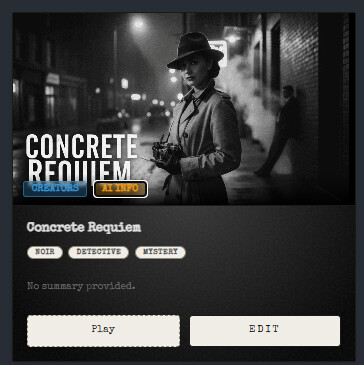
To avoid being called a hypocrite, I did include AI disclaimers in ChronicleHub so I could explain my reasons for using Film Noir style AI generated photographs. As it turns out, the 1950s aren’t a terribly diverse time period. I hope I can at least contribute a little social good through this application:

Programmers though? I’ve seen plenty of people using it, including Linus Torvalds (the Linux and Git guy) because it’s just so terribly efficient.


But, at least everyone with a programming background also understands that, if you don’t actually try to understand your code and the architecture behind it, you are introducing so many vulnerabilities and future headaches.

I have no idea how people are able to fully vibe code though. There’s some absolute nonsense coming out of those models at times, and I usually have to go over the output to see if it hasn’t introduced redundant programming left and right. It’s also decent for actually understanding terribly obscure debug logs. What it can’t do, though, is write proper documentation. I have tried, and failed, and had to pretty much program and write all the docs pages by hand. And after so much progress those are outdated again. So, I’m going to leave updating them until I’m sure that the system is stable.

This is also why I needed to clean up my repo before I made it open source, because there were still completely useless LLM comments strewn about. Half this post feels like me trying to justify using LLMs to help write code, but I reckon it’s better to be open and honest about it.

But yes, it’s a really fun hobby project, and it sort of already has been for several years if you count the stuff I tried for Unity. This hobby project just got way out of hand, and I hope it’s to the benefit of the community. Because what I noticed about myself at least: I’m better at setting up systems, tools and narrative mechanics than I am at sitting down daily and writing to prove those system. That’s why my one published game mostly features my visual art and music, and less of the written stuff.

3 Likes

One of my concerns with AI coding, is updates and maintenance. When you need to update a dependent lib and there are breaking changes that need to be re-coded, is the AI clever enough to do this? Or are you dumped into fixing the problem yourself? I don’t envy the latter.

I’ve noticed the world is now in, what i call, “change or die”. Basically apps of all kinds are being forced to update on a frequent basis. For example, if you put apps on Google Play, you’ll be receiving demands to support new versions of Android otherwise they’ll throw your app off. With very little notice too (like 1-2 months).

I don’t like being forced to update things when i’m not ready, or working toward a release. And if i were using AI, I’d be even more worried it would leave me in the lurch.

3 Likes

It’s an absolute slog, but usually those are security updates, and I have been able to keep up with my mobile app. Still, it’s a chore. What’s worse is players demanding you update your app. I’ve had 1 star reviews from people who thought I didn’t update the game frequently enough. Really killed my motivation there.

I really hope anyone who uses an LLM to code understands the output of it. When a bug gets reported about ChronicleHub (and at this stage, there’s still a lot of them), I can infer pretty quickly which component/file the bug is in, because I have been on top of this. But if you fully commit to vibe coding… I don’t envy that either.

2 Likes