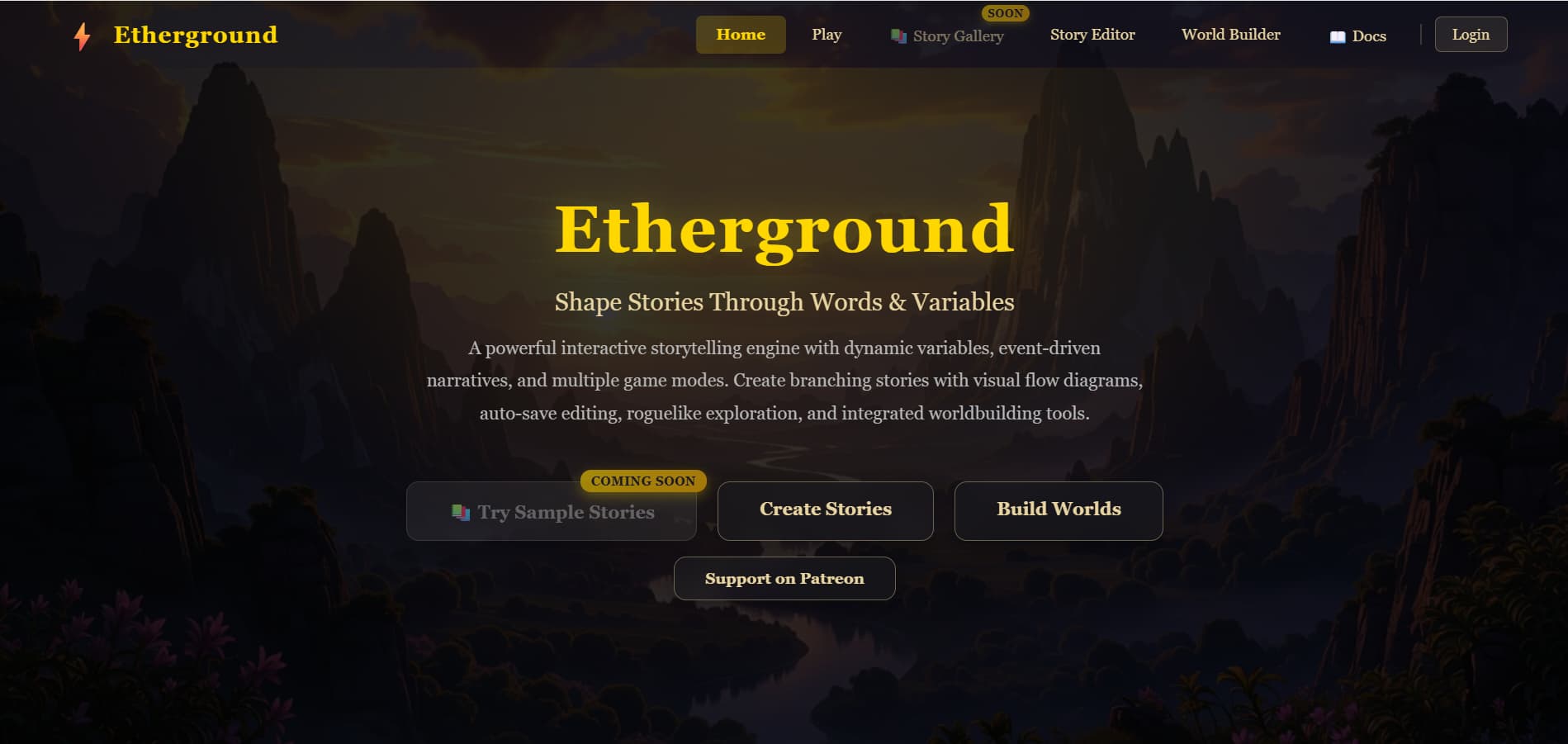
This post is to publicly announce the beta release of Etherground, an IF game engine/authoring tool. I hope to do this write up and round all the important details of what this tool is and why it is different from all the rest. At the end of the post there will be a roadmap for the upcoming months of development as well as social media links. But before i continue, my goal with this project is to get to know the IF community better and be as helpful as i can as a game developer.
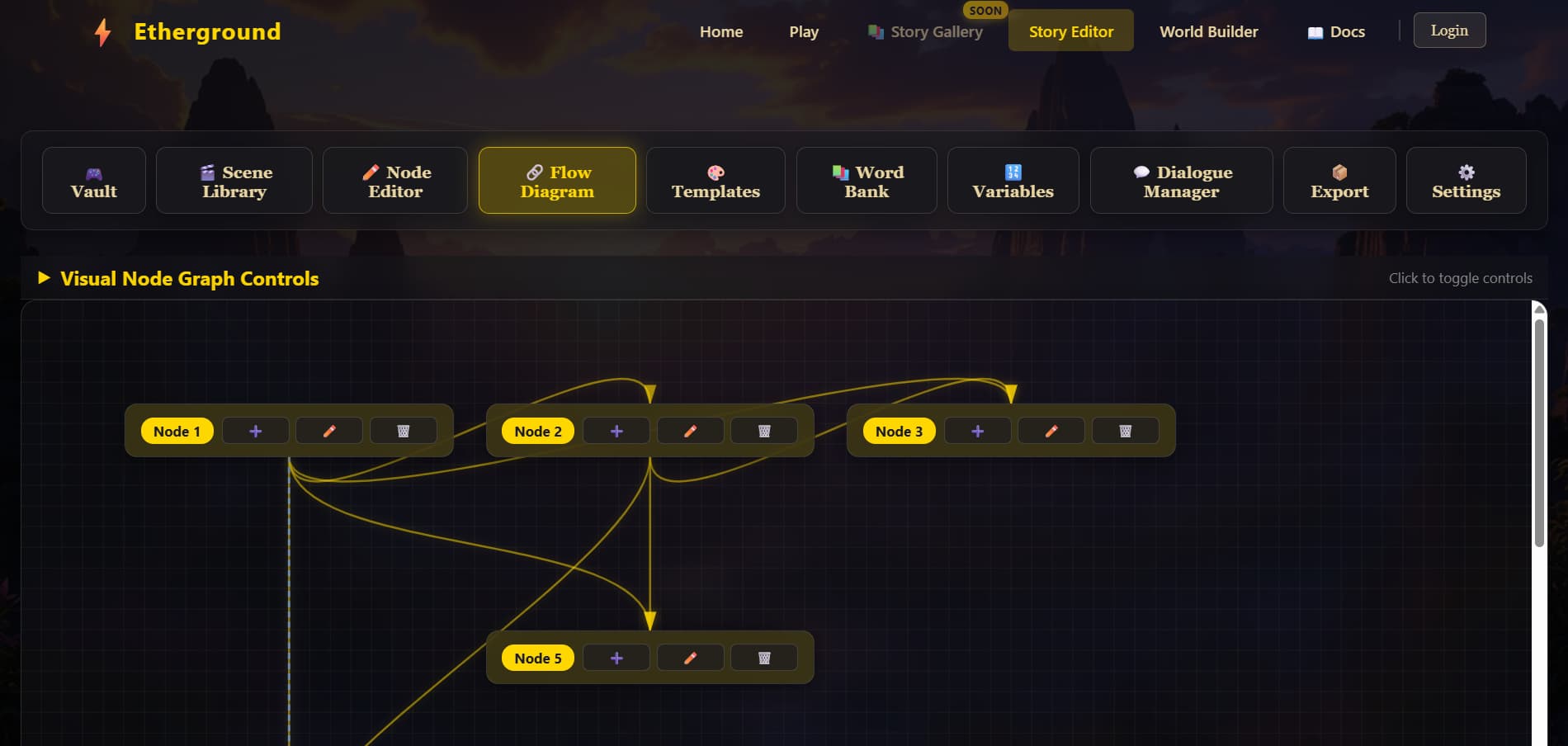
Etherground is an IF authoring tool designed as a game engine tailored for storydriven and narrative heavy games. In the long run, the engine will support a few genres from visual novel to traditional old school roguelikes but for now works as a no-code node-based editor with variables and dynamic events.
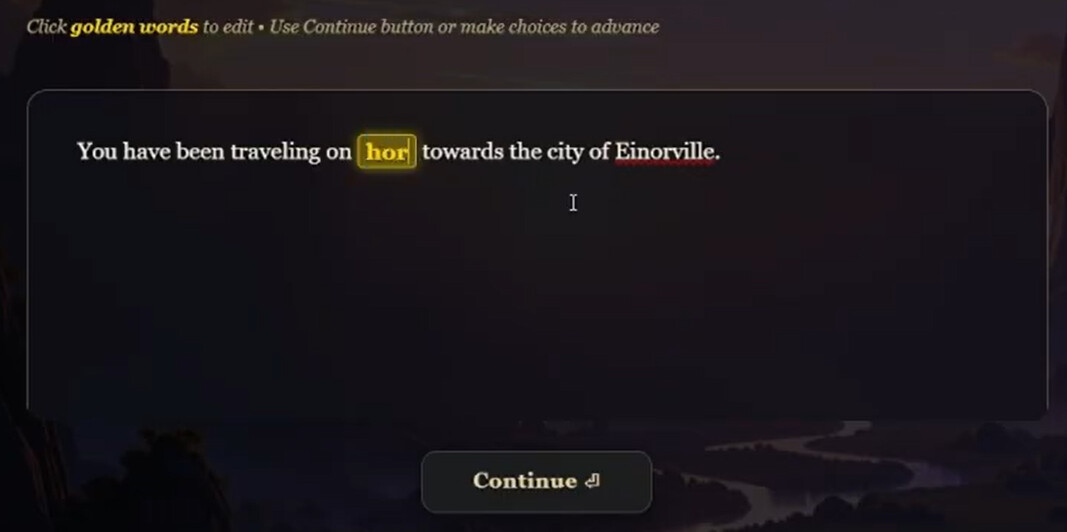
The whole idea was born out of a IF mechanic idea of word swapping, the writer chooses specific words and supplies variants, based on these variants branches can be made, offering a unique alternative to the traditional IF mediums. The engine also has context tag, variables, and events which all combine in different ways.
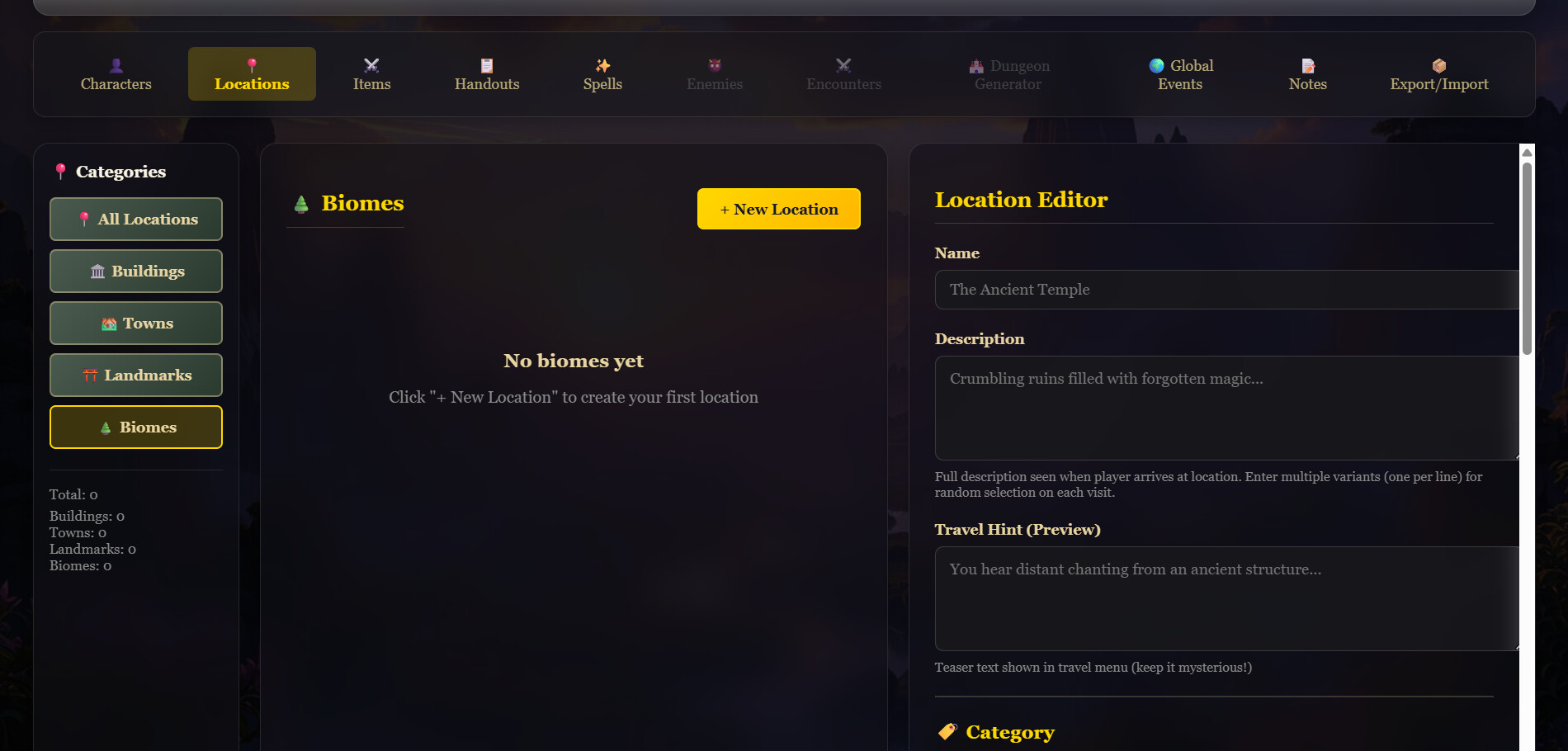
Another inspiration for its design has been Tabletop and traditional RPGs, for that reason the engine has a world building tool that can be used to facilitate the writing process. Locations are no longer a mess to design, dynamic inventory, characters, handouts, etc. And if you find the node editor too complex or daunting you can try the note taking tool for a more streamlined experience.
I am at a stage that feedback is a must, i cannot keep adding features before testing the tool further. I would like to see what stories this awesome community develop and even hop on a screen share call to discuss the tool and how it can help us all create better content.
Current phase is Beta, there will be errors and bugs but i’m iterating fast and usually patch everything in a day.
Everyone who actively helps test the engine and provides feedback will be considered a beta tester, get credited on the website, and get lifetime commercial license for their work.
ROADMAP
as soon as i publish this post i will work on iterating the export feature and add upload capability within the web site as to be able to share stories. you can currently export the json data structure of the story and even a lightweight html file that allows you to upload yourself. i recommend exporting often as the code changes might break the saved/local storage data but can most times be migrated to newer states of the build.
media support such as pictures and audio will likely come late december.
traditional roguelike mode will be revisited soon but it’s not on the current build.
styling, theme, and layout editing is top priority alongside the exports.
additional video tutorials will drop with every major feature
THANK YOU for reading and engaging with this post. i really hope this resonates.
Shouldn’t this be tagged AI, given that vercel seems to be an LLM platform? I guess using LLM in development—but not for actual content production—is different from the more recent proposed platforms mentioning AI…
If the Etherground platform itself doesn’t incorporate LLMs, there’s no need for the tag, don’t worry about that! We use that tag to mark discussion of AI-based platforms that do the actual design and/or writing for you.
@essencescape I tried the basic quickstart tutorial and the result was not as described.
I created a character, created a location, created a node, added the character’s greeting to the node, saved to storage, played it, and the screen didn’t show the character’s greeting.
The help also says “Interactive words are highlighted” but there are no hilighted words.
It’s basically a quarantine tag. Arguments about using LLMs to create IF were very prevalent here for a while, so now the tag lets people mute that if they don’t want to see it.
it’s a little bit late here and i am heading to bed, the only step missing is to click “add to library” in the node editor before saving to storage and playing it. i will revise the docs tomorrow. sorry for the inconvenience. the video tutorials show all the procedures though.
Creating a no-code online platform for IF creation seems to be a popular project right now. Here’s several announced on this forum just in the last few months:
You can look through these threads for a lot of interesting discussion about what people are looking for in a new IF platform. Some general questions that come up a lot are:
How does this compare to existing IF authoring tools (Twine, Inform, Ink, ChoiceScript, etc.)? What are its strengths and weaknesses compared to them?
Will editing be done strictly through the GUI, or will there be a way to write code directly?
What is your plan for game preservation long-term? I see you have export/upload functionality, which is great - how playable are the exported games out of the box? (For reference, Twine builds a fully playable HTML file of your game which is the gold standard.)
I don’t have time to experiment with this at the moment but there’s a lot of discussion in the threads I linked above that you might find useful, including a great post by Dan Fabulich with his advice on starting a new platform. Dan co-founded Choice of Games so he very much knows what he’s talking about!
Yes, i did take a look at some of those before posting. That’s why i decided to do the video playlist on how it works. Thanks for the resources. My original post already answers a few of these. I designed the note taking tool to be the closest to writing code directly but i am not too interested on designing a custom syntax for the engine. I can add it if its a requested feature. Etherground also has html export that works out of the box but still does not have styling/theme functionalities yet.
i do feel i am at a point where the tool needs testing and am also networking with writers to do a complete game in it just like Dan suggested. i’m taking it one step at a time and in it for the long run!
Yeah before jumping fully on the AI bandwagon, Vercel was known primarily for Next.js, a back-end Javascript framework / wrapper for React.js, that occupies a similar space to Node.js or PHP, intended for server-side rendering of Javascript/HTML content. I think mainly what they are is a hosting platform.
Can someone explain the “word-swapping” mechanic which seems to be the USP of this platform? I can’t easily watch the video (go figure I’m posting this on a forum for text games) but from the author’s description I didn’t understand how this mechanic is meant to work.
Writer chooses specific words of the story text and marks them as swappable with the gui, then provides variants. That word is stylized different in the story text and is clickable. The player then can edit the word based on context so “traveling on foot” can become “traveling on horse”. And each alternative can have it’s own branch.
They’re just cycling links with a different UI. A word in the text can change between a fixed set of options, but instead of clicking to cycle through the options, you have to magically know what they are and type them in.
Clicking merely focuses them so you can type. So from the video… this golden word used to be “foot,” he clicked it and now he’s typing in “horse” instead. And then when you click the “Continue” button at the bottom, it will continue to different places depending on what you’ve set the golden word(s) to.