The quest to make a new top 10 favorite games list

I am very fond of the games in my current IFDB top 10 list:
https://ifdb.org/viewlist?id=g8slrg6gzj4amig

However, it’s been a while since I played some of them, and none are published after 2020. I wanted to go through all of my played games and make a new top 10 list. (There is a very good chance the list will stay exactly the way it is).

I know this is kind of navel gazing, but I thought it’d be fun to go through the process publicly. I’ve gone through a list of all 3755 games I’ve reviewed and marked ones that I thought ‘this could be a ‘favorite game’’. This ended up being 350 or so games:

List of games and authors

sojourn, 30x30
Eidolon, A.D. Jansen
You Are Standing, Aaron A. Reed
> by @, Aaron A. Reed
Open Sorcery, Abigail Corfman
The Absence of Miriam Lane, Abigail Corfman
Lock & Key, Adam Cadre
Trigaea, Adam Ipsen (RynGM)
Hard Puzzle 4: The Ballad of Bob and Cheryl, Ade McT
Worldsmith, Ade McT
Map, Ade McT
Hard Puzzle 3 : Origins, Ade McT
Dr Horror’s House of Terror, Ade McT
Hero or Villain: Genesis, Adrao
4x4 Archipelago, Agnieszka Trzaska
Chuk and the Arena, Agnieszka Trzaska
4x4 Galaxy, Agnieszka Trzaska
Bolivia By Night, Aidan Doyle
Ascension of Limbs, AKheon
Feu de Joie (Session 1): cathedral, Alan DeNiro
Deadline Enchanter, Alan DeNiro
A New Life, Alexandre Owen Muñiz
Flint, Alexis Kennedy, Failbetter Games
Delphina’s House, Alice Grove
Molly and the Butter Thieves, Alice Grove (as Cosmic Hamster)
The Superlatives: Aetherfall, Alice Ripley
No More, alyshkalia
Of Their Shadows Deep, Amanda Walker
Fairest, Amanda Walker
The Spectators, Amanda Walker
Stronghold: A Hero’s Fate, Amy Griswold and Jo Graham
Dual Transform, Andrew Plotkin
Praser 5, Andrew Plotkin
So Far, Andrew Plotkin
Spider and Web, Andrew Plotkin
Shade, Andrew Plotkin
Hadean Lands, Andrew Plotkin
Lists and Lists, Andrew Plotkin
Delightful Wallpaper, Andrew Plotkin (‘Edgar O. Weyrd’)
Threediopolis, Andrew Schultz
Fivebyfivia Delenda Est, Andrew Schultz
Inside Woman, Andy Phillips
Earth and Sky 2: Another Earth, Another Sky, Paul O’Brian
Cricket, Anyone?, Chandler Groover, Failbetter Games
The Usher Foundation VIII: The Spiral, Apollosboy
Gotomomi, Arno von Borries
Grandma Bethlinda’s Remarkable Egg, Arthur DiBianca
The Wand, Arthur DiBianca
Sage Sanctum Scramble, Arthur DiBianca
Grandma Bethlinda’s Variety Box, Arthur DiBianca
Black Knife Dungeon, Arthur DiBianca
Skies Above, Arthur DiBianca
Erstwhile, Aster (formerly Maddie) Fialla and Marijke Perry
You are Standing at a Crossroads, Astrid Dalmady
Cactus Blue Motel, Astrid Dalmady
Tangaroa Deep, Astrid Dalmady
Beware The Faerie Food You Eat, Astrid Dalmady
Night Guard / Morning Star, Astrid Dalmady
Murderworld, Austin Auclair
A Paradox Between Worlds, Autumn Chen
ConfigurationUploader, Autumn Chen
my heart, bared., Sophia de Augustine
Congee, Becci
The Den, Ben Jackson
LUNIUM, Ben Jackson
Detritus, Ben Jackson
InGirum_French, BenyDanette
All Visitors Welcome, Bitter Karella
Guttersnipe: St. Hesper’s Asylum for the Criminally Mischievous, Bitter Karella
Night House, Bitter Karella
The Grown-Up Detective Agency, Brendan Patrick Hennessy
You Will Select a Decision, Brendan Patrick Hennessy
Birdland, Brendan Patrick Hennessy
Theatre, Brendon Wyber
Wishbringer, Brian Moriarty
Trinity, Brian Moriarty
Cape, Bruno Dias
Foo Foo, Buster Hudson
Gun Mute, C.E.J. Pacian
Rogue of the Multiverse, C.E.J. Pacian
Forsaken Denizen, C.E.J. Pacian
Superluminal Vagrant Twin, C.E.J. Pacian
Weird City Interloper, C.E.J. Pacian
Walker & Silhouette, C.E.J. Pacian
Dead Like Ants, C.E.J. Pacian
Killing Machine Loves Slime Prince, C.E.J. Pacian
One Eye Open, Caelyn Sandel (as Colin Sandel) and Carolyn VanEseltine
Six Gray Rats Crawl Up The Pillow, Caleb Wilson (as Boswell Cain)
Lime Ergot, Caleb Wilson (as Rust Blight)
The Northnorth Passage, Caleb Wilson (as Snowball Ice)
The Act of Misdirection, Callico Harrison
The Gostak, Carl Muckenhoupt
You, Carter X Gwertzman
HOJOTOHO!, Cash DeCuir, Failbetter Games
God is in the Radio, catsket
Three-Card Trick, Chandler Groover
Toby’s Nose, Chandler Groover
Skull-Scraper, chandler groover
The Bat, Chandler Groover
Midnight. Swordfight., Chandler Groover
The Queen’s Menagerie, Chandler Groover
Eat Me, Chandler Groover
Codename: Sugarplum, Chandler Groover and Failbetter Games
The Bloody Wallpaper, Chandler Groover and Failbetter Games
Sundown, Charm Cochran
Gestures Towards Divinity, Charm Cochran
Red Door Yellow Door, Charm Cochran
Studio, Charm Cochran
La Faille, Chester
The Weight of a Soul, Chin Kee Yong
The Prairie House, Chris Hay (a.k.a. Eldritch Renaissance Cake)
Blue Chairs, Chris Klimas
the sea god, christine mi
NOLA Is Burning, Claudia Starling
GUT THE MOVIE, Coral Nulla
creak, creak, chandler groover
SCP-3939 [NUMBER RESERVED; AWAITING RESEARCHER], Croquembouche
Marbles, D, and the Sinister Spotlight, Drew Cook
A Normal Morning, Damon L. Wakes
The Miller’s Garden, Damon L. Wakes
Choice of the Dragon, Dan Fabulich and Adam Strong-Morse
For a Change, Dan Schmidt
The Antediluvian Weapon, Daniel M. Stelzer
The Wise-Woman’s Dog, Daniel M. Stelzer
Familiar Problems, Daniel Stelzer, Ada Stelzer, Sarah Stelzer
Tuuli, Daurmith and Ruber Eaglenest
Enchanter, Marc Blank, Dave Lebling
Spellbreaker, Dave Lebling
Zork II, Dave Lebling, Marc Blank
The Lurking Horror, Dave Lebling
Suveh Nux, David Fisher
Le comte et la communiste, deBeauharnais
Pharos Fidelis, DemonApologist
Remedial Witchcraft, dgtziea
meminerimus, diluculum
The Lottery Ticket, Dorian Passer
Afflicted, Doug Egan
Repeat the Ending, Drew Cook
Portrait with Wolf, Drew Cook
Summers with the Sea King, Dry Cappuccino Games
Stay?, E. Jade Lomax
LIDO, Elizabeth Smyth
To The Wolves, Els White
Lady Thalia and the Masterpiece of Moldavia, Emery Joyce and N. Cormier
Lady Thalia and the Seraskier Sapphires, Emery Joyce and N. Cormier
Lady Thalia and the Case of Clephan, Emery Joyce and N. Cormier
Secret Agent Cinder, Emily Ryan
First Draft of the Revolution, Emily Short, Liza Daly and inkle
City of Secrets, Emily Short
The Mary Jane of Tomorrow, Emily Short
Glass, Emily Short
Metamorphoses, Emily Short
Savoir-Faire, Emily Short
Galatea, Emily Short
Counterfeit Monkey, Emily Short
Elite Status: Platinum Concierge, Emily Short and Harris Powell-Smith
Square Circle, Eric Eve
Nightfall, Eric Eve
Blighted Isle, Eric Eve
The Tiniest Room, Erik108
Fallen London, Failbetter Games
Sunless Skies, Failbetter Games
The Missing Ring, Felicity Drake
Heretic’s Hope, G. C. Baccaris
DEVOTIONALIA, G.C. “Grim” Baccaris (as G. Grimoire)
The Mystery of Winchester High, Garry Francis
Hana Feels, Gavin Inglis
The Shallows, Gavin Inglis, Failbetter Games
What Heart Heard Of, Ghost Guessed, Amanda Walker
Jigsaw, Graham Nelson
Curses, Graham Nelson
All Things Devours, half sick of shadows
Fair, Hanon Ondricek
Cannery Vale, Hanon Ondricek (as Keanhid Connor)
Thanksgiving, Harris Powell-Smith
Crème de la Crème, Harris Powell-Smith
The Chinese Room, Harry Josephine Giles and Joey Jones
Love, Hate and the Mysterious Ocean Tower, C.E.J. Pacian
A Study in Steampunk: Choice by Gaslight, Heather Albano
All Alone, Ian Finley
Babel, Ian Finley
Kaged, Ian Finley
The Shadow in the Cathedral, Ian Finley and Jon Ingold
Hunter, in Darkness, Andrew Plotkin
Excalibur, J. J. Guest, G. C. Baccaris, and Duncan Bowsman
Escape from the Crazy Place, J. J. Guest, Loz Etheridge and friends
To Hell in a Hamper, J. J. Guest
Alias ‘The Magpie’, J. J. Guest
To Sea in a Sieve, J. J. Guest
Being Andrew Plotkin, J. Robinson Wheeler
ASCII and the Argonauts, J. Robinson Wheeler
Each-uisge, Jacic
Re: Dragon, Jack Welch
Faute De Servo, Jack Welch
The Fire Tower, Jacqueline A. Lott
Two Hours to Midnight, Jacqueline Ashwell
The Warbler’s Nest, Jason McIntosh
Choice of the Vampire, Jason Stevan Hill
Ballyhoo, Jeff O’Neill
Werewolves: Haven Rising, Jeffrey Dean
Vampire: The Masquerade — Parliament of Knives, Jeffrey Dean
Koustrea’s Contentment, Jeremy Pflasterer
Lydia’s Heart, Jim Aikin
Not Just an Ordinary Ballerina, Jim Aikin
Under the Cognomen of Edgar Allan Poe, Jim Nelson
According to Cain, Jim Nelson
The Passenger, Jime Rolón
The King of Shreds and Patches, Jimmy Maher
Choice of Rebels: Uprising, Joel Havenstone
Sub Rosa, Joey Jones, Melvin Rangasamy
Andromeda Dreaming, Joey Jones
John’s Fire Witch, John Baker
Alabaster, John Cater, Rob Dubbin, Eric Eve, Elizabeth Heller, Jayzee, Kazuki Mishima, Sarah Morayati, Mark Musante, Emily Short, Adam Thornton, Ziv Wities
The Mulldoon Legacy, Jon Ingold
Champion of the Gods, Jonathan Valuckas
Tavern Crawler, Josh Labelle
Spiral, Justin Morgan
Messages From the Universe Graveyard, KADW
Contaminated Space, Kanderwund
180 Files: The Aegis Project, Karelia Hall
Inevitable, Kathleen M. Fischer as Timothy Lawrence Heinrich
Polish the Glass, Keltie Wright
The Golden, Kerry Taylor
Choice of Magics, Kevin Gold
Choice of Robots, Kevin Gold
Chancellor, Kevin Venzke
Universal Hologram, Kit Riemer
Verses, Kit Riemer
consciousness hologram, Kit Riemer
La harpe du Dieu-Rouge, KorWeN
Tally Ho, Kreg Segall
Tower Behind the Moon, Kyle Marquis
Werewolf: The Apocalypse—The Book of Hungry Names, Kyle Marquis
Vampire: The Masquerade — Night Road, Kyle Marquis
dripping with the waters of SHEOL, Lady Isak Grozny
The Gnomish Treasury, Lamp Post Projects
Etiolated Light, Lassiter W.
baby tree, Lester Galin
The Impossible Bottle, Linus Åkesson
10pm, litrouke
Harmonia, Liza Daly
my father’s long, long legs, michael lutz
Writers Are Not Strangers, Lynda Clark
Coloratura, Lynnea Glasser
Creatures Such As We, Lynnea Glasser
The Martian Job, M. Darusha Wehm
Return to Ditch Day, M.J. Roberts
Fallen Hero: Retribution, Malin Rydén
Fallen Hero: Rebirth, Malin Rydén
DOL-OS, manonamora
machina caerulea, manonamora
Andromeda Apocalypse — Extended Edition, Marco Innocenti
Constraints, Martin Bays
Aotearoa, Matt Wigdahl
Deathless: The City’s Thirst, Max Gladstone
Anchorhead, Michael Gentry
A Dark Room, Michael Townsend
The Eleusinian Miseries, Mike Russo
Distress, Mike Snyder
Till Death Makes a Monk-Fish Out of Me, Mike Sousa and Jon Ingold
A Beauty Cold and Austere, Mike Spivey
Junior Arithmancer, Mike Spivey
Wayhaven Chronicles: Book One, Mishka Jenkins
whoami [es], n-n
the lamp of your body, Naarel
Endless, Nameless, Adam Cadre
Lore Distance Relationship, Naomi “Bez” Norbez
A Single Ouroboros Scale, Naomi Norbez
My Pseudo-Dementia Exhibition, Naomi Norbez (call me Bez, he/they)
Rent-a-Vice, Natalia Theodoridou
Black Sheep, Nic Barkdull and Matt Borgard
Ad Verbum, Nick Montfort
The Primrose Path, Nolan Bonvouloir
Fischstäbchen, Olaf Nowacki
To Burn in Memory, Orihaus
Attack of the Yeti Robot Zombies, Øyvind Thorsby
Cygnet Committee, P.B. Parjeter
Limerick Heist, Pace Smith
SLAMMED!, Paolo Chikiamco
The Lookout, Paul Michael Winters
Earth And Sky 3: Luminous Horizon, Paul O’Brian
To Spring Open, Peter Berman and Yoon Ha Lee (as Two-Bit Chip)
Mask of the Plague Doctor, Peter Parrish
Strange Geometries, Phillip Chambers
howling dogs, Porpentine
their angelical understanding, Porpentine
Building, Poster
Spring Gothic, Prof. Lily and Kastel and Lacunova and Nitori and Noelle Amelie Aman
Grimnoir, ProP
My Brother; The Parasite, qrowscant
Scavenger, Quintin Stone
Psy High, Rebecca Slitt
Restore, Reflect, Retry, Natalia Theodoridou
Scary House Amulet!, Ricardo Dague
Beyond, Roberto Grassi, Paolo Lucchesi, and Alessandro Peretti
The Fairy Woods, rosencrantz
The Little Match Girl 5: The Hunter’s Vow, Ryan Veeder
The Little Match Girl Approaches the Golden Firmament, Ryan Veeder
Reference and Representation: An Approach to First-Order Semantics, Ryan Veeder
Several Other Tales from Castle Balderstone, Ryan Veeder
Winter Storm Draco, Ryan Veeder
Captain Verdeterre’s Plunder, Ryan Veeder
Last-Minute Magic, Ryan Veeder
The Lurking Horror II: The Lurkening, Ryan Veeder
Even Some More Tales from Castle Balderstone, Ryan Veeder
Ryan Veeder’s Authentic Fly Fishing, Ryan Veeder
A Rope of Chalk, Ryan Veeder
The Ascent of the Gothic Tower, Ryan Veeder
Taco Fiction, Ryan Veeder
Cragne Manor, Ryan Veeder, Jenni Polodna et al.
Visit Skuga Lake - Masterpiece Edition, Ryan Veeder
The Little Match Girl 4: Crown of Pearls, Ryan Veeder
Crocodracula: The Beginning, Ryan Veeder and Harrison Gerard
:heart:Magical Makeover​:heart:, S. Woodson
Aisle, Sam Barlow
Meteoric, Samwise Harry Young
Madam Spider’s Web, Sara Dee
You Can’t Save Her, Sarah Mak
Closure, Sarah Willson
Pirate Adventure, Scott Adams and Alexis Adams
Heroes, Sean Barrett
I.A.G. Alpha, Serhii Mozhaiskyi
Slouching Towards Bedlam, Star C. Foster and Daniel Ravipinto
Zozzled, Steph Cherrywell
Chlorophyll, Steph Cherrywell
Brain Guzzlers from Beyond!, Steph Cherrywell
Will Not Let Me Go, Stephen Granade
Losing Your Grip, Stephen Granade
Child’s Play, Stephen Granade
Sorcery!, Steve Jackson and inkle
Sorcery! 3, Steve Jackson and inkle
Sorcery! 4, Steve Jackson and inkle
Stationfall, Steve Meretzky
RPG-ish, Stuart Lilford
Worlds Apart, Suzanne Britton
A Long Way to the Nearest Star, SV Linwood
Cut the Sky, SV Linwood
Dr Ludwig and the Devil, SV Linwood
night confessional, sweetfish
strings: a (bug)folk song, Tabitha and baezil
warden: a (bug)folk horror, Tabitha and baezil
Doki Doki Literature Club, Team Salvato
Down, the Serpent and the Sun, Chandler Groover
Sordwin: The Evertree Saga, Thom Baylay
Où est passé Mathieu Moreau ?, Thomas Collet (Fantôme Apparent)
Following Me, Tia Orisney
JELLY, Tom Lento, Chandler Groover
if not us: an interactive fiction anthology, ub4q
Terminal Interface for Models RCM301-303, Victor Gijsbers
Kerkerkruip, Victor Gijsbers
Out, Viktor Sobol
Leadlight, Wade Clarke
Six, Wade Clarke
Colossal Cave Adventure, William Crowther and Donald Woods
Six Silver Bullets, William Dooling
Type Help, William Rous
rat chaos, Winter Lake
Dungeon Detective 2: Devils and Details, Wonaglot
[IFComp 22 - Beta] Cannelé & Nomnom - Defective Agency, Younès R. and Yazaleea
Bell Park, Youth Detective, Brendan Patrick Hennessy

I definitely noticed some patterns, with 16 games by Ryan Veeder being the most noticeable. Of foreign language games, the most common are French (I think 5 or so are French) with a couple of Spanish, one german (I think) and few English games by Italian authors.

Many of the games are exceptionally high quality and long. Some of the games are short and bad (noticeably, baby tree). At least one game, when I added it, I thought, “This is a stupid game. This is what uninteractive fiction should have been. It’s short and bland and dumb and that’s why I’m adding it.” Other games changed my life.

My goal with this is to go through and out of these narrow it down to ‘the favorite of the favorite’ (hopefully 50 or less). Once I get it small enough (maybe 20-30), I’d like to play through all the remaining games to see which ones hold up.

Some warnings: a couple of the games contain content that could disturb others for various reasons. Some of the games listed have been called out as containing injurious depictions of mental illness. At least two games have authors who have been exceptionally rude/hateful to other people in their community. I skipped several games for having a lot of profanity (since this is my personal favorites list), and two specifically for the n-word, but one game (dripping with the waters of SHEOL) has quite a bit of it, including some homophobic slurs (it was written by trans writer Isak Grozny and is a t4t story). Several games are likely only included because I know their authors or backstory and it gives me good memories, or because I played it at a key point in my life. Some games are likely included by accident. Several were definitely left off by accident; after going through, I realized I had missed World’s Apart and Colossal Cave Adventure.

Several people make incredible games, none of which I included, just because my personal tastes are very specific (I like melancholy but hopeful games, detective games, parser games, etc.)

I have no real time frame for this; I might update it later tonight or in the next few days, and likely won’t finish for a few more weeks.

If anybody ever heard me say I absolutely loved a game and it’s not on this list, feel free to send a reminder!
26 Likes

At least it had an interesting use of colour, which wasn’t much used at the time.

1 Like

Uninteractive Fiction? or the other game? I did like the trombones in Uninteractive Fiction

The other game, if we’re thinking of the same one.

Top 100 (approximately)

[I wasn’t trying to get to 100, I actually hoped to get down to 50 or even 30, but it ended up around here]

Okay, this is where things get hard. I went through the list and compared them against each other. It’s not any more ‘is there anything special about this at all’, but more ‘is this meaningful to me personally’ (btw I’d love to see other people’s ‘top games’ list, even in this thread! Victor Gijsbers runs a competition for them every few years so it can’t hurt to think of them ahead of time).

There are a lot of games I have deep respect for but approach more as an academic exercise. There are other games I think are neat innovations.

So I basically went through and selected all games where I said ‘yeah!’ and nodded my head as I hovered over them. Replay value was important to me; I liked Sobol’s game Out, for instance, but I haven’t revisited it much, while there are some short games on this smaller list that I have revisited.

Three games I removed because I just couldn’t see them ending up on a favorite games list (The Tiniest Room, for being bland while technically awesome, and two Fallen London exceptional stories, HOJOTOHO! and The Bloody Wallpaper, as I am unable to replay them).

I did this on a spreadsheet with an X next to ones that especially sparked joy. I put more x’s by ones that sparked more joy and sorted, so the first 20 or so are more likely to make it to later rounds (but not definitively the top 20).

There were 50 parser and 45 choice until I deleted those three, leaving 42 choice. I though I had a strong parser bias but I suppose not. I also went back and added Hadean Lands and Open Sorcery to the list, as I had Hadean Lands in my top 10 before so I feel like it deserves a seed and Open Sorcery I just can’t remember well enough, leaving 51 parser and 43 choice.

Main List

Creatures Such As We, Lynnea Glasser
Curses, Graham Nelson
Vampire: The Masquerade — Night Road, Kyle Marquis
Worlds Apart, Suzanne Britton
Excalibur, J. J. Guest, G. C. Baccaris, and Duncan Bowsman
Escape from the Crazy Place, J. J. Guest, Loz Etheridge and friends
To Hell in a Hamper, J. J. Guest
Cannery Vale, Hanon Ondricek (as Keanhid Connor)
Writers Are Not Strangers, Lynda Clark
Theatre, Brendon Wyber
Eat Me, Chandler Groover
Ballyhoo, Jeff O’Neill
Tower Behind the Moon, Kyle Marquis
Werewolf: The Apocalypse—The Book of Hungry Names, Kyle Marquis
my father’s long, long legs, michael lutz
Junior Arithmancer, Mike Spivey
The Little Match Girl Approaches the Golden Firmament, Ryan Veeder
A Rope of Chalk, Ryan Veeder
The Warbler’s Nest, Jason McIntosh
Endless, Nameless, Adam Cadre
Map, Ade McT
Deadline Enchanter, Alan DeNiro
Dual Transform, Andrew Plotkin
Hadean Lands, Andrew Plotkin
Shade, Andrew Plotkin
You are Standing at a Crossroads, Astrid Dalmady
The Grown-Up Detective Agency, Brendan Patrick Hennessy
You Will Select a Decision, Brendan Patrick Hennessy
Birdland, Brendan Patrick Hennessy
Wishbringer, Brian Moriarty
Open Sorcery, Abigail Corfman
Rogue of the Multiverse, C.E.J. Pacian
Dead Like Ants, C.E.J. Pacian
The Northnorth Passage, Caleb Wilson (as Snowball Ice)
The Bat, Chandler Groover
creak, creak, chandler groover
Spellbreaker, Dave Lebling
Zork II, Dave Lebling, Marc Blank
Stay?, E. Jade Lomax
Lady Thalia and the Case of Clephan, Emery Joyce and N. Cormier
The Mary Jane of Tomorrow, Emily Short
Nightfall, Eric Eve
Fallen London, Failbetter Games
Sunless Skies, Failbetter Games
The Missing Ring, Felicity Drake
Heretic’s Hope, G. C. Baccaris
Hana Feels, Gavin Inglis
What Heart Heard Of, Ghost Guessed, Amanda Walker
Fair, Hanon Ondricek
Crème de la Crème, Harris Powell-Smith
Babel, Ian Finley
Kaged, Ian Finley
ASCII and the Argonauts, J. Robinson Wheeler
The Fire Tower, Jacqueline A. Lott
Not Just an Ordinary Ballerina, Jim Aikin
According to Cain, Jim Nelson
Messages From the Universe Graveyard, KADW
Choice of Magics, Kevin Gold
Choice of Robots, Kevin Gold
baby tree, Lester Galin
The Impossible Bottle, Linus Åkesson
Harmonia, Liza Daly
Return to Ditch Day, M.J. Roberts
Fallen Hero: Retribution, Malin Rydén
A Dark Room, Michael Townsend
A Beauty Cold and Austere, Mike Spivey
My Pseudo-Dementia Exhibition, Naomi Norbez (call me Bez, he/they)
Ad Verbum, Nick Montfort
Attack of the Yeti Robot Zombies, Øyvind Thorsby
SLAMMED!, Paolo Chikiamco
To Spring Open, Peter Berman and Yoon Ha Lee (as Two-Bit Chip)
Mask of the Plague Doctor, Peter Parrish
Even Some More Tales from Castle Balderstone, Ryan Veeder
Ryan Veeder’s Authentic Fly Fishing, Ryan Veeder
Cragne Manor, Ryan Veeder, Jenni Polodna et al.
Crocodracula: The Beginning, Ryan Veeder and Harrison Gerard
Will Not Let Me Go, Stephen Granade
Sorcery! 4, Steve Jackson and inkle
Six, Wade Clarke
Colossal Cave Adventure, William Crowther and Donald Woods

The 14 following games are ones that I remember having good experiences with but can’t recall why, or remember not enjoying as much but looking back feel I ought to have loved them. I plan on replaying them before I whittle things down further, so it might be a while before I move on to the next stage.

Replay List

Cactus Blue Motel, Astrid Dalmady
One Eye Open, Caelyn Sandel (as Colin Sandel) and Carolyn VanEseltine
The Lurking Horror, Dave Lebling
City of Secrets, Emily Short
Elite Status: Platinum Concierge, Emily Short and Harris Powell-Smith
Thanksgiving, Harris Powell-Smith
A Study in Steampunk: Choice by Gaslight, Heather Albano
Andromeda Dreaming, Joey Jones
180 Files: The Aegis Project, Karelia Hall
Polish the Glass, Keltie Wright
Deathless: The City’s Thirst, Max Gladstone
A Single Ouroboros Scale, Naomi Norbez
Earth And Sky 3: Luminous Horizon, Paul O’Brian
Losing Your Grip, Stephen Granade

Notably, these games are all substantial/long, except for To Spring Open, baby tree, You are Standing at a Crossroads (which is only still in as my first Twine game I enjoyed), The Northnorth Passage, and creak creak, all of which are pretty short. There’s definitely a length bias here.

Edit: I think for the next round, I’ll include a little bit more like publication year and some indication of what category of ‘favorite’ it is (for personal historic reasons, just fun to play in, etc.) Once it gets down to 25 or less I want to write up paragraph or more about why each game is a favorite.

10 Likes

Perhaps 10 are few games. We coud start with 50, then 25, and finally 10, reducing the list progressively in order to have a wide vision.

1 Like

That sounds fun. I’d be interested in your favorite games.

The main takeaway I’ve had from doing this so far is that there are 100 or so if games that I think are just amazing and incredible. I think if people experience the full breadth of possible if games there will always be something beautiful to be found.

4 Likes

I think that on the other hand I Guess there could be about 20-30 people voting, so they “should” vote for 5-10 games each to have a reasonable amount of votes when ending up the poll. Otherwise we could finish with all the games between 1 and 5 votes per game which is not enough clarifing.

1 Like

I’m not sure what you’re trying to workshop rules for here; Victor Gijsbers’s top 50 polls (next due to run next year) are a pretty well-established thing. They allow each person to vote for up to 20 games. Mathbrush isn’t affiliated with them and I believe he’s suggesting making personal lists for fun, with the added benefit that it could help people think of which 20 games to nominate next time Victor’s poll runs.

4 Likes

I’ve been replaying some of my ‘maybe’ list.

Cactus Blue Motel was truly good. It had perhaps a little less variety than I remember but better story. I remember being jealous when it came out because my initial reason for making IF was to try to prove myself and make a name for myself, and this game ended up getting more IFDB ratings than my game Color the Truth which came out the same year. Now that there is some space, I don’t care about that anymore, and I can enjoy the very solid writing by one of my favorite authors. I don’t think it’ll make top 10, but it’s great.

One Eye Open is great. Exceptionally gory, but in a way that it almost loops around to become ungory as it is so extreme. An entire hospital filled with flesh and violence, like a laundry chute filled with teeth or a whole floor filled with shifting flesh. Some difficulty with synonyms but the writing is very solid.

Replaying The Lurking Horror, I feel like half of it is ho-hum plain and the other half is fantastic and thematic. While I think that horror can benefit a lot from mundanity to complement it, I’m just not enthused by the most complex puzzle in the game being microwaving chinese food. Great game, but it’s not going to make any more short lists.

Polish the Glass has such great writing. It’s one of those games where my rating diverges the most from the average rating; I don’t know why it appeals to me, especially since its linear with semi-timed text. I think I just like ‘terror’ type horror where the idea of a monster is worse than the monster itself. Replaying it, I was surprised because I had thought it was more ambiguous than it actually was. Very good, but may not make the next round.

Deathless: The City’s Thirst. I don’t have the account I bought it on 10 years ago, but I replayed some of the demo. It had a lot of good points, like I remember, but just didn’t call out to me as much as it once did.

Earth and Sky 3 was just as well-polished as I remember with fun graphics and engaging story. I had also dimly remembered the storyline coming to a crashing halt with a confusing puzzle, and that happened this time as well. Lots of good here, but just enough frustration for it not to end up in the final count.

Losing Your Grip: I like a lot of Stephen Granade’s games, I think he’s a fantastic author. I had remembered really enjoying this. Back when I first played it, I used walkthroughs for everything, and was impressed by this game’s detail. Without a walkthrough this time (at first), I was surprised at how obtuse many of the puzzles were, as if this game were designed to be played by many people collaborating over time (strengthened by the fact that there are 2 versions of ch. 2 and 4; I think the author mentioned wanting people to be discussing the game with each other and be confused about the discrepancies). I also felt like the puzzles felt a bit arbitrary at times and not as connected to the story as they could be. Still very good though. It’s part of the trilogy of “very big, polished, well-received games that are fundamentally about confronting the death of your parent”, with the other members being Repeat the Ending and Worlds Apart. So, big respect for this one, but not a finalist.

I’m still going through the others. I replayed City of Secrets last night and today. It’s so fascinating, a huge city with complex systems. Playing on my own I found puzzle solutions very different to the ones I’m used to (like cutting the bug out with scissors, dispelling the ivy illusion, opening the moon court in both ways). There are so many alternative solutions and complex things, I even saw a comment where Emily Short said she didn’t know how to solve something and had lost the code for the game. I feel like this game calls out to me, and I don’t know why.

A Single Ouroboros Scale. Replaying I immediately saw why I liked it: some passages of it lambast parts of the IF community that I am very familiar with and part of (especially the curation of past IF works and deciding what is ‘important enough’ to preserve). The ending is also very impactful. At times near the 2021 and on journal entries I felt like there could have been more variation.

I plan on checking out the other ones soon, and then paring down the list and doing some more replays.

7 Likes

Alas. A tragedy!

2 Likes

I went through and replayed two more games on the ‘maybe’ list: Elite Status and Thanksgiving.

I remembered Elite Status much as I remembered Beethoven’s opera Fidelio: a kind of clean purity like a clear ice cube, an ascetic masterpiece but not ‘meaty’ at all.

Replaying it, I thought, 'ah, this is good. I remember being tripped up by the stats before but things are going swimmingly! I’m relying on my strengths and I’m going to ace this interview!"

Reader, I failed the interview so badly I lost my promotion. And that’s when I remembered the struggle many players (including me) have with the game. Most of the strongest-selling choicescript games are less a puzzle or challenge and more of a ‘which power fantasy do you want to select?’ This game has more challenge. While you can replay each chapter, choices have downstream effects. Most of Emily Short’s most effective games have gameplay loops that teach and reinforce behavior. Here, there is little opportunity to learn the mechanics, which are very complex behind the scenes and rather obfuscated. Failing the interview also felt as if it was signalled, not as my character failing, but as me, the player failing.

I gave up on replay, but decided to pick it up again and just play through failing all the while. I think it’s intended to play that way; like a lot of the nebular award winning games which sold poorly, it features crushing defeats and obstacles in the way, which makes it a better human story, but provides inconsistent player signalling. Some CS games, like Samurai of Hyuga, get around this by completely removing player agency, so the extreme suffering you encounter is clearly part of the story and not the player’s fault at all.

In my original Elite Status review, I mentioned 2 endings I had found. This time I had a 3rd completely different one, which was a masterful human story. I don’t know which author wrote it; it thematically fits with the whole game and Emily Short’s interview discussion, but writing-wise it reminded me of the next game I replayed, Thanksgiving by Harris Powell-Smith.

Overall, this game felt like the most ‘human’ story out of pretty much all Choicescript games I played, filled with a lot of authentic moments and dialogue that felt like an actual person I could be meeting in real life. Its a shame that the story is so at odds with the gameplay. If they released a ‘god mode’ that gave you full stats in every category, I think it would actually be rather popular. But, I’m not including it on my finalized list.

Same for Thanksgiving. This was an early Twine game that solved a lot of problems I had with the sytem at the time. Back in the mid 2010s, a lot of Twine games had difficulty signalling between cycling links, progression links, and expansion links, using similar styling for each (if this doesn’t sound familiar, it’s because those games from that era that are still popular are generally the ones that solved this problem). Thanksgiving had a brilliant solution, using 3 colors for the different link kinds.

Going back to it now, I still admire it for its mechanics, but the story didn’t grip me as much as other favorite candidates (or Powell-Smith’s other incredible work).

So, these are two games that I deeply admire for various reasons, but for narrowing down this list I’d like to go beyond admiration and add consistent personal enjoyability as well.

Edited to add third game:
I remember loving Andromeda Dreaming when I played it. It’s a short parser game where you hear weird lingo from people and something to do with windows.

Replaying it, I was surprised to see that it’s essentially 1-room and you spend a lot of the time sleeping while strapped in to a bed.

I loved it. Replaying, I thought, 'While bigger games have more chance to make an impression, a smaller game has a better shot at getting everything exactly right, and this game is doing that. I also like the self-reflection parts that are like ‘creatures such as we’.)

But I got to the ending and it just didn’t hit as hard. Still a fantastic game, like all the others in the ‘maybe’ list it’s definitely in my top 100, and it might even be in my top 50, but I don’t think it’s fully going to make the final list. I might put it in the next round just for fun, though.

6 Likes

The last two games were 180 Files and A Study in Steampunk, both Choicescript commercial games.

Playing through both, they’re very solid. Very good in almost every way. But I’m struggling to even get the list down to 50, so I might drop the two.

Study in Steampunk is a Sherlock Holmes AU that is mixed with victorian horror. There are a group of people who can absorb and return life energy, so there’s a bit of Dracula and Jack the Ripper mixed in with Sherlock. Definitely a great game (lots of good ratings for a reason).

180 Aegis files is a classic spy story, where you can charm, fight, or use tech on people, break into high security places, fight goons, deal with possibly treacherous romantic people from the other team, etc.

Like I said, both are fantastic, but I think I’ll leave them off.

I’m almost down to 50. I might have to stop and think of a better way of narrowing stuff down because all of these games are fantastic. I might do that thing where I list each one and how much it impresses, refreshes, and touches me.

4 Likes

Top 50/Reasons for liking them

What makes something favorite? To me, it’s something that’s impressive in some way (where I think, ‘Wow, that so cool someone made that’ or ‘I wish I could make that’. It’s refreshing in the sense that playing it feels good (which is one reason I took off Will Not Let Me Go, which is painful to play). And it’s something that touches me, where I feel some kind of emotional connection to it (which is why I dropped a lot of games that I respect but don’t really touch me, like Junior Arithmancer).

I also swapped Sorcery 4 for Sorcery 3 (out of the series, 3 is my favorite) and I realized I had mixed up Heart of the House and Mask of the Plague Doctor (both are great, but Heart of the House is the one that makes it to this level).

Creatures Such As We, Lynnea Glasser
I find the commentary on the creative process very relevant. Playing it is relaxing and thoughtful. And the mindset of the character is well-depicted.

Curses, Graham Nelson
I love the literary quotes and references in it; I ended up doing some research and reading outside texts because of this. There’s always something to do, and the world feels big and exciting, with jumps in power. I love this game. Never Gives Up Her Dead was entirely an attempt to make my own curses.

Vampire: The Masquerade — Night Road, Kyle Marquis
This game fulfilled my dream of playing an extremely cool TTRPG from start to finish (by cool I mean with a great narrator and system). I wanted that so much as a kid. Love the writing, the moody atmosphere. Fantastic game.

Worlds Apart, Suzanne Britton
I remember being very impressed by this game’s size, and it gave me big Anne Mcaffrey vibes, which I liked (I read her crystal singer books and enjoyed them as a kid, though I never read the dragon books). I love the concept of multiple worlds. Gameplay when I replayed 2 years ago was a little trickier than I recalled; when I started IF I used walkthroughs for everything all the time and so heavily weighted story and cool moments over smooth implementation. This has been in my top 10 for a while, but I’m not sure how long it will last.

Excalibur, J. J. Guest, G. C. Baccaris, and Duncan Bowsman
Fantastic concept (so it satisfies the impressiveness criterion). Browsing a fake wiki that may be fake in-universe, about a TV show with a mystery involved and including community participation. I love editing and adding to wikis and reading ones (I’ve been rewatching X-Files recently and have been reading along on the wiki there). I can’t quite remember how interaction feels, though, and how much of the compelling text I remember is from the highest of highlights or if the average quality is high.

To Hell in a Hamper, J. J. Guest
Deeply amusing game, exactly my sense of humor. Ridiculous and clever. I had creativity lessons in school as a kid and the motto was ‘many, varied, and unusual’ which fits this game.

Cannery Vale, Hanon Ondricek (as Keanhid Connor)
This has one slightly confusing part at the beginning with the different nap settings, but otherwise is a great game. Has mind trips and fakeouts but still carries a strong plot thread, manages to have a varied setting but keeping unified themes and a darkly humorous tone. Contains an option to skip sexual scenes. Has a strong plot arc where the end really feels epic.

Theatre, Brendon Wyber
Like Anchorhead (which I believe was influenced by this) but stripped of the Verlacs and slightly less polished. Which isn’t a resounding recommendation, but I found it to be a puzzle game paced well for my own inclinations, where I always had something to do, and also a horror game paced well for my own inclinations, with a good drip feed of increasingly creepy events. I swear I remember the author saying part of it was more unfinished than they like.

Ballyhoo, Jeff O’Neill
I remember enjoying this quite a lot when I played the Infocom games, with the caveat of earlier that I used a walkthrough for most things. I remember it having a feeling of decay and a dying era, which I intentionally copied with Color the Truth (I looked up how many years circuses peaked in popularity before the release of this game and found out that radio stations more or less peaked in popularity the same amount of time before 2016, when I wrote it). I do remember a popcorn puzzle being obnoxious.

Tower Behind the Moon, Kyle Marquis
I don’t think this is a great Choicescript game; it only has 642 ratings on the app (10x less than Night Road). It has kind of wonky stats. But I just think it’s cool. You’re a godlike wizard striving against equally powerful beings in your quest to ascend (which reminded me of a Magic the Gathering book as a kid where a guy became a planeswalker and found out that being the weakest god sucked so went back to bug mortals). But when I think of replaying choicescript games this comes to my mind very often.

my father’s long, long legs, michael lutz
I remember this being very aesthetic, creepy, with cool CSS effects. Sometimes I wonder if people have forgotten what Twine is capable of; I think modern Twine games are in almost all ways more suited to my tastes and more fun, but the Porpentine-dominated era had some real gems in regards to display and pacing I don’t see much anymore. I often feel the same way about parser games; every few years small groups of authors will form that make great games, but it often seems clear that they either never encountered a really smooth, polished parser experience with deep implementation, or specifically prefer the clunkier experience of “You can also see…” and adjectives not matching as synonyms for nouns. For both Twine and parser games I feel that if people would lift their eyes to the stars (the great games of the past) then it would inspire them in the same way knowing the 4-minute mile could be broken insired others. Anyway, this game does some great stuff, but I may need to see how its interaction holds up.

The Little Match Girl Approaches the Golden Firmament, Ryan Veeder
Ryan Veeder has a lot of good Little Match Girl games (the ‘LMG variants’ one comes to mind). I remember enjoying the plotline and finale of this. If I replay it and it isn’t what I remember, I might switch it out for a different LMG game. I think the interconnectedness of the series as a whole enhances my impression of each game, as when I think of LMG I think of the best parts of the whole series.

A Rope of Chalk, Ryan Veeder
A full-effort game with over a decade of experience in frequent game writing, entered in a difficult competition. I remember this having vivid imagery, interesting characters, smooth implementation and a fun ending. I’ll have to replay to see if it really stayed with me.

Endless, Nameless, Adam Cadre
I’m very biased towards media about creating that media. Endless, Nameless is a mini-history of the IF world. Playing Paul Panks’ biggest game a few years back gave me an increased appreciation of how this game draws on the best parts of that Westfront game. The cuts to other worlds (with the other worlds concept being one I love) gives the polished text and smooth character interactions I associate with the early 2000’s era of game. This game also has a cool magic system and sticks the landing with the endings. I have little doubt this will make it to the end.

Deadline Enchanter, Alan DeNiro
Speaking of parser games which opened my eyes to what the medium is truly capable of, this game is it. Completely surreal in a way that would be totally different if attempted through visual media. I still wonder what the ending could me. In an era where I relied almost entirely on walkthroughs, I really liked the game itself giving me the walkthrough and making it an in-game object, and going off it was a strange experience. So it’s high on the impressiveness scale, but I wonder how it will be on the ‘refreshing’ scale.

Dual Transform, Andrew Plotkin
I just think this game is neat. Very symmetric, very aesthetic, almost ritualistic. One room, one portable item, etc. My brain can wrap around it in a pleasing way. Looking forward to replaying it.

Hadean Lands, Andrew Plotkin
A masterpiece of a game, all the good things about Andrew Plotkin games brought together; the size and scope of So Far mixed with the logic and progression of Lists and Lists, the thematic unity of Dual Transform. I play this on airplanes when I go overseas.

Shade, Andrew Plotkin
This game spooked me as a 31 year old in 2015 when I played it (or maybe I played it during the brief 2 months I downloaded Frotz in 2010?). Nowadays I think it’s one of the best-implemented ‘one room’ games and has great plot development, creepy moments, and enough ambiguity to be compelling but enough substance to be fun.

Open Sorcery, Abigail Corfman
Can remember very little of this, just that it blew me away. I purchased it and the christmas DLC yesterday and hope to replay it soon. I remember it being a technomagic hybrid with twine links scattered around the screen.

Rogue of the Multiverse, C.E.J. Pacian
I remember truly loving this game. I think the ‘real’ game is like a randomly generated gridlike parser game hunting resources, but the outside environment has some kind of gorgeous lizard doctor that treats you like an animal and a guy who sells stuff in a toilet. Also there’s a car chase with explosions? Definitely looking forward to it. It used to be in my top 10, I think I dropped it for Night Road.

Dead Like Ants, C.E.J. Pacian
I remember this being a game where you play as several ants sent out by the queen and you become violently killed by community members. Same vibe as Hollow Knight and the Bugfolk games, but with a ritualistic feel.

creak, creak, chandler groover
One of the shortest games on the list. Literally no one else likes this as much as me. If a future person reads this looking for recommendations and comes back to play creak creak you are not going to like it, unfortunately (based on past experience). It’s a short nursery rhyme, but I like the pacing in it (the same kind of thing I mentioned earlier that I missed in mid-2010 games).

Spellbreaker, Dave Lebling
This has been in my top 10 for a while. It’s not the highest in my estimation currently that it ever was. I remember loving the way it had wild branching (or so it seemed from the walkthrough I followed), but on replays its very much more linear than I had remembered and has some dumb ways to lose the game unwittingly. What I still love it for is its final evolution of the Enchanter spellcasting scroll system, its incredible time travel puzzle, the creativity of things like the zipper and grue area, and the strange cubes (which were purposely imitated by the rods in Curses).

Zork II, Dave Lebling, Marc Blank
My favorite of the three Zorks. Zork III feels kind of imbalanced, Zork I has less excitement. Zork II though has the fun dragon and stuff. Don’t remember too much of this, and it may not last.

Stay?, E. Jade Lomax
I’ve recommended this for years, but don’t remember too much beyond the idea that its a perpetual (perhaps futile) time loop to save a fantasy town from a comet, with the ability to stop the loop whenever you want. If anyone is reading this, I wonder if they remember a game with a similar fantasy setting that involved something like a time loop but it had a room that was freezing, either cold storage or something, and the loop was much shorter, like a single day, and you had amnesia or something. Anyway, Stay? is the kind of game I expect most people who play it to enjoy it.

Crème de la Crème, Harris Powell-Smith
I’m firmly convinved that my enthusiastic and frequent declarations of love for this game helped it win the XYZZY Award that year, but then again maybe not; it has a lot of fans on its own (although now it has a celebrity status and people love to tear down or criticize things at the top, so it’s encountered some of that). This game has great well-defined paths with different ROs that are compelling (like a mistreated servant you can rescue, a prince you can hobnob with, a would-be witchy kid who wants to do magic in a world where that’s not really a thing.) I think it epitomizes the central Choicescript concept of ‘multiple competing interests’, with the clubs, grades, exposing crimes, etc. Only issue is that this is really heavily weighted towards ‘impressive’ on my scales, while I’m not sure how high it is on the others (very high, but not as much as some others on this list).

Babel, Ian Finley
This is a trope-heavy game that has been done 100 times, but I like this one. When I first played IF I only played on Frotz on the iPad or Chromebook web browser. I couldn’t play zipped games (at least, I didn’t know I could) or TADS. So when I finally got my own laptop and resurrected my IF interest again, this was one of the first games I wanted to try as the highest rated TADS game. I love the amnesia, the abandoned base, the scattered memory fragments. I do remember replays not being quite as fun but we’ll see. Interestingly, Ian Finley was a teenager from Utah when he wrote this, same as I was at that time period (though I didn’t play it for years after). We had completely divergent paths on how we processed being raised LDS, but I feel like there’s some kind of shared culture there.

Choice of Magics, Kevin Gold
I’ve heard people poopoo this recently. I remember it being really cool when I played it, though maybe that’s only because I was so impressed by Choice of Robots. Has a cool magic system where every magic has some kind of curse-like thing associated with it that you have to be careful with.

Choice of Robots, Kevin Gold
I remember being captivated by this. Somehow I don’t own it anymore. But it has SO MANY possibilities. I’ve often wondered why later CoG authors (including myself, I guess) are so adamant not to implement the great things it does, like explicitly signalling stat increases (although I did do that in the second game I worked on). Your robots that you make can be warlike or beautiful or graceful or all sorts of things, but not all at once. You can marry a robot, heal your mom’s cancer, take over Alaska. It’s all up to you.

SLAMMED!, Paolo Chikiamco
This Choicescript game set the tone for me for what good story and relationships could look like. You play as an amateur wrestler who works up to the big leagues, with rival wrestlers along the way. Had one of my favorite ethical dilemmas of all time in the final fight. Really legendary. It’s been nearly a decade since I played though.

Heart of the House, Nissa Campbell
Really cool atmosphere, nice horror and mystery, hits up all of my criteria. Another replay needed!

Even Some More Tales from Castle Balderstone, Ryan Veeder
There are a lot of Balderstone games and the names don’t help recall them. But this one has the magic system one (that became its own split off, Skuga Lake), folk-horror business sim, a cool dolphin game and a well-written bounty hunter game. Just fun overall; if you had to go to prison and could only bring a few games this would be a fun one to have.

Cragne Manor, Ryan Veeder, Jenni Polodna et al.
An amazing game with 80 authors but wildly inconsistent. Has some very peak moments (Hanon’s room writing is great, Jeremy Freese’s room is funny, Andrew Plotkin’s room is basically its own game) along with some truly bizarre ones (boneless horse bathroom???) and some that just stop the gameplay like a brick to the face. Perhaps what I love most about it is the human spirit of cooperation it shows.

Sorcery! 3, Steve Jackson and inkle
I originally had 4 here but 3 is more emotionally compelling to me. Another one I’ve lost the account to for some reason. This game includes a mechanism (the towers) that has such a wild consequence, really great setup. Lots of cool dragons, too.

Six, Wade Clarke
I helped port this to online play, which was lots of fun. A bunch of kids are wearing costumes and playing hide-and-go-seek. Has images, music, ambient sound, sound effects. But defeating each kid happens in a creative way, and the big twist at the end makes the game twice as fun.

Colossal Cave Adventure, William Crowther and Donald Woods
I had this game as an 11th game in my top 10 list before. I loved it, because all the crappy things people copied from it actually made sense in the original game. Mazes where you have to drop things, keys and locks, XYZZY, all of it feels fresh here. The mirror scene, the roaring bear, and the meta-ending really struck me. The dragon puzzle, which I solved on my own, gave me a rush I’ve rarely experienced, and the timer actually helped me to sit down and map out the combinatorics of the game, which wasn’t stressful because the game was designed around that. So many people copied things here into games where it didn’t contribute at all.

But, I did play the inform port, which fixes a lot of interactivity issues the original had (and introduces new bugs I exploited, like infinite carrying space in the bird cage). And there isn’t really any one original; I think one person has found dozens of versions of this game. I don’t know if its status as the spiritual ancestor of all the IF I like clouds my judgment.

One Eye Open, Caelyn Sandel (as Colin Sandel) and Carolyn VanEseltine
City of Secrets, Emily Short
Andromeda Dreaming, Joey Jones
I recently discussed these three above.

Replay list: These are ones where I can’t remember enough exactly why I have such positive feelings about them, even more than ones above. I’ll replay them first and comment on them. Some I know why I love but I just have to see if I can justify it (like You Are Standing at a Crossroads). These are all short, with Fair and Map being the longest.
The Warbler’s Nest, Jason McIntosh
Map, Ade McT
Fair, Hanon Ondricek
You are Standing at a Crossroads, Astrid Dalmady
You Will Select a Decision, Brendan Patrick Hennessy
The Fire Tower, Jacqueline A. Lott
ASCII and the Argonauts, J. Robinson Wheeler
My Pseudo-Dementia Exhibition, Naomi Norbez (call me Bez, he/they)
Hana Feels, Gavin Inglis
The Mary Jane of Tomorrow, Emily Short
To Spring Open, Peter Berman and Yoon Ha Lee (as Two-Bit Chip)

10 Likes

I’m pleasantly surprised to see Babel make your top 50. My first encounter with the title was in the late 90s, on a FTP server of shareware and free-to-play games. I expected it to be a crummy two-word parser, which I thought was still the norm with amateur IF. Instead, I found Babel to be an effort at least aspiring to reach the Infocom gold standard, in terms of storytelling as well as technical ability. This is what led me to seek out TADS. (I sometimes say I didn’t pick TADS, TADS picked me.)

I love the amnesia, the abandoned base, the scattered memory fragments.

It’s definitely a guilty-pleasure game. I’ve not played it in years, so perhaps my memory is halo-ing it a bit.

We had completely divergent paths on how we processed being raised LDS, but I feel like there’s some kind of shared culture there.

Interesting, I didn’t know that about him. (I also didn’t know he was a teenager when he wrote Babel, which impresses me even more.) Do you think his background with LDS informed Babel in some way?

2 Likes

I think Babel is the least of his LDS-informed games. But Exhibition and Kaged were the ones that connected with what I know of ‘raised LDS while gay’ culture.

In his Kaged interview with Spag magazine, he says:

Exhibition was written about themes isolation and the impossibility of communication at least in part to justify the inability to talk with the NPCs in the gallery.

and in his Babel interview, he says (when he was 17! I may have said 15 earlier)

Ok, my name is Ian Finley, I’m 17 years old and a senior at Bountiful High School in Bountiful, Utah; one of the more conservative communities this side of Communist China.

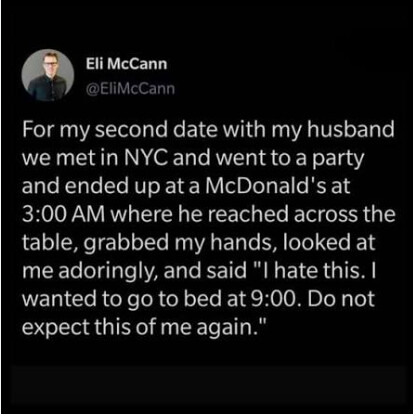
I lived in Utah around the same time. While straight, very large numbers of LDS men I grew up with are gay. One of the boys in my local congregation, Eli McCann, is famous for social media postsabout his husband (he had this popular tweet:)

Back then, though, Utah culture was very repressive towards LGBTQ people. The most popular game during recess (which I didn’t participate in as I had social issues) was called ‘Smear the Qu**r’ (don’t know if offensive if used in this way but it was intended as offensive back then) where they’d throw the football and whoever caught it got tackled/beat up by everyone else.

Eli and his best friend Sam would do skits a lot where they pretended to be valley girls talking to each other. Sam later officiated for Eli’s wedding.

I then became a missionary. Two of my companions, I found out years later, were gay. I had no idea at the time. Then I went to college, and several of my grad student buddies turned out to be gay when I talked to them years later. So I’d honestly say around 10-15% of all LDS young men I met throughout my life were actually gay.

But they never talked about it at all, and many of them currently post about the stresses of it. When I played Exhibition, I really felt that come through; while set in New York, it reminded me of some of the museums and libraries in SLC, and the people reminded me of many people that I know. The organized state of oppression in Kaged also felt symbolic to me of how gay people in Utah felt about the church. Many LGBTQ people find oppression from many sources, but in Utah its easy to attribute much of that oppression directly to the LDS church, giving it the aura of an evil state religion. I think it’s connected to the higher suicide rates in Utah, although those area also high in other areas of the rocky west, but some people have mentioned the church specifically in their notes.

Ironically, the church made me less homophobic. I started out life with some baseline racist and homophic/transphobic assumptions that I absorbed from around me and didn’t question. I found out one of my roommates in college was openly gay (and also had a lot of pornographic videos, which I was unaccustomed to people having out in the open and was disturbed by). I was literally scared of him and slept with a belt under my pillow in case he assaulted me (I don’t mean this as a cute story, but as a bad one. This was a bad thing I did!).

After that experience, and years later after encountering trans people like ferkle online who were nice, I decided to look up what my church’s teachings were on LGBTQ people. They have two websites, one for gay people and one for trans. The first pieces of advice on there are to love LGBTQ people, not judge them, to not cut them off, to try to serve them. It was wildly different than I expected, and different than the culture I experienced when I was raised. It encouraged me to use people’s preferred pronouns and to treat LGBTQ people with respect. The very first line is

[One of the apostles in our church] taught that people who experience transgender feelings “need to be encircled in the arms of their Savior and know they are loved. So often the Lord calls on us; He expects us to be His welcoming, loving arms. We need to encourage their friends to do the same."

So while I think the church’s positions are much more to the right than most of America, they’re far to the left of where I started. I separate what is taught vs what is practiced a lot. I do have full faith in my church’s teachings, though I do my best not to proselytize in the IF community (I tried twice and both times it ended up weird). I’m glad that I found these positions before my son grew up, because he’s part of the LGTBQ community and so are all of his friends, and I’ve been able to be supportive of the trans kids at my school who have all reached out to me to say nice things after graduation (which is one of the few measures I have of how things are going).

Anyway, so writing this all out I guess I can theorize that Babel might partially be related to some of these themes of closeted homosexuality in a religious world; after all, aren’t all the mirrors smashed? And the player has to rediscover who they are? I don’t think all of Ian Finley’s games are about that since he has great breadth as an author (like Shadow of the Cathedral) but it’s easy to draw connections that may or may not be there.

7 Likes

Alt text for:

Screenshot of a tweet from Eli McCann that reads: For my second date with my husband we met in NYC and went to a party and ended up at a McDonald’s at 3:00 AM where he reached across the table, grabbed my hands, looked at me adoringly, and said “I hate this. I wanted to go to bed at 9:00. Do not expect this of me again.”

1 Like

Love reading your thoughts here! But I have to ask…Counterfeit Monkey???

1 Like

There’s a difference between ‘game I think is the highest quality’ and ‘game I like the most’. I don’t think a McDonalds double filet of fish is high quality, but I really like it.

Counterfeit Monkey has a kind of gloomy view of both relationships and politics that didn’t gel with me. It’s technically impressive, complex and interesting, but the puzzle mechanic is one I engaged with more at an academic level. I like the game a lot, and would put it high on ‘best games of all time’ lists, but it doesn’t call out to me personally (but it’s enough that I put it on my first list of 300+ games).

Anchorhead is similar in some ways. It’s actually what got me really into IF. I got one of the first ipads in 2010 as a grad student, and googling games I remembered, I searched for ‘Zork’ and ended up downloading Frotz on the ipad which had a bundle of games, including Anchorhead. Once I got married later that year, I set aside most games of all kinds for a while. Only later in 2015 did I remember Frotz and download it, and replaying Anchorhead was so fun that I got back into IF, discovered IFComp, made an IFDB account and started reviewing games.

But while Anchorhead is really exciting and well written, a lot of it makes me feel queasy (another great game that does that even more is Bogeyman). So I 100% respect both of those games, but emotional impact/feeling is part of my rubric.

I’d be interested in your personal favorite IF games, if you wanted to post them in here (this thread feels really selfish to me so having someone else post their favorites would help it feel less awkward), and in how you decided what to put on there. Sounds like Counterfeit Monkey is one of them!

6 Likes

Okay, I’ve been going through my ‘definitely replay’ list (though I may be able to replay all the games, as someone helped me get a new copy of Sorcery 3).

To Spring Open, Peter Berman and Yoon Ha Lee (as Two-Bit Chip)
I remembered this vaguely as a costume-based incomplete Twine game that had some kind of cool worldbuilding.

Replaying it (which was fun because someone just wrote a new review of it for the marathon), I found that it had a really cool UI setup with a task in the corner and occasional text animations. It wasn’t incomplete, it’s just that I wasn’t used to shorter games at the time (it was one of the first games I experienced). I do still like the worldbuilding and the strange details. It has a lot in common with Pacian’s worldbuilding. While I still love the thrill of exploration and I’m glad it’s in my top 50, I think it’ll stop there, especially since it’s been crept up on by several other very good short twine games in the mean time (like the faery game ‘You’, for instance).

The Mary Jane of Tomorrow, Emily Short
I’ve often thought of this as one of my favorite Emily Short games, but haven’t replayed it. Replaying it, it took me a while to grasp it and I had to read Club Floyd’s transcript, but I think I got it in the end.

This is a sequel to Brain Guzzler’s From Beyond, when Emily Short offered as a prize 'A small piece based on or set in the world of your game, which might consist of a short fiction, cover art, or feelie." It’s short, with 3 rooms and two main NPCs.

It also uses procedural generation. You are a teenage girl and have a robot you made as an exact copy of yourself. You give it as a gift to your friend Jenny, but she would rather have a copy of herself to do chores. So you have to reprogram the robot. Your only tools are books and other written materials. The game consists of a scavenger hunt to find the books and finding the right order to give them to the robot, with some resets.

The books can do things like teach french or rhyming, or make someone lose or gain manners. A bodice-ripper gives them middle english, while a french poem book gives the robot ennui.

I was dismayed this time because I remembered all the variations having a lot more effect. It turns out I somehow didn’t trigger the condition to be able to ask the robot for a poem for a long time. Once I did, I saw how procedural the poems were and it brought back the impressed feeling I first had when playing.

Overall, I love the dynamic between all the characters and the responsiveness. There was a bit of frustration here, not enough to take it out of the top 50 but probably out of the next set.

Hana Feels, Gavin Inglis
Man, so glad I replayed this game. One of my favorite choice-based games back in the day (and one of the first I ever played, just a month after I made my IFDB account).

It’s almost entirely dialogue with some journal entries. It has fantastic profile drawings of the characters. It’s also a government psy-op (quite literally funded by the Scottish government to adjust the way people think).

It’s about a girl named Hana who self-harms and calls a hotline. She also has conversations with her boss, a pushy friend, and another person or two. Your job is to select from 3 different options on how to respond to her.

The idea is to teach people how to talk to others who are self-harming without demonizing or trivializing them. If you’re pushing too hard, it lets you know. You can’t always pick ‘good’ options, especially as the friend, who is always kind of rude/pushy.

The dialogue feels really natural to me, and while I haven’t replayed in years, it had an effect on me and I learned from it. I’ve used its techniques to talk to my students whenever they have issues they bring up (like one person a long time ago who told me her dad locked her out of the house and she had to sleep in a car on campus).

Playing it was very therapeutic for me, now; when I first played it, I was married with a young child. Now I’m older and divorced. I have a lot of the same issues Hana has, and I have had many unhealthy coping strategies over the years (not cutting, but other coping things. Escapism is a huge one, one reason I play and write so much IF!). So the game reminded me that I’m not alone and it’s okay to talk about things, which made feel great; I could identify with one older guy in it.

So this game is really high on the emotional connection/refreshing scale. Maybe not as much on the impressive scale (though the art, UI and dialogue are impeccable), but I think I’ll probably keep it up to 25.

4 Likes