EDIT: A fixed version is up. Updated title and links.
This release fixes a couple of potential crashes. It also adds support for graphics in more Scott Adams games:
- The Apple 2 and Atari 8-bit SAGA re-releases of Adventureland, Pirate Adventure, Mission Impossible and Strange Odyssey.
- The Commodore 64 SAGA re-releases of Pirate Adventure and Voodoo Castle.
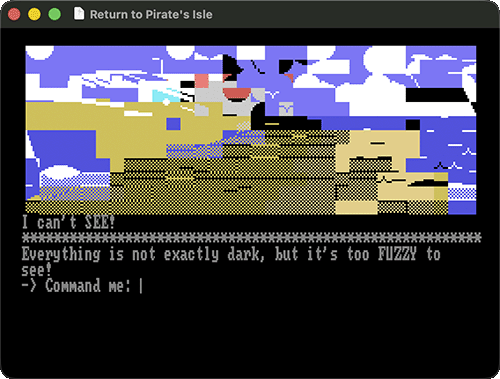
- The TI-99/4A exclusive Return to Pirate’s Isle.
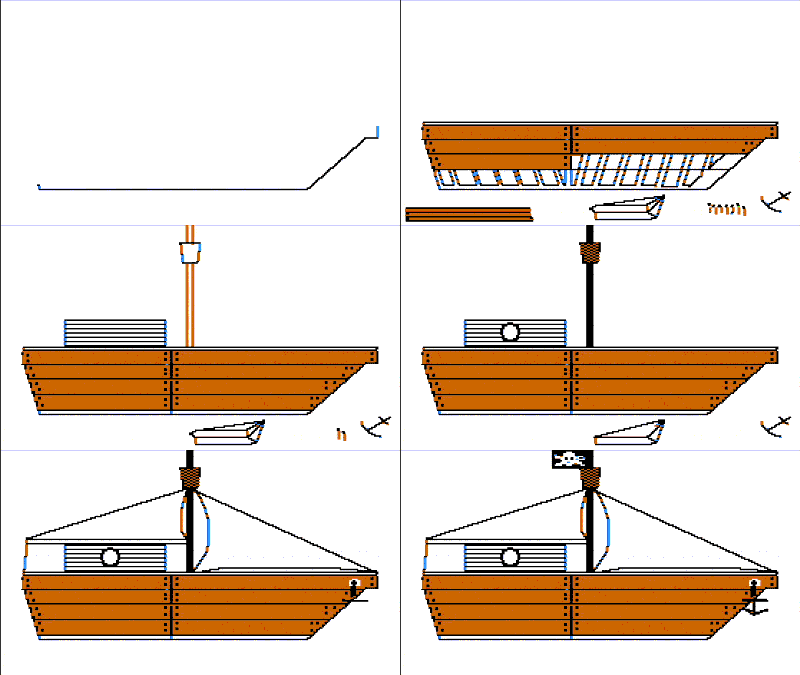
The slow draw speed of the vector graphics in the Apple 2 and Atari 8-bit versions is sometimes used to create simple animations. This works in Spatterlight as well, if Settings > Format > Slow vector drawing is checked.
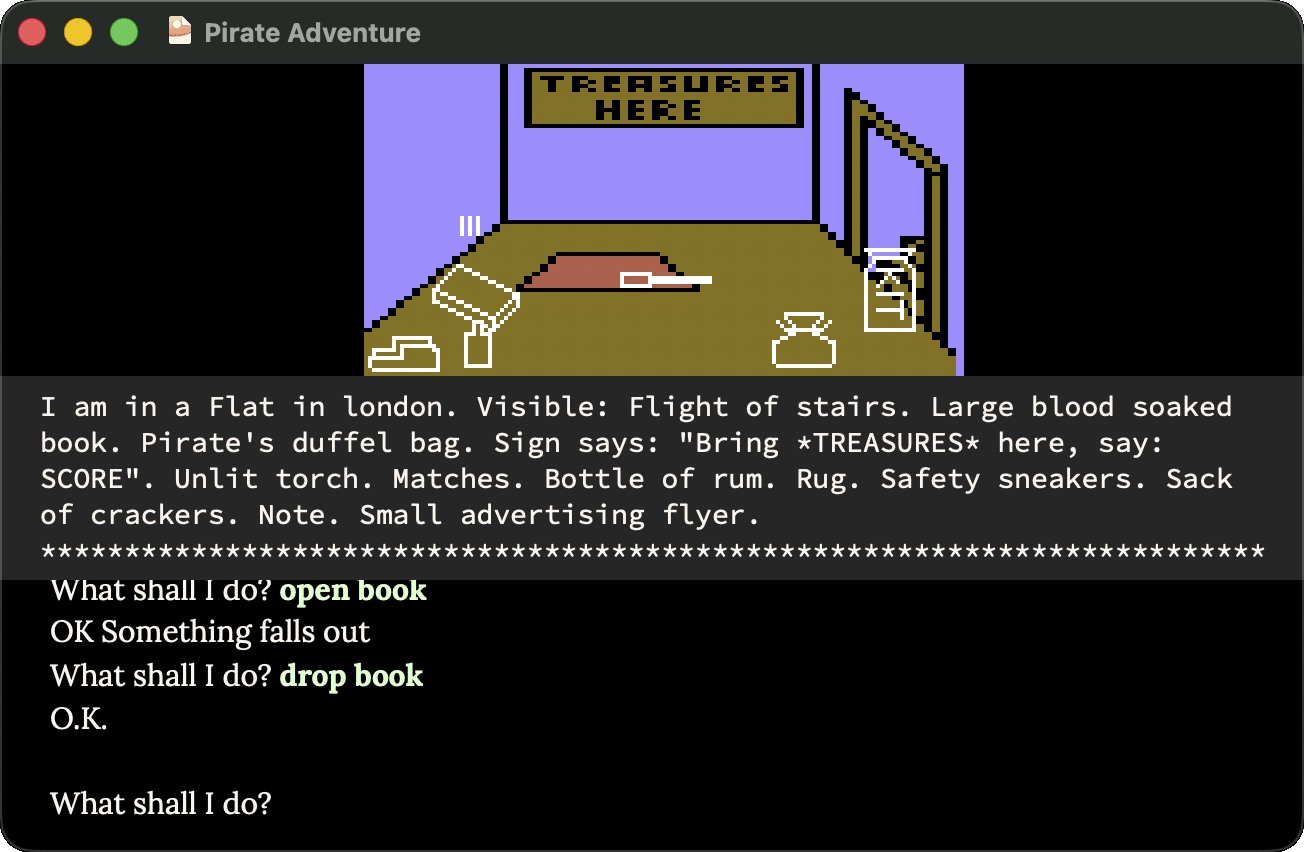
These games draw little pictures of all the objects in every room. The same images are also used on the inventory screen, at the same positions.
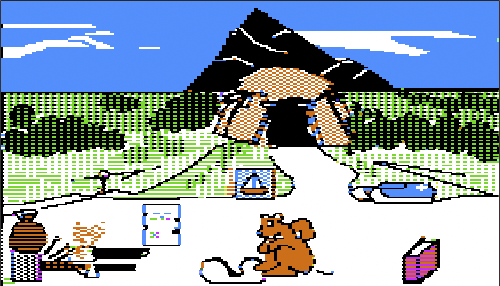
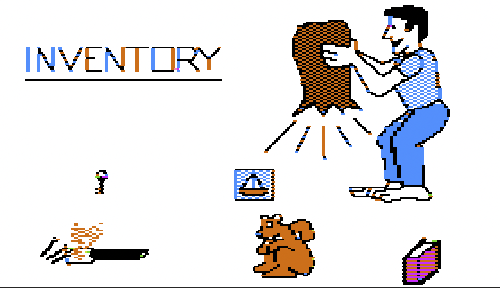
Most people probably played these games in text-only mode back in the day, due to the slow loading and drawing of the images. Now the graphics can be enjoyed at full speed.
A quick playthrough of the Apple 2 version of Pirate Adventure:
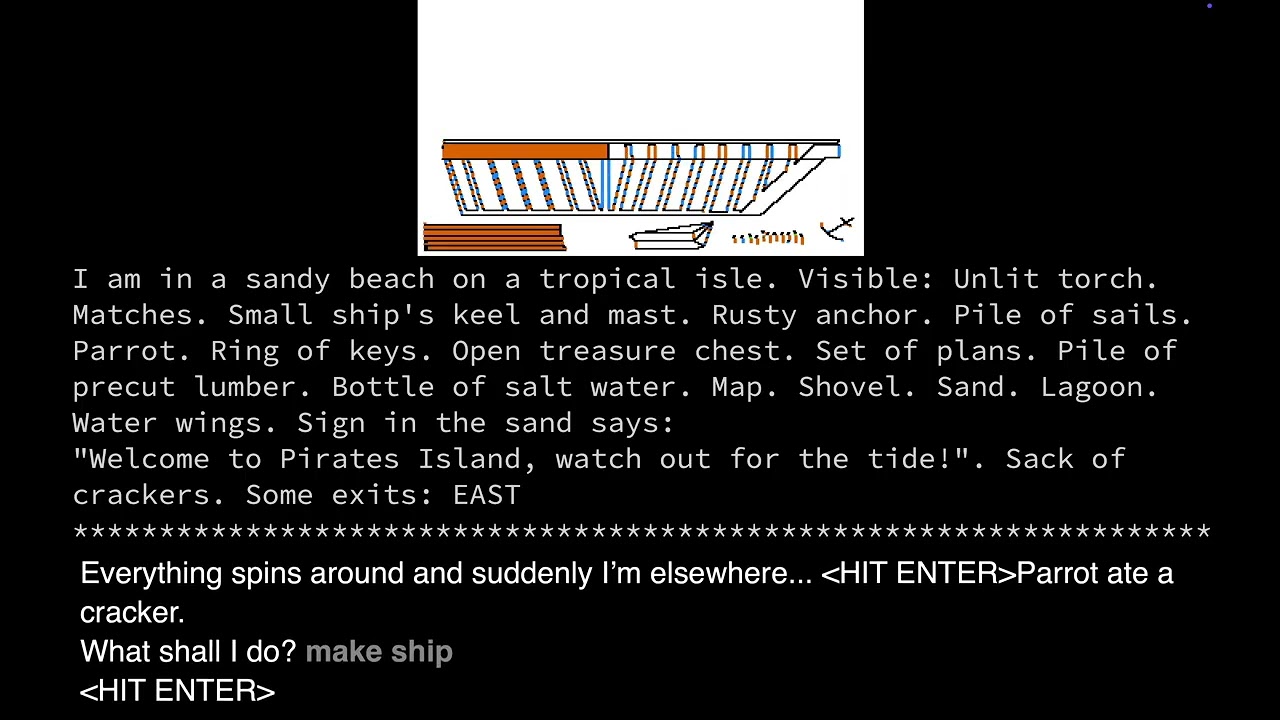
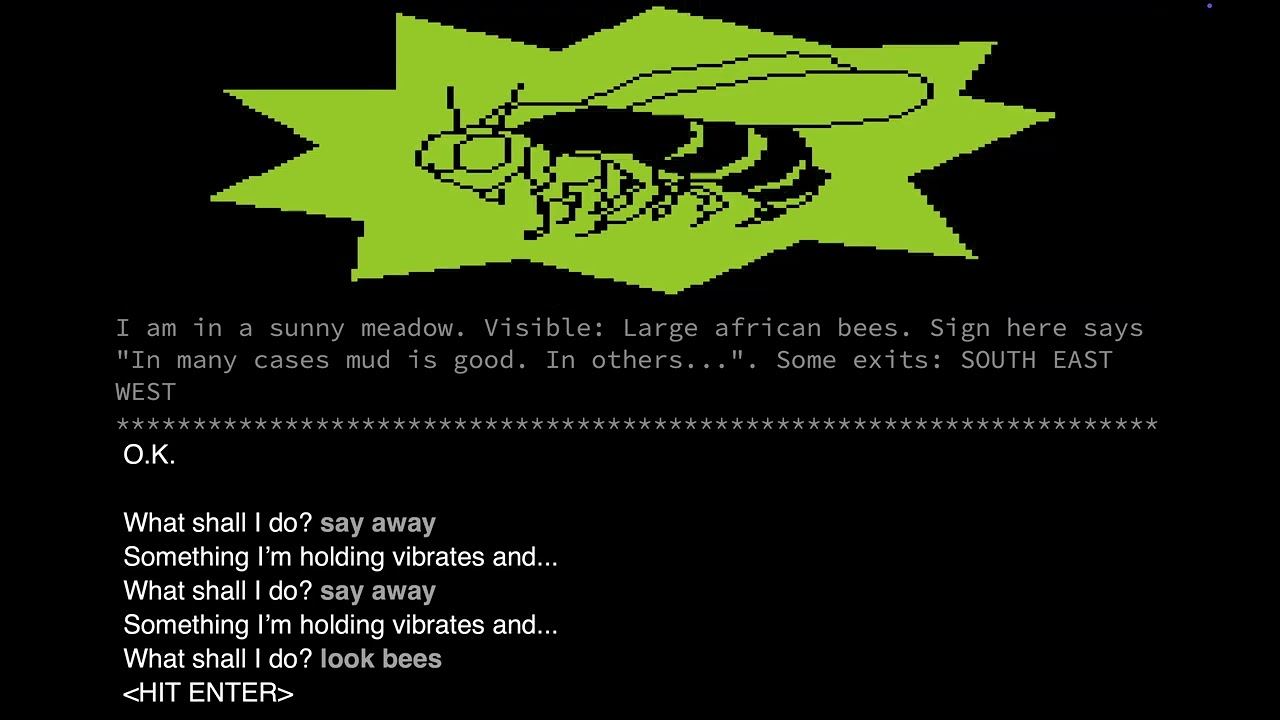
The Atari 8-bit vector graphics actually draws two variants of every image, with different colors. The original hardware switches between these every other frame, giving the impression of a total of 16 colors instead of the 4 that the hardware supports (while flickering a lot). I have made no attempt to emulate this. The colors used in Spatterlight are more or less guesswork.
While most Atari 8-bit images seem to be lower-resolution variants of the Apple 2 ones, in Adventureland, many pictures have been redrawn to look less like programmer art.

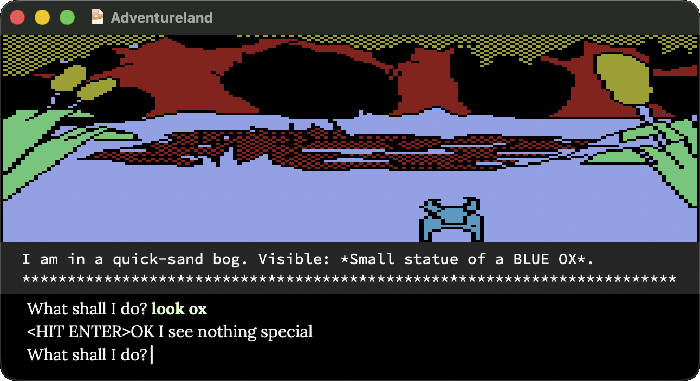
A video playthrough (without audio) of Atari 8-bit Adventureland:
The Commodore 64 SAGA cassette releases of Voodoo Castle and Pirate Adventure have their own scaled-down bitmap image format, with all image data resident in memory. Pirate Adventure uses the Commodore 64 hardware sprite generator to draw object images at a higher resolution than the background.
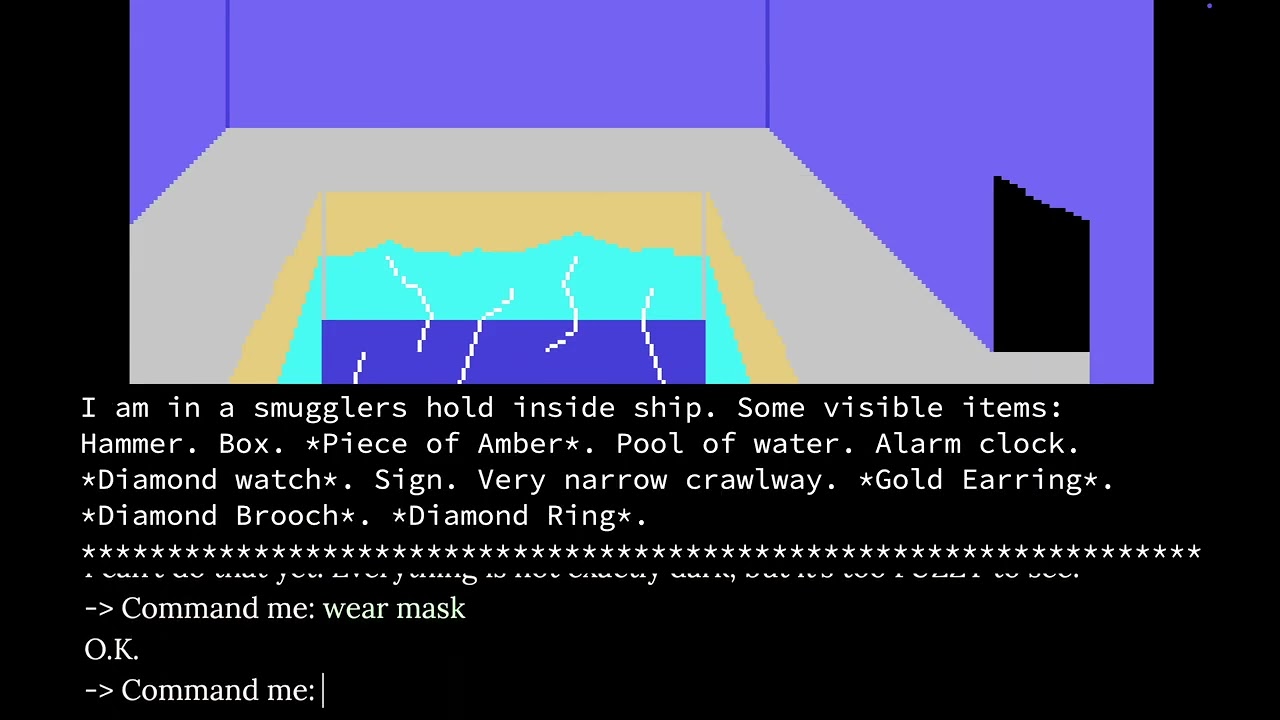
The TI-99/4A cartridge Return to Pirate’s Isle uses tile-based images. The result is similar to the graphics used by Adventure International UK/Adventure Soft in games such as Gremlins, while the actual implementation is a lot more complex.
Every image has a “fuzzy” counterpart, created by skipping the first draw instruction. That is apparently enough to mess things up in an interesting way.
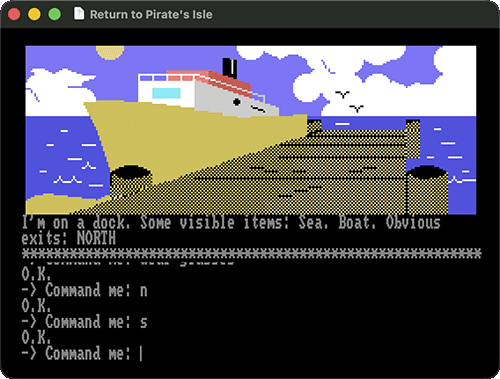

All images in Return to Pirate’s Isle are made of these 52 tiles. Except there is one opcode that cheats and draws a custom tile from the next eight bytes in the draw instruction data.
Here is a video (without audio) where I play through Return to Pirate’s Isle:
–––
Spatterlight is a unified IF interpreter for macOS, originally developed by Tor Andersson.
Get the latest version here:
https://github.com/angstsmurf/spatterlight/releases/download/v1.4.9/Spatterlight.zip
Full change log:
https://github.com/angstsmurf/spatterlight/blob/master/CHANGELOG.md