You have to target certain spots, just like in Above. It is a lot less strict about exact targeting, though, and you can put both hands on the same spot.
2 Likes
Qwop is that running game where you have to use the titular keys on the keyboard to move the thighs and calves individually, correct? Notable mostly for being an experiment in deliberately hostile to the player game controls.
I’ve always just assumed Goat simulator is a virtual pet game with a goat and an uninspired title.
Don’t think I’ve ever heard of sable, and not sure I’ve heard of Jusant unless it’s the climbing game that was highlighted by Gamemakers Toolkit a year or two back.
2 Likes
Qwop is that running game
Oh, right. I meant Girp, which is a climbing game from the same developer, Bennet Foddy. It’s the same idea, kind of, but a little less hostile.
It seemingly takes inspiration from Twister, the floor mat game. I don’t know if it was intentional on the developer’s part, though.
1 Like
Goat Simulator is an open-world physics sandbox where you control a goat. The game features deliberately buggy physics which let you send the goat flying around in all sorts of bizarre ways and awards points for tricks in the manner of a skateboarding game. You also get points for headbutting people and causing car crashes.
It’s intended to be deliberately absurd. I think that’s the best I can do at capturing it in text.
2 Likes
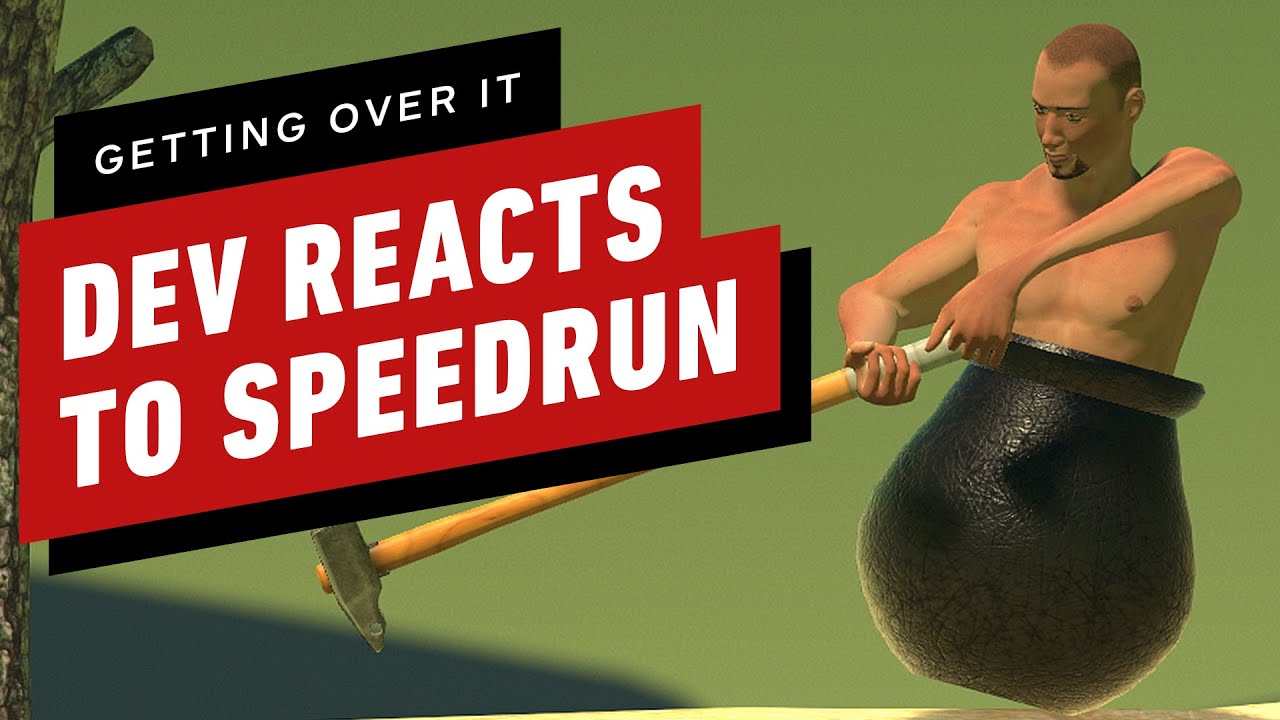
Bennet Foddy’s games are ridiculous, yet it’s a thing of beauty to see them mastered.
5 Likes
I’m currently playing Jusant. It is definitely extremely forgiving re: hand targeting.
It tries to make things a bit more demanding with its stamina mechanic, which I disliked enough to turn it off.
I do like the bolt system. There were a few times that I put the bolts in bad places and had to go back and remove them — not because I used them all up, but because they extended my tether too much. This would get annoying if it was something you had to monitor all the time, though.
There’s also a demo out for a climbing game called Cairn, which I enjoyed. It’s complicated in a different way and it allows for more open-ended approaches.
1 Like
Perhaps you’ve read Andrew Plotkins short review of Jusant:
https://blog.zarfhome.com/2023/12/a-few-narrative
That’s were I first heard of it, and I agree with most of his points, even though I never finished the game.
I’m trying out the Cairn demo right now. Seems promising so far.
1 Like
Interesting. I disagree with him quite a bit, but I guess I went in expecting Jusant to be something different than it was.
On open-endedness
I thought the game could have leaned harder into the climbing-sandbox idea.
I think the game should have been even more linear. Any more openness and the game would be far too unengaging.
As noted before, I would have liked more highly linear puzzle areas. I really enjoyed the final climbing wall in the snowy area, where there’s a correct that way you need to manage your tether.
On the story
The story… I dunno. Everybody wants to talk about climate change. I get this. The journal-threads of communities surviving in a strange world: great stuff. (Reminded me of Sable.) But the fairy-tale “boy ascends mountain, talks to ancient machinery, a miracle occurs – whales!” That just doesn’t land any more. That’s 20th-century fantasy. We gotta save ourselves.
The ending is a bit ambiguous because it’s not clear how much of the water system is natural and how much is human-made.
So you can read it as anything from ‘magic whales save planet’ to ‘boy reactivates infrastructure that was previously mismanaged.’ I assumed it was mostly the first, but reading other reviews, it seems to be a mix of the two.
Maybe this was explained more in the journals. I didn’t read very many and and I didn’t get a full grasp on how things were supposed to work, but they made it were clear this was a situation of mismanagement (not fatalism).
Still, I think the game’s story would have benefited from being entirely wordless with more refined symbolism. That approach risks being misinterpreted, but I think that’s better than it’s currently disjointed storytelling.
Final thoughts
I’d say that Jusant is a good game, but I think that it’s mostly enjoyable and memorable because these sorts of games are somewhat rare.
Andrew and I both mentioned Sable as being kind of in this genre, and there’s a lineage going back to probably Shadow of the Colossus even if the mechanics aren’t the same. Many AAA open world games have a lot of climbing now, too, I guess.
Maybe you could extend this even further to some early vertically scrolling platformers like Kid Icarus, but that’s getting a bit out there.
But there simply are only a few of these almost strictly ‘vertical exploration’ games each year, which seems to make them feel fresh.
I’m actually not that interested in the particular climbing mechanic, but more interested in vertical level design as a challenge. I played Insurmountable last month, which is entirely turn based, and got the same breathless feeling that I got from Above but not Jusant.
2 Likes
BLUE PRINCE
I have seen a few people draw a comparison between Blue Prince and games like Myst or Riven. Personally, I feel like a game about exploring an enormous and mysterious house over a period of days, about combining tools for unique outcomes – tools like metal detectors and various keys – a game in which you must navigate efficiently, and sometimes, be judicious about which goals to pursue – a game in which a long and convoluted history underpins the present events, in which you must be prepared to solve world puzzles, in which you will miss things on your first playthrough by design: I think there are more obvious comparisons to draw for such a game.
I have been having such a blast.
I’ve seen some negativity about the choice to combine the randomization and resource-management of a rogue-lite with big-picture puzzle-solving. A lot of people seem to realize that a particular puzzle will require them to draft two rooms in relatively close proximity and get so focused on the fact that the game isn’t offering those rooms to them that they stop observing the environment and looking for other puzzles to solve. Personally, I find the challenge of balancing your immediate drafting needs with puzzle solving and the pursuit of permanent upgrades quite rewarding, and I haven’t lost patience with these dry spells yet. Maybe if I run out of leads to pursue, I’ll start to get frustrated, but Blue Prince is like a graduated swimming pool: the further in I get, the deeper it becomes. I’m 30 hours in; I can’t wait to see if I feel differently after another 30 hours.
Some people don’t get into the randomness and walk away. I think this just demonstrates that no game is everybody’s perfect game.
2 Likes
I’ve also been enjoying Blue Prince a lot, although I can definitely understand that it’s not the kind of game for everyone. I do think that a substantial part of the perceived difficulty of the game comes from, as you sideways alluded to, people banging their heads trying to force a particular way forward, when the game is very good at giving you a lot of things that you might profitably be doing at any given moment in your meta-progress.
That said, the game I’ve been working on for however many years now has substantial gameplay similarities (static-ish traditional adventure-gamey “overworld” with multiple procgen, rogue-lite-ish “dungeons” that can be reset on repeated runs) so that kind of thing might just be my jam more than the average gamer’s.
I will say that I’ve discussed the game with several other people at various levels of “sophistication” (as game-players and/or players-of-roguelikes) and the thing that strikes me is that what seems to best predict a player’s perception of difficulty is not necessarily their experience with the genre or video games in general, but how fixated they are on, for example, the “main” puzzle, (explained in the intro but I’ll still spoiler it) reaching Room 46.
I very much came to the conclusion early on (basically as soon as I got my first (very minor vague description of gameplay) permanent meta progression unlock I came to the conclusion that just poking around was designed to be profitable and became much more focused not on what I was trying to do in terms of the “main” objective but rather what I could do with what the current run was giving me, and I’ve been finding the game almost easier than I’d prefer—I’ve completed a lot of puzzles only to discover their reward was a clue about something I’d already figured out via some other means.
If I had a major complaint about the game it’s that I’d prefer if some of the repeated puzzles didn’t just give a trophy, but instead gave you the option to have the puzzles “permanently solved”—some of the major puzzles are solve-once and then they give you the reward whenever you draft the room, while others require you to solve the puzzle each time. I don’t really see the gameplay justification for the difference.
1 Like
I think the core nonviolent roguelike loop is fantastic. It works very well for a long time because there are a lot of things to do. I found that if I wasn’t narrowly focused on single tasks MUST THAW THE FREEZER NOW!, there was almost always something interesting to do.
It’s a feeling that changed for me as the number of possible outcomes diminished, but that was a long process. If I’m self-critical, I think a lot of my postgame impatience arises from my tendency to binge-play.
If I were to begrudge it anything, I would call out things like walking to the outside building every day. It’s not a short walk. Why am I doing that? I’m not talking about backtracking in the house, mind you, because that makes sense. I suppose I would like more meta/permanent stuff in the postgame (not so much before claiming your inheritance).
But it’s brilliant. I’m sure people will be talking about it in classrooms someday. Some probably are already.
1 Like
Trying out Manufactoria 2022 (yes, three years late). It seems great, but I miss the stripped-down simplicity of the old Flash game.
1 Like
That, and in a similar vein the hike to the sanctum, which you end up doing a lot (or at least I did). And a few where I’m not sure if it’s the design or if I was just making work for myself by missing a clue like adjusting the level of the reservoir, which involved me going back and forth a lot because I could tell that there was somewhere to get to and I could figure out the mechanics of adjusting the water level, but as far as I know I haven’t been clued on what to adjust the level to, short of visually checking it.
And continuing to play in search of the last couple bits and bobs I’m more puzzled about the failure to permanently solve things like the locked safes that don’t have multiple solutions, or even multi-solution puzzles like the dartboard or parlor boxen (after you’ve solved them frequently enough to get the trophy). I’m playing on the Steam deck, and I’ve gotten to the point where if the parlor boxen have three lines on them, which is taxing to read on the Deck’s screen, then I’ll just randomly guess and damn my puzzle stats in the library. Not like I’m champing at the bit to solve another boolean satisfiability instance at that point anyway.
I’d also appreciate, purely from an interface standpoint, having the ability to keep notes in-game. Not in the sense of having a quest log or anything like that. But what I’m doing is taking screenshots of every note and book I see. But when I have to go back and reference something, it would be nice if I just had a tab for library books or something like that, so if I know I’m looking for the book on sigils, for example, that doesn’t look like me scrolling through the “Media” tab on my Deck trying to visually grep it out of the several hundred other screenshots of the game I have.
1 Like
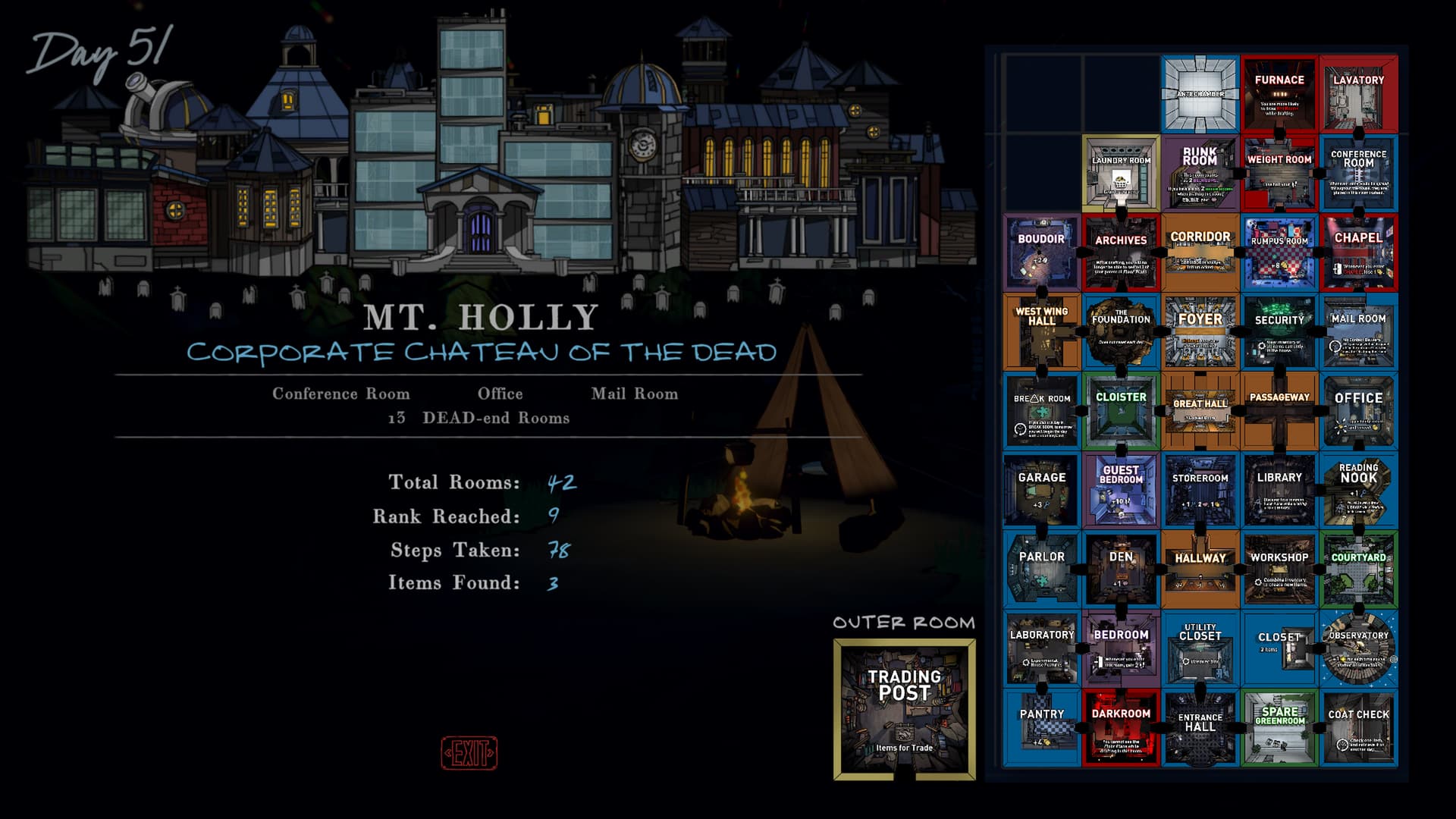
Blue Prince postgame:
4 Likes
I played most of Thief 2. I’ve bounced off the series several times in the past (mostly playing the demos and individual Dark Mod fan missions).
It’s easy see why people like it so much — it has great maps with open approaches. Few stealth series (aside from Hitman and Splinter Cell) have levels with realistic architectural layouts like Thief does.
I do prefer constrained dungeon-like environments (especially in the classic Metal Gear Solid games), but it’s always impressive to see realistic buildings you can tackle with this much freedom.
That said… Thief 2 has a lot of rough edges. Unforgiving lines of sight, sound as the only indicator of a nearby guard, a forced first person perspective, and awkward rear takedowns with your club. Plus late game levels that have goals that are far too repetitive.
There is also the good jank. Most old games had jank, but Thief depends on its jank so much that it becomes useful to the player.
You can stand on top of doors to get onto out-of-reach balconies. You can abuse the ‘creep’ button to never make a sound. Guards with swords can’t climb anything above waist height. Only some of those things are deliberate on the developers’ part, probably. But you can’t get away with putting those things in a triple-A game anymore.
There’s also a new Styx game coming out this year — Thief’s best candidate for spiritual successor. Styx has little of the jank of Thief but much of its openness and verticality. And it (usually) has ghost and pacifist options that allow for pure stealth playstyles. An underrated or at least underseen franchise.
This particular thing has been rectified in one of the recent updates.
Yeah, I noticed that.
I’m not sure if I’ve seen everything in the game. Well, I’m certain I haven’t seen everything…I haven’t gotten all the trophies, but some of them require gimmick runs and new profiles and I’m not into that. But I think I’ve gotten as much as I’m going to get. The last thing(s) I did involved [vague post-postgame mechanic spoilers] unlocking blue doors. Specifically [explicit spoilers involving the puzzles alluded to in the previous spoiler] the one you need to clear the tunnel to reach, and the one that you get to by drafting the Secret Passage outside, and then I got through that maze to the blueprint version of Room 46.
It was right after that that I had to reboot my Deck for an update and that’s when I noticed the updated puzzle mechanics, so I wasn’t sure if it was tied to progress or it was just a patch.
Anyway, I still think it’s a great game and don’t really have anything negative to say about it overall, but I definitely feel like it could’ve used some metagame progression tweaks for the very, very “postgame” stuff. Basically by the end I was routinely [vague gameplay mechanics spoilers] burning through weeks of in-game days at a time to get past some effect timers or because I needed a specific sequence of rooms to come up, or needed to draft a specific outdoor room, or something RNG-related like that and had essentially no other active avenues to pursue, so just doing another run that didn’t do any of those things wasn’t worth it.
I’m willing to give it a pass on a certain amount of this because by the time you’re worried about that kind of stuff you’re really in it for the long haul and so “the player is patient and methodical” is a pretty solid assumption for the designer to make. But I still would’ve preferred a few additional QoL tweals near the end. Even something as simple as being able to skip past the end-of-run summary and the slow flyby opening the next day that you have to sit through every time.
1 Like
I’m still trying to play through King’s Quest V with my kids. Can anyone lend me a very gentle hint of how to make progress in Mordack’s castle?
-I don’t know what to do with the scrubbing girl
-I know I can knock out the beast with peas and throw fish to the cat
-I’ve put the wand on one platter of the machine but no other inventory is accepted
-If I get taken to the dungeon I can get the cheese with the fishhook but I don’t know how to escape.
Thanks!
2 Likes
Hint 1: You are supposed to give her something.
Hint 2: Something from the Roc’s nest.
Solution: Talk to the girl and give her the locket, then talk to her again.