Iron ChIF: Season One Episode 1 (lpsmith vs. Afterward, using Inform 7)

Our Iron ChIF has exposed his process, and what a lovely glimpse it is! I am still painfully interested in the art of Beta Testing, if only to make myself more useful in the future, but now all I can think about is development wonkery!

There’s a lot to digest here, but the biggest revelation (to me) was the presence of Day 0. Despite challenger aspirations of my own, I too have NO IDEA WHAT IS EVEN POSSIBLE ON THIS TIMELINE. That’s too broad. Obviously I have seen the pilot, and our Challenger has been diligent to a fault about documenting progress. Clearly I mean ‘what is possible, trapped as I am in my own clumsy body.’ Our Iron ChIF took the most pragmatic approach possible: a dry run. That has officially been added to my IF schedule this calendar year. (Sorry WIP, yet ANOTHER delay.)

The rest of his process seems squarely in Emily’s Fully design on paper, then implement method, but BIG. Our Iron ChIF wears the crown for a reason, because this observation really struck home:

Is this a tacit admission that implicit in Fully design on paper, then implement is a pre-requisite Write the through-line first, or more accurately the PAPER throughline first? I mean, yeah! Otherwise yr gonna burn a WHOLE lotta butcher paper! And his progress highlighted to me the separation between Iron ChIF worthy performance and the rest of us.

A fully populated 5x5 (times 2!) grid in 24hrs??? I suppose we can sleep after Keyboard Stadium’s final bell. It helps, I am sure, that the Iron ChIF has clearly been down this road before, as he carries a fully formed taxonomy of Room Functions, with implicit requirements ready to be elaborated. I suppose I kind of intuitively grasp some of this during development, but to have this deep framework at one’s fingertips bespeaks an unsurprisingly deep engagement with craft.

I MUST resist the siren call of yet more code-generating code. That could easily reduce me to all-caps bloviating for the rest of the day.

In closing, let us all sit the with impossible pregnancy of this casual bon mot:

OH IS THAT ALL???

6 Likes

[Lest history judge me harshly for seemingly repeating without attribution much of our Horsewoman of War’s observations, I wish it understood we were racing at the keyboard and SHE BEAT ME TO THE ‘REPLY’ BUTTON!]

Well, we know it wasn’t FAMINE that ate all that cake! This was my take on learning of this marvelous tome as well… until I considered that temporally, that would have shifted my lifespan to where I could not pugnaciously ignore AI’s intrusion into my life! It would have to be a REAAALLY good book to warrant that!

3 Likes

I maaaaay have seen JJ typing and redoubled my efforts to finish my post!

But in regards to any similarities let it be said: great minds think alike!

5 Likes

Pictured: @Encorm and JJMcC Thinking alike. (That’s me on the right!)

a cartoon of lisa simpson standing next to bart simpson in a red costume that says i dress myself .|262.5x146.76136363636363

4 Likes

I don’t know when the Horseman of Pestilence was born, but the book may very well be that good! Even now, it remains one of my all-time favorites. It truly was foundational for me, so imagine my surprise to see it here in Keyboard Stadium!

In addition to the veritable smorgasbord of puzzles and ciphers, visual and textual alike, which provide a dip into multiple game-design philosophies all bundled under the same narrative umbrella, the book is packed with history and art lessons. The birthday elephant lives in a mansion whose wings are each based on real-world architectural wonders from across the globe. And the book breaks down the history of each architectural reference in the final “dossier” that reveals the solution to everything.

It’s an easy recommendation, in my opinion, to any adult in search of good children’s literature. And even to plenty of adults who might be curious about puzzle integration in a visual medium!

7 Likes

As my transcripts start coming in from a wider variety of people, there are some commonalities; things that trip everyone up, that I might have dismissed as unimportant if only one person complained. It’s unwise to dismiss any complaint, but it’s particularly unwise to dismiss repeated complaints.

For me, one root problem surprised me in how fundamental it was, and how simple: the geography of the map.

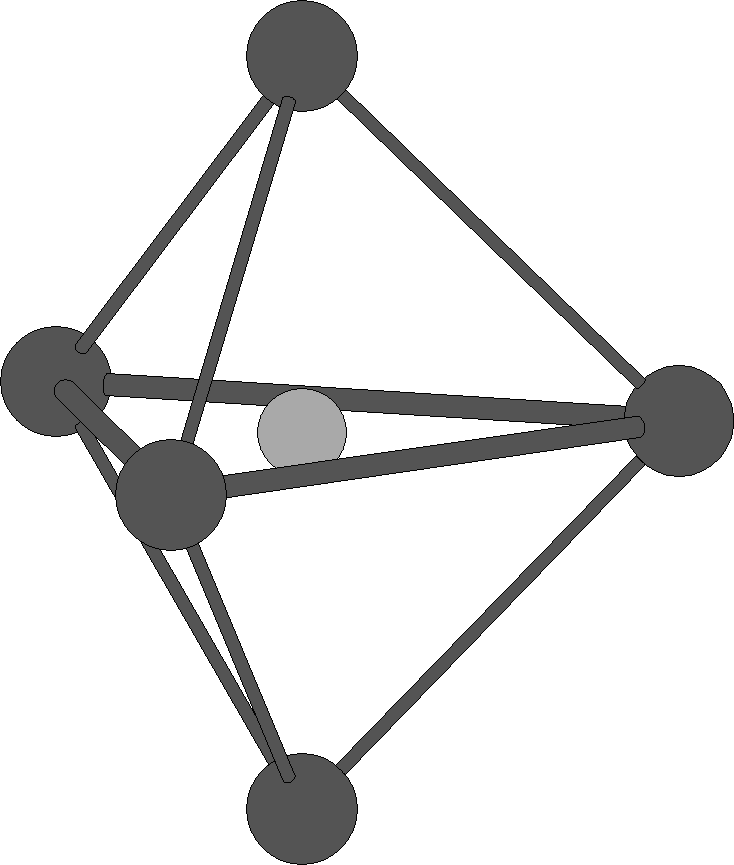
You’re a bird person, so the map was always going to be three-dimensional. But I really thought it was going to be simple! There are only five rooms: One up in the air, above everything, one down in the forest, below everything, and three in a triangle in the forest canopy: the aerie itself.

Logically, given that setup, you should be able to get from either ‘high above’ or ‘in the forest’ to any of the three middle rooms. So, there’s one main room that serves as the focal point: the Great Hall, where you can go in a straight line down from High Above to Great Hall to Forest. Then the Librum is east of the Great Hall, and the Gardens are north of the Great Hall. But you should be able to get to the Librum or the Gardens from High Above or Forest, right? So you can go up from either to get to High Above, and down from either to get to Forest. But there is no ‘upeast’ or ‘downeast’ direction anyone would type to get to the Librum from below or above it, so ‘east’ has to suffice. Similarly, ‘upnorth’ and ‘downnorth’ become just ‘north’ for the Gardens.

Writing this out makes me understand why this was hard for people to visualize. It all made so much sense in my head!

I made a probably-not-helpful map, where all the non-reflexive directions are double-arrows:

Alternately, imagine https://upload.wikimedia.org/wikipedia/commons/1/13/Trigonal_bipyramid.png but move the top and bottom vertices to be directly over one of the vertices in the middle.

The problem is that there are unintuitive-to-IF-players three-node loops all over the place. As @Sargent put it: "things like being able to go down to the forest, then north (which led up to the Royal Gardens), then down, then up (which returned me to the Landing Cradle) confused my poor brain. North/Down/Up is a circle? What?

I don’t have a good solution to this. I’m going to try adding ‘after’ rules as people travel diagonally up and down: “You head up and north to the Royal Garden” “You descend to the forest floor, angling south so you’re under the Great Hall again.” Or something. Maybe it’ll help!

Everything would be geographically more clear if I had a nine-room map. Three on the top layer, three in the middle, and three on the bottom, all directly above/below each other. But I don’t have enough gameplay to justify three different ‘in the air’ rooms and three different ‘in the forest’ rooms. So I’ll make due with what I have.

10 Likes

I may in fact have a cave crawling WIP with full 26 directions, including upnortheast… :joy:

5 Likes

The Challenger’s latest update strikes a chord with me re: the compass! But I must hold myself back. I could unleash compass-themed diatribes!

In a context as tight as the time constraints of Keyboard Stadium – especially on this, the final day – it would likely be impossible for the Challenger to reconfigure his navigational system. The map has been constructed. The rooms are linked. Inform 7 provides built-in compass navigation (which the Iron ChIF so helpfully explained how to circumvent before, in order to achieve nearly the same exact effect via the circumvention), and the Challenger has availed himself of these built-in navigational tools. The compass makes sense to most IF players, does it not? Well, no. Not all the time! We often take for granted that the compass must be the navigational foundation for parser games, with many players and authors alike never questioning its presence.

But must the compass be included? Could another system have been coded here? Especially if there are only a handful of rooms, and the PC is a bird who can dart hither and thither, the premise seems ripe for alternative movement systems!

Which isn’t to say that compass navigation “in the air” won’t work. Our own Horseman of Death programmed a three-dimensional airy environment in his first game, Ether, which the player navigates with traditional compass directions – by moving in any direction.

I have no doubt that the Challenger will iron out the wrinkles in his own dish before the deadline! In the grand scheme, these wrinkles seem quite surmountable, and he has demonstrated exceptional proficiency with Inform 7 as a programming language. This little hiccup at the finish line, however, does expose a pitfall of Inform 7’s internal assumptions about how parser games should be designed. Inform 7 is very helpful in many situations, but depending on each game’s unique requirements, Inform 7 may also lead authors astray, like a will-o-the-wisp beckoning a programmer down a certain path until suddenly – poof! – the path vanishes, and the programmers must fend for themselves.

This little hiccup, I may also add, exposes the importance of beta-testing! Something may seem perfectly reasonable to an author, but players may struggle with it. There is no way to know how a game will be received until it has been received, and the Challenger has been assiduously beta-testing his dish at every step of development. With his keen foresight, he has caught the compass hiccup! This is a skill in itself: the willingness to beta-test, and the willingness to listen to what beta-testers say. It may seem like common sense, but it is often a hard-won discipline.

The attention that our Challenger pays to the importance of beta-testing is no surprise. It fits hand-in-glove with his impeccable time-management habits (a trait that he shares with the Iron ChIF). And while all of this may seem bureaucratic, almost divorced from the actual labor of imagining a game’s mechanics and arranging a game’s story, the production schedule is no less vital to a game’s success.

May the Challenger dip and dive through the air, on this last day in Keyboard Stadium, and deliver his dish to the table triumphantly!

9 Likes

Horsemen, I have been SOO GOOD about leaving TADS out of this up until now, you gotta give me this.

I think the directional link model in TADS would really have served our Challenger well for this specific bird-centric problem. TADS defines a Direction class, which really just provides room-room connectivity. It subclasses into CompassDirection (nsew and their crossbreeds), RelativeDirection (in, out), VerticalDirection (up, down), and ShipboardDirection (fore, aft, starboard, port)(because… boats be cool?). These are instanced into global objects like eastDirection etc which are in turn provided a macro-based substitution (ie east) to allow for easy reference. Note that, I assume like Inform, these have no true cardinal relationships, they are just unique labels for connectivity. Their names are purely for the author and player to conceptualize.

It would be, well not trivial, but not HARD to create new classes of Directions to use globally so that instead of

highSky : Floorless, OutdoorRoom 'High Above' 'high above'
    "High above the Great Hall of the Castle-Nest.  "
    down = greatHall
    north = royalGarden
    south = librum
;

TADS would allow

highSky : Floorless, OutdoorRoom 'High Above' 'high above'
    "High above the Great Hall of the Castle-Nest.  "
    dive = greatHall
    leewarddive = royalGarden
    windwarddive = librum
;

The trick of course would be to train the player to use ‘climb, dive, leeward-dive, windward-dive, leeward-climb, and windward-climb’ for navigation, or ‘c,d,lc,wc,ld,wd’ in addition to ‘soareast, soarnorth, soarwest’ (because who wants to go ‘ss’). So yeah, a DIFFERENT KIND of challenging experience for the player!

8 Likes

Inform 7 can do the same thing! Well, not exactly the same. The syntax is different, of course. But the system is capable of encoding new navigational models, and it’s not too hard. I have done it myself in a few games like Midnight. Swordfight.

The tricky thing for authors, in my opinion, is resisting the temptation to use Inform 7’s out-of-the-box compass. The compass is so habitually featured in so many games, and it is right there in Inform 7’s toolbox. Authors reach for it automatically. It begs to be used. It may sometimes even appear to assert itself as the only possible navigational model! And in many cases, it is serviceable. It’s easy. It works.

Until it doesn’t!

9 Likes

There’s a nice example in the Inform manual implementing the Discworld directions: 3.26. Directions

    Turnwise is a direction. The opposite of turnwise is widdershins.
    Widdershins is a direction. The opposite of widdershins is turnwise.
    Hubwards is a direction. The opposite of hubwards is rimwards.
    Rimwards is a direction. The opposite of rimwards is hubwards.

    Ankh-Morpork is hubwards of Lancre and turnwise from Borogravia.
9 Likes

If I’m honest, which it sometimes PAINS me to be, that’s pretty elegant compared to the TADS version.

9 Likes

At this point in time, I’m not going to play the compiled version of our challenger’s game – I’ll wait for the final dish. But I take some more peeks into his source code. One of the things we find is the solution to the riddle: why was he looking up the wives of Frederick II?

Interestingly, the code was originally written to leave it open as to whether the player would be this character Constance or not, but now it seems that the player indeed is her.

Looking through the scrolls – I won’t spoil what they are – I find that one of the sections is mysteriously named “Section Zork Grand Inquisitor Live Forever.” Not having played Zork: Grand Inquisitor, I have no idea what this means, but those in the know can tell me after the game has been released!

7 Likes

While all of the Chef’s post is interesting, this struck me the most. There’s a class of old school adventure games where random locations have been thrown together, making no sense. That is mostly a thing of the past; for decades, authors have taken care to make their fictional worlds more coherent than that. But what Veeder is pointing out to us, is that rooms don’t just have a ‘content’, they also have a ‘meaning’. The bandit cave can be (a) the lair of your worst enemy; (b) a place to get some items that you need for puzzles; (c) your home base; (d) couleur locale; and so forth. It could be the very same bandit cave, in a sense, but with completely different functions in the game. And the function will be important in how you describe it and what you will implement. What’s more, a truly ‘organic’ map will be one where the functions of the locations fit together; you won’t have the lair of your worst enemy right next to your own home base, unless that proximity is somehow an important part of the character and the story (maybe you are the oppressed minion of an evil master, and your little sleeping nook opens onto his throne room).

7 Likes

Looking at Lucian’s tabs of the day and you can tell he’s in polishing mode! We’re at roughly an even balance of Inform 7 questions and bird facts. I like the implications that our challenger is thinking hard about his worldbuilding despite the deadline; searches for “expressions like pulling teeth” and inquiries about bird anatomy indicate a high level of care is going into the creation of his avian society. Of course he won’t have any pedestrian human idioms sneaking into his dish!

(And shoutout to “Reddit thread: birds absolutely have facial expressions” which I am 100% going to find and read later.)

8 Likes

As the Horseman of Death, I come to remind us all that this challenge is growing ever closer to its end. These final moments can make all the different. With little time left, will the competitors go for last-minute, potentially game-breaking additions? Or will they polish what they have, deciding that a good small game is better than a broken ambitious game?

The time frame combined with voting really separates it from other pressures for the chefs. Most Speed-IF is over a few hours or a day. Many games are written over a week for jams, but those are rarely judged. So to have enough time to get yourself into trouble but not enough to get out of it, plus having the pressure of public visibility, really throws some wrinkles into the mix here. Some would crumble under the pressure. But not these two; after all, who would sign up for Iron ChIF if they didn’t enjoy the love of the game itself?

I suspect the earliest decisions will have the greatest effect here. The Challengers map and worldbuilding came first, and inform all that come after. The Iron ChIF’s systematic thinking has indelibly imprinted itself on the game.

The bells are ringing. The vultures are crowding around (oh wait, that’s just us judges, eager for a meal). The end of the competition is coming.

7 Likes

I am learning from my beta testers that my game is less linear than I thought. That doesn’t happen often!

I feel like I should suggest, at the risk of being presumptuous, that the judges should consider pooling their notes (and likewise the tasters?) as they tackle this dish. If they feel like it. If they find they have some reason to do that. They should bear it in mind. As an option.

7 Likes

An astonishing last-minute development! Has the Iron ChIF partially stumbled at the finish line? His own beta-testers have revealed another gap between “the author’s expectation” and “the player’s experience,” but from the ChIF’s warning to the judges, this gap, unlike the Challenger’s compass hiccup, seems too deeply embedded for the ChIF to address.

The Iron ChIF has a long and prestigious resume – an outright laundry-list of celebrated games. He has designed so many! And yet he informs us that gaps like these rarely arise. What could this mean about the nature of his dish? Has the pressure at Keyboard Stadium actually inspired a few cracks to develop? Has the dish been over-seasoned? Under-cooked? Or are the flavors so rich and the servings so generous, rather, that the dish will simply require teamwork to eat?

Death gallops closer each second. Time will soon tell!

6 Likes

15 seconds…

10 seconds…

5…
4…
3…
2…
1…

5 Likes

The development period has ended.

An unforgettable battle, to be sung through the ages. Iron Chef Inform 7 Afterward was as remote and mysterious as one might expect, and has delivered his dish with the cryptic advisory that pooled efforts may be desirable. Challenger lpsmith invited the whole world to join him on his journey, but the map is not the territory! In the finest tradition of those working to tight deadlines, both chefs worked almost to the last minute.

Next comes the most difficult challenge of all: the test of play.

As is traditional, the dish from the challenger is offered first:


course correction, by Challenger @lpsmith

ZIP file for offline play

[or play online]


… and the dish prepared by the defending Iron Chef is offered second:


The Van der Nagel Papyrus, by Iron Chef Inform 7 @Afterward

gblorb for offline play

[or play online - official Iron ChIF version

or at The Van der Nagel Papyrus]


The finished dishes are now released for the audience to enjoy, and the judges retire to contemplate these new creations and issue their scores. We’ll find out their verdict in two days’ time, when audience voting begins at noon UTC on Sunday March 1st.

In the meantime, I congratulate our competing chefs, who conducted themselves honorably and well. Stay tuned for their final thoughts as the post-match interviews with both are posted here over the next two days.

[Audience members are encouraged to discuss the dishes on the audience commentary thread, but please make liberal use of spoiler tags when posting about details of the games!]

19 Likes