I didn’t know where else to put this but I suppose general authoring is close enough. I’ve been thinking a lot about how we present artwork in IF. Some games do this well, but most terps just dump a whole image-a big, frameless rectangle graphic-into the scrollback.
This often looks terrible. It has the look of a Web page from 1997, especially if the terp colors are use defined and don’t match the tone mapping of the bitmap. Colors definitely influence how a user perceives the art. I think a lot about illustrated books, especially for children, where how a picture is presented on the page really matters.
Is there a terp that does the well? I keep thinking there has to be a better way to convey a sense of design and style in where and how the image is presented.
Can you elaborate on what “do this well” means to you? I ask because I’d like to know. I’m not plugging my system but it does two things here that you mention. The author has 2 levels of control over all the colors displayed. They can be set globally during design and they can be manipulated by rules during the game. There is also an inverted palette that automatically activates when the background colors luminosity is less than 50. Pair that with the ability to show images and an author can manipulate the colors to be in alignment with the images or even to convey different states, whatever those may be to the author.
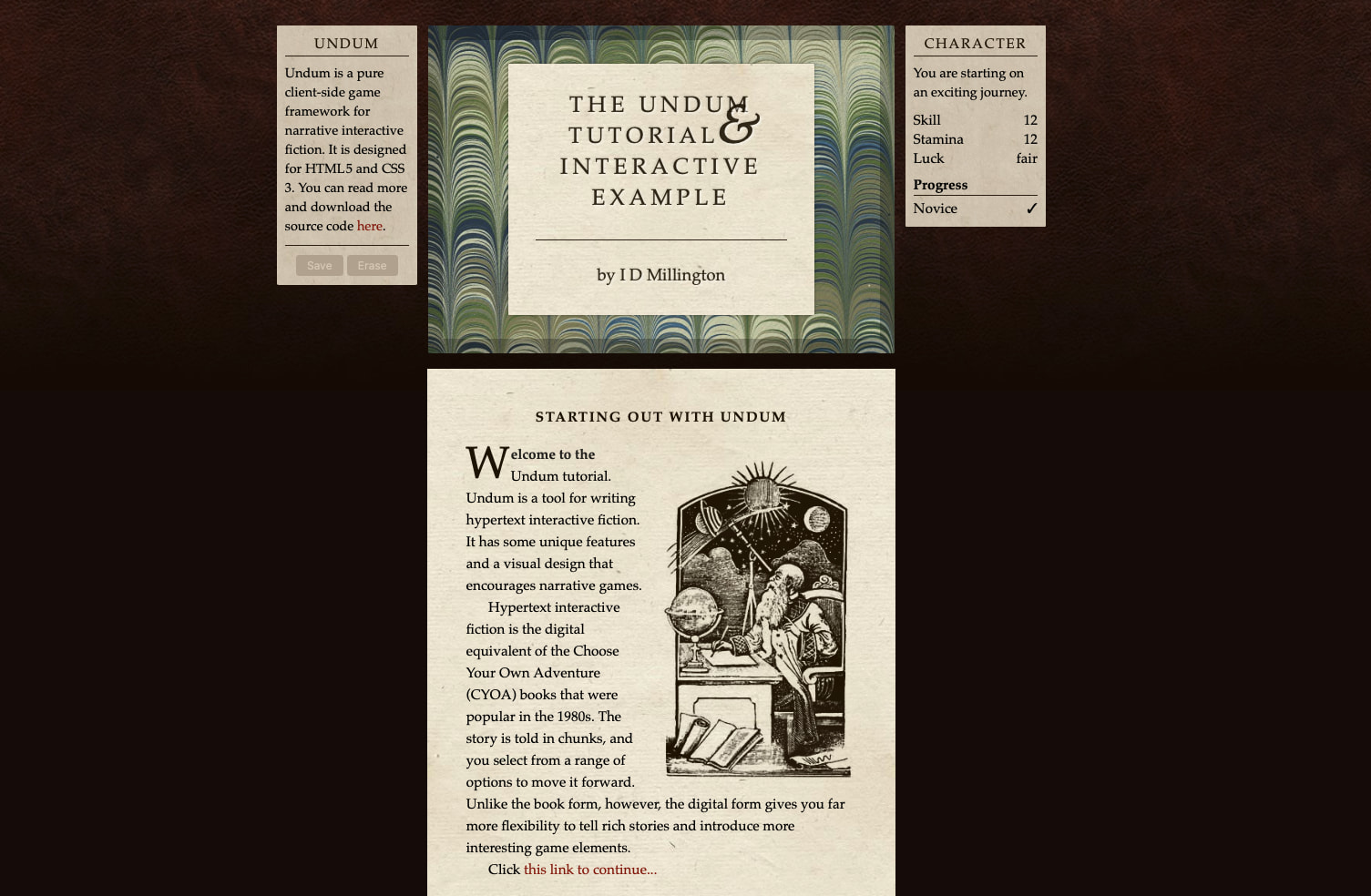
Undum and Hugo were what I was thinking of. Before I went tads obsessed I messed around with Hugo, to the point of printing out the entire documentation (a decently thick book!) so I could have it as a reference while the editor was up on my old CRT.
Tads does NOT do this well, neither does inform, at least as far as I’ve seen. I understand it is a challenge, of course: there’s a billion possible layouts, and every player wants their own color and font set.
For a design to really shine you almost have to lock down the font, color, and where the image appears relative to the text.
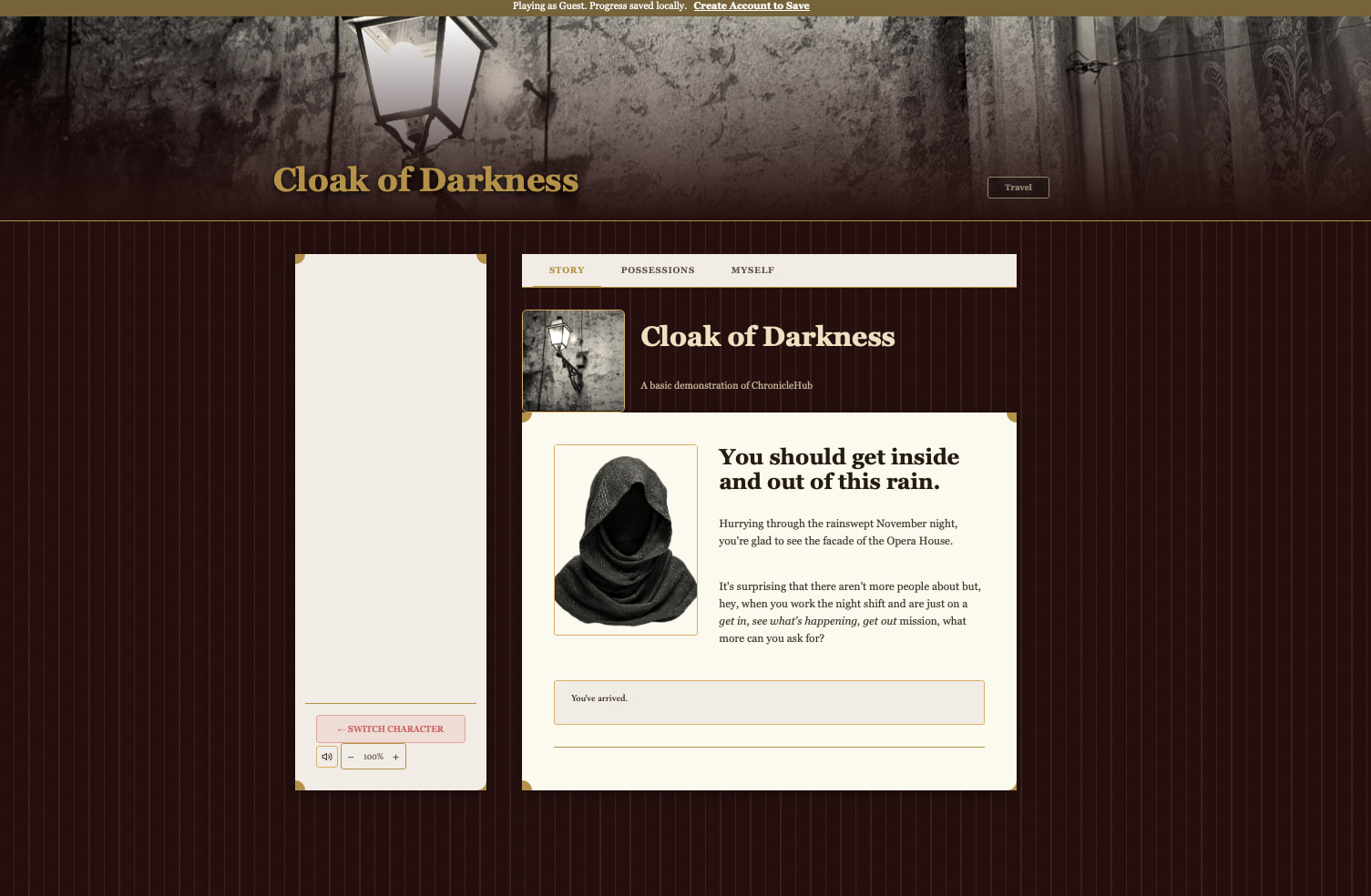
To the point about choice vs parser, I feel like for choice games this is easier, because (at least with most of these) there isn’t a scrollback, and you can control where the text is relative to the image.
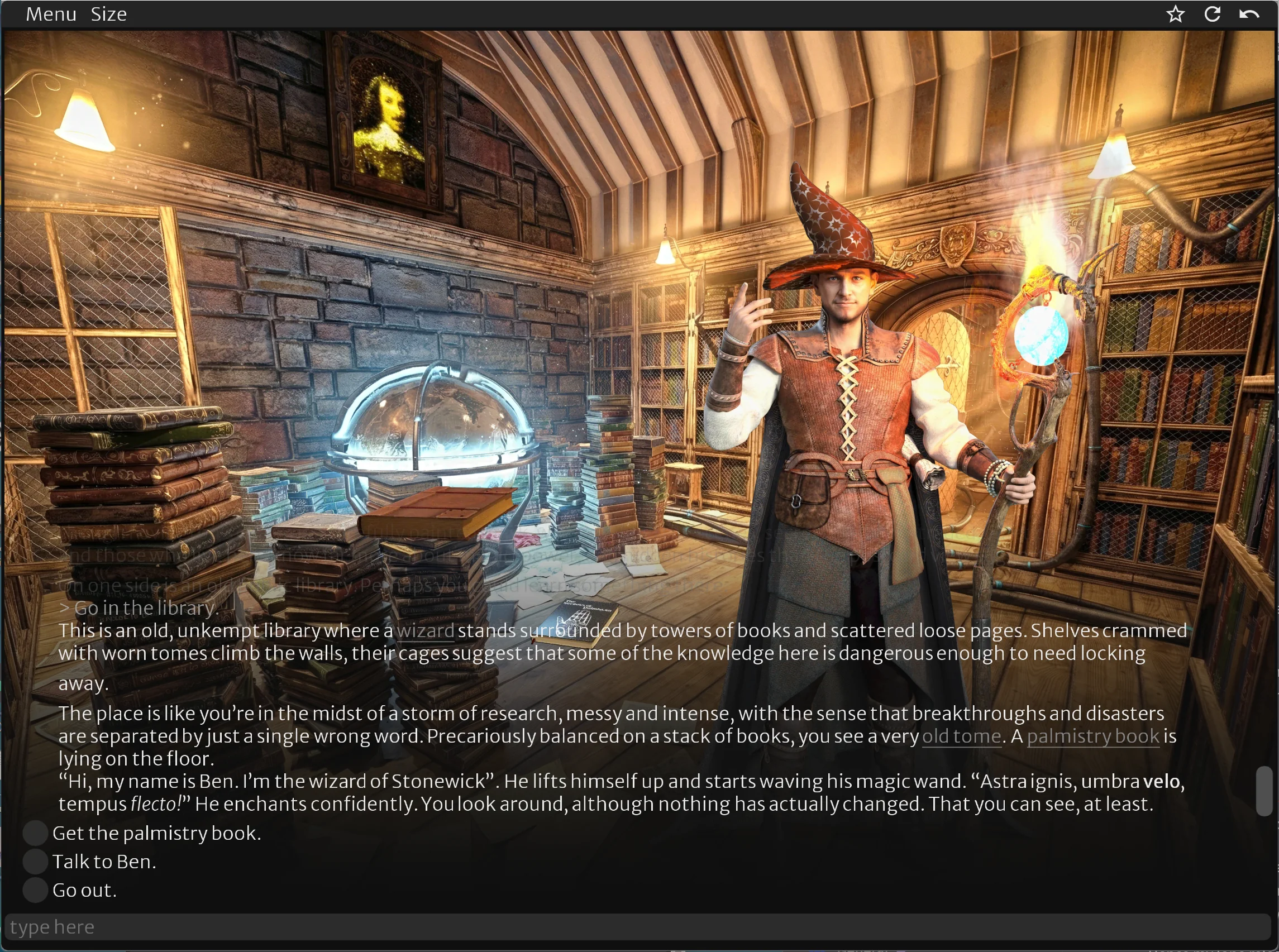
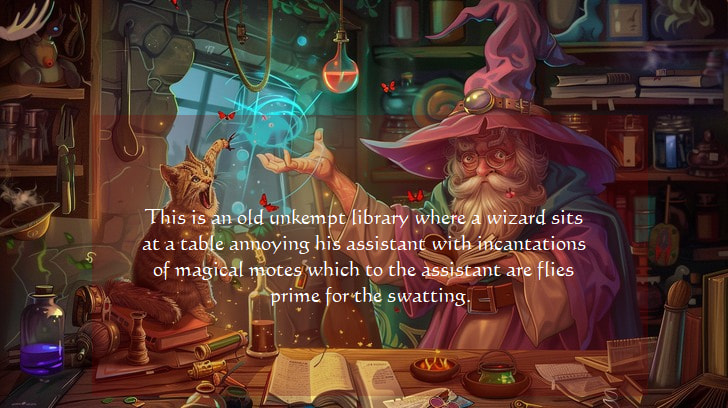
Good stuff here. Food for thought. One of the design ideas I am experimenting with is overlaying the text in a frame inside the image where the frame is alpha blended to the background and the text is composed in it.
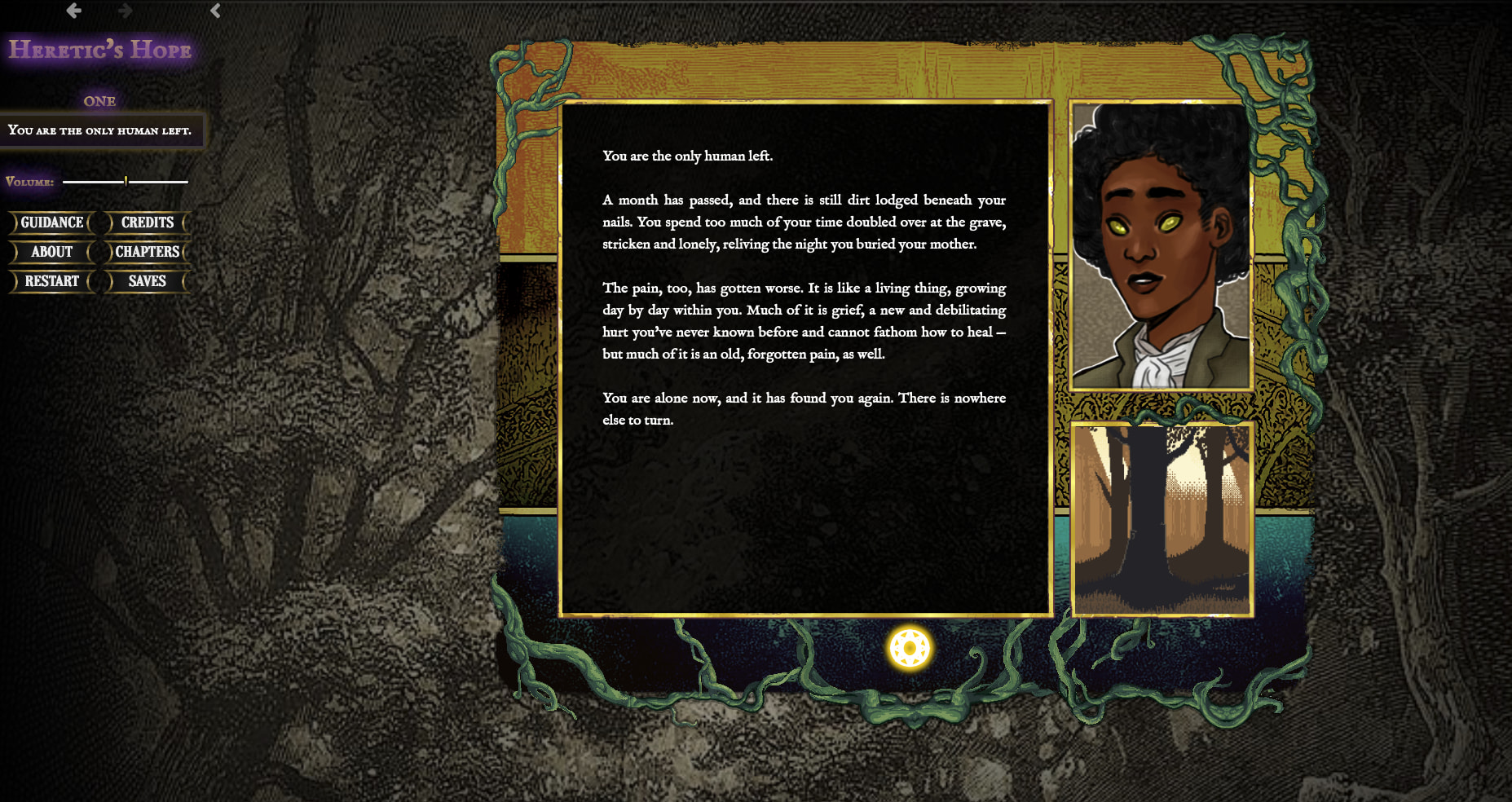
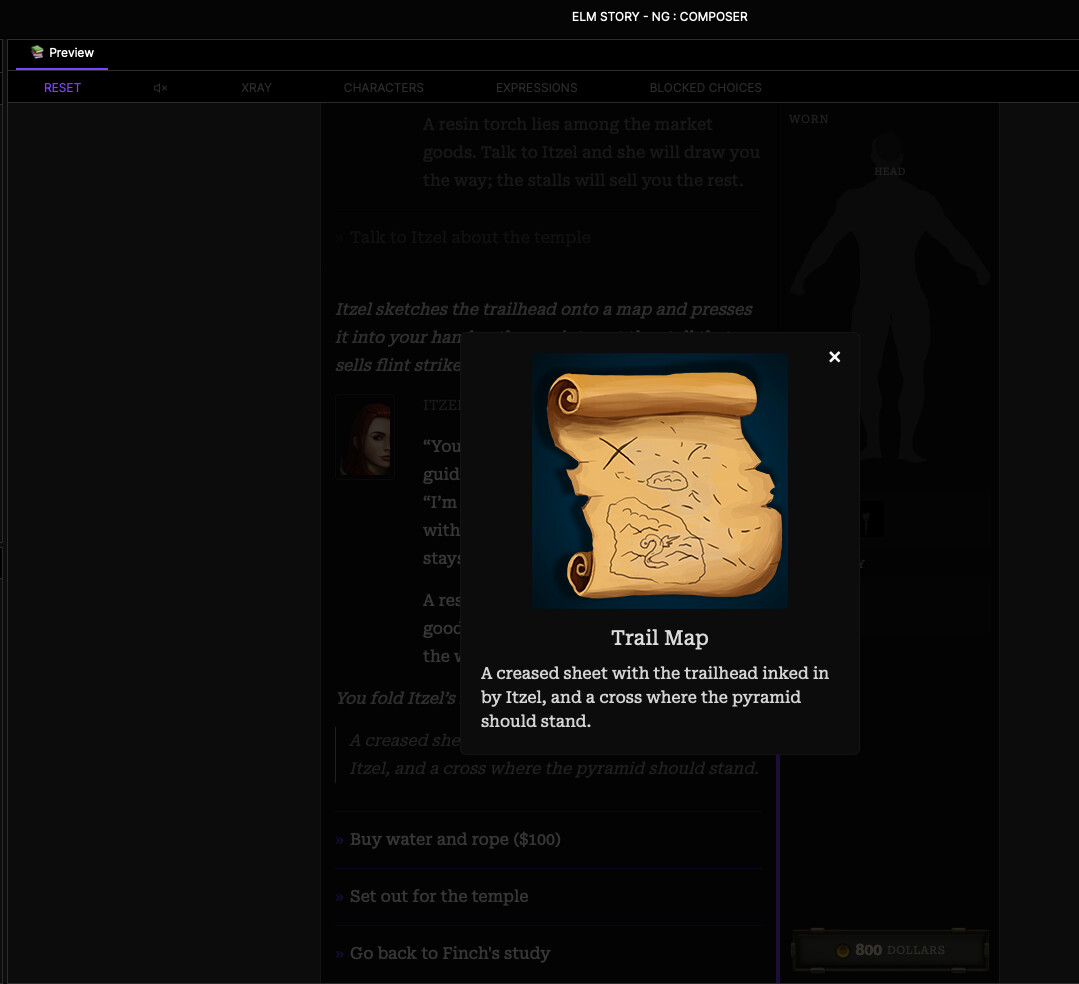
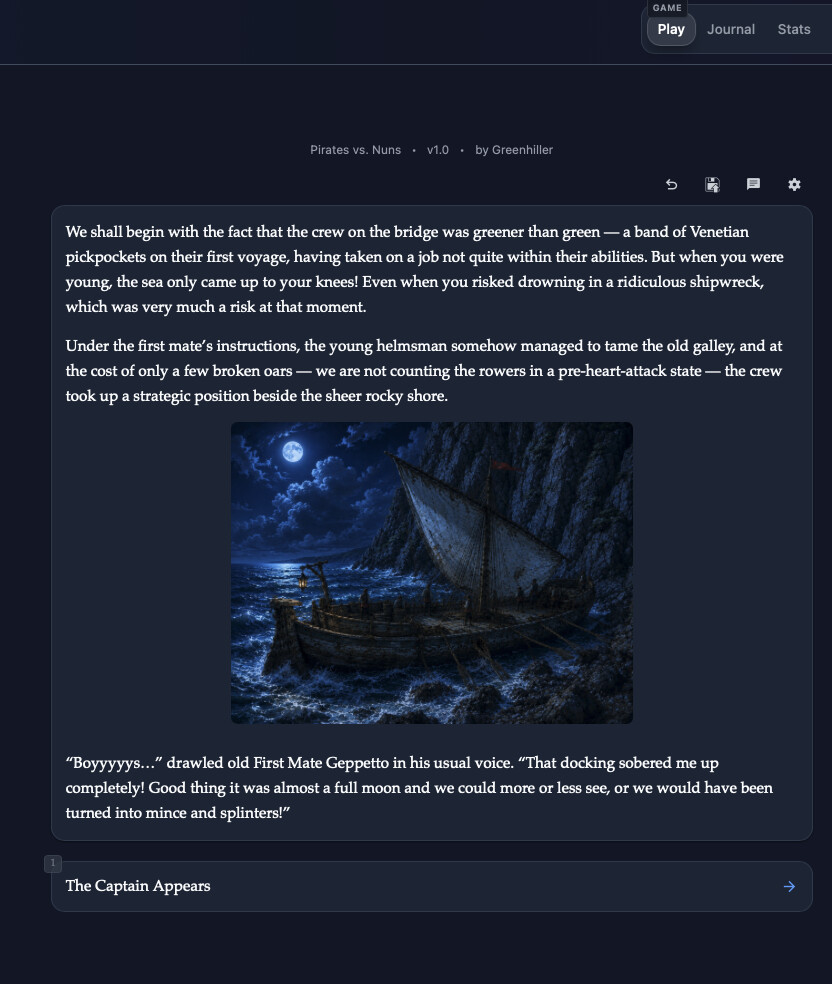
I’m not sure if you’re adding onto or trying to refute my point. These all look beautifully styled to me. Nothing like “A [terrible] web page from 1997”
My point was that most choice systems handle styling and images easily and well, not that they don’t have any.
My stance is that in an narrative-driven story what really matters is the text (aside the handling & command of the specific human language, that is) and UI and illustration put the work outside the resources & limits of a single author.
Hence my lone released choice-based IF limited its “decorative” features to colour palette & font.
What you have there is what i call, “the text and picture problem”. This is how to have the text and picture in the same space at the same time. Or how to apportion them. This is particularly pernicious if your pictures are large or you want more of a visual novel layout.
I ended up overlaying the text over the bottom part of the picture. This is especially relevant in wide screen. I didn’t put a box around it as that wasted space.
This is how I do it in my other, fractal, software. (I made this frame with that software) The frame itself has a color with a certain opacity. This opacity is alpha blended to the background to create a place to write and not have the text washed out by the background. The text is then written with full opaqueness so that it then jumps out to the eye. The parameters are simple. The frame color, percentage of blend to the background (this one is 25%), the text, font, color, and frame coordinates.
I was adding. I didn’t even consider this topic might be referring to parser only the way you did and I was gathering some unique examples, then I saw your quote and went okay, here are choice examples for comparison…
But I agree that I’ve not seen a separate text interpreter for parser games that has book-like flow for inline images, sort of how Undum does it.
I believe the thinking - for parser at least - is that people who play in a separate interpreter want to control how the text looks and the author basically doesn’t have much control over it.
The solution might be a web interpreter for parser that a game could be presented in and HTML/CSS styled, possibly BisquixE or Vorple. Many parser players still wish to “roll their own” and want the bare gblorb or similar format.
My personal preference for images in a mostly-text parser game is that images would pop-over in a separate modal window that could be dismissed and possibly called again by an EXAMINE or LOOK AT command.
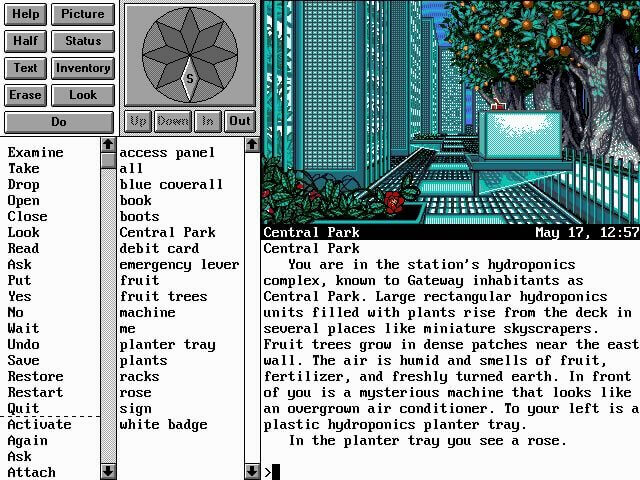
@Candy64 and @jkj_yuio examples are also good, but those bring to mind VN engines like Ren’py which have robust tools for background and sprite images, and often can hold the text in a caption box at the bottom of the screen, or might be able to print text completely full-screen over the background. In fact, with a VN engine, you could use the paper doll/sprite function usually meant for characters to show images onscreen at will and move them around.
There’s also the legendary Flexible Windows and Simple Graphical Window extensions for inform that essentially splits the interface up sort of like the classic Legend interface, but I from what I recall people seemed to have had difficulties making those extensions play nice with recent I7 builds.