View From the Shifting Mound
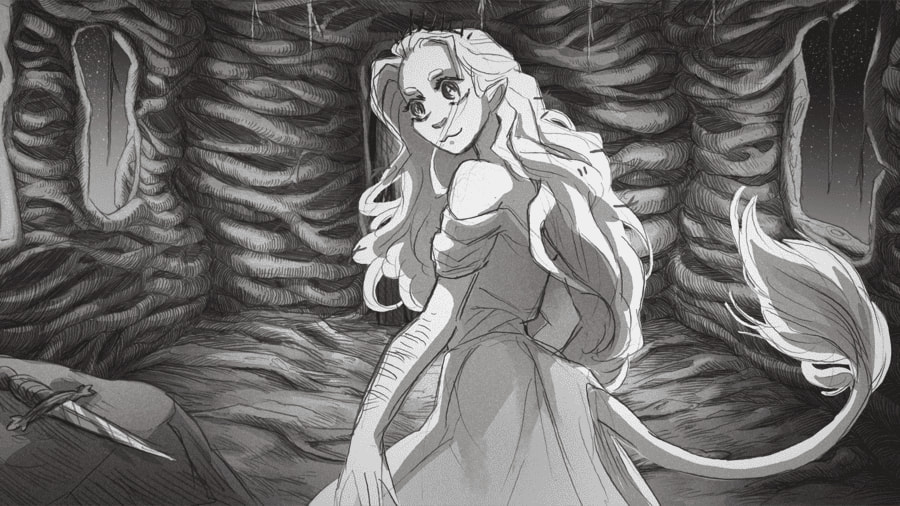
I recently found a interesting piece about identity and cPTSD, among other things, featuring the visual novel Slay the Princess. I haven’t actually played much of Slay the Princess, but still liked reading the essay. I’m curious what other people who have played the game would think.
I’ve seen enough discussion that I knew the gist of Slay the Princess going in, but the essay helped me understand the game better. The bits that I played felt very abstract to me, detached from reality, and I couldn’t understand them. This essay, meanwhile, analyzes the game through the lens of childhood abuse and trauma, relating the game’s story to the author’s own mental health struggles and experiences with suicidal ideation, and (spoilers for the end of the piece) her gender dysphoria and coming out as trans. The version I read was the English translation of the original Russian, so there were some translation quirks.
Caveat that the essay is extremely long and took me a few hours to finish reading, and I disagree with some of it (e.g. there’s a tasteless joke about the Holocaust early on, but the rest of the article isn’t like that, in my opinion). I’ll share some excerpts down below, drawn from the first half of the essay:
Every summer they shipped me to the village to live with my grandparents. They gave me the first real “upbringing” I had. My pre-school life, including whatever traumas happened, were snugly buried under the blanket of amnesia; and my parents were very laissez faire and never tried to shape me into anything in particular. So it was my grandfather who did most of the work. His running theme was how brutal life is and how strong you have to be to survive. He “prepared me for life”. While you’re a child, he said, you gather strength, build character, teach yourself skills, learn to work and to endure. You have to lay down the foundation now, while you’re in the tutorial area, where food and shelter are free. Nothing will be free once you’re an adult, you’d have to survive by your own strength, and if you don’t learn all you need to learn, you’re going to suffer. He was a warrant officer, an alcoholic, “train hard – fight easy” enjoyer, and he taught me how to be a Real Man.
I was utterly horrified of the ‘adult life’ he was preparing me for. Adults have to labor around the clock without sleep, scrape by on pennies, defend against all kinds of enemies, hustle, adapt, stay sharp at all times, and absorb constant injustice. The scariest stories were about how cunning and quick thinking let him avoid some catastrophe. Perhaps he thought that the bigger the disaster he’d narrowly avoided by being smart, the more motivated I’d be to be smart. What I actually got from it was that it only takes one misstep, one wrong answer to a puzzle that Fate decided to give me that day, and I’ll end up homeless and destitute and doomed forever.
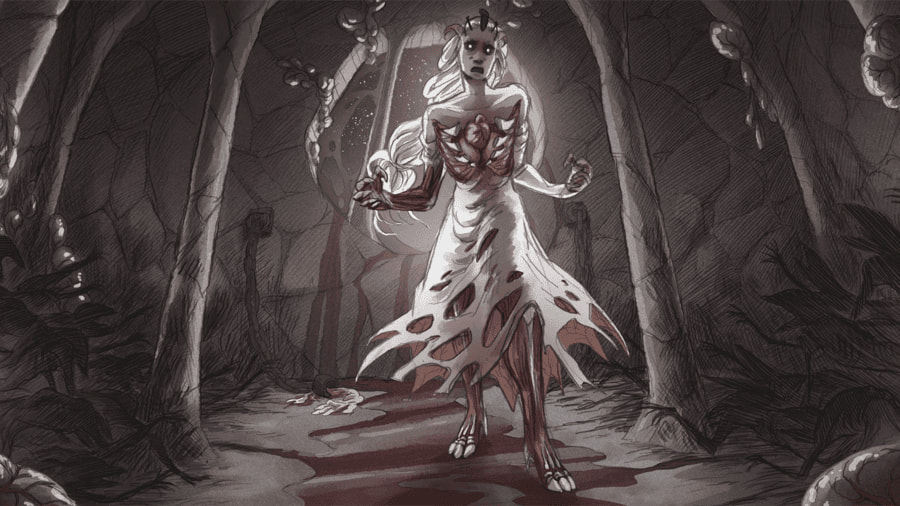
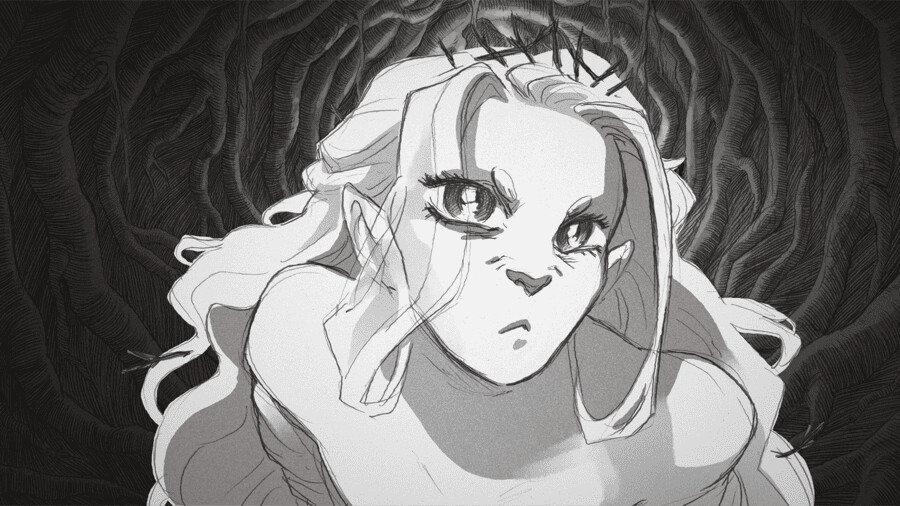
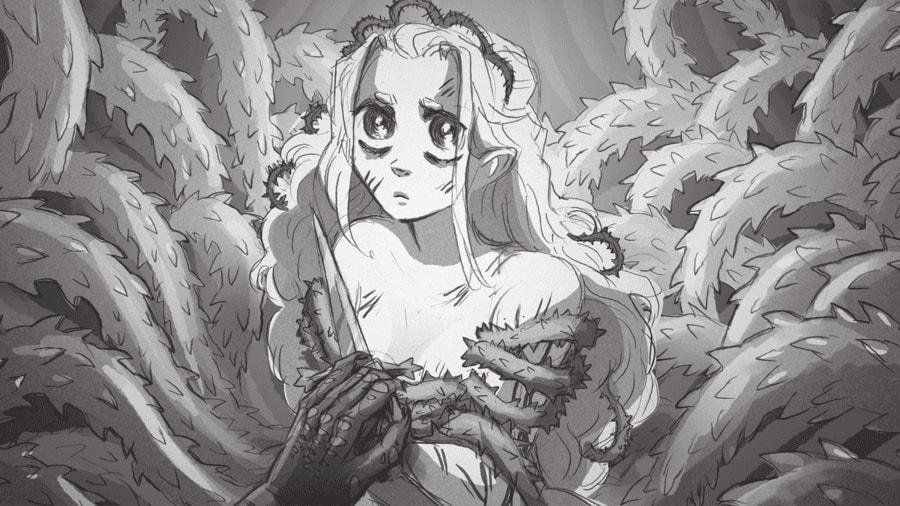
And there you are. Are you here to kill me or something? is the first thing the Princess says when she sees the protagonist, the Long Quiet, with the knife. She’s careful and suspicious, expecting an attack.A notable feature of “grandfather realism” was the universe being utterly incomprehensible and unpredictable. One time he got hold of some expensive candy bars and treated me to them. The bars had raisins, which I hate, so I rejected them. He was visibly offended, and he told me about a friend who developed some kind of illness from a nutritional deficiency, which had left him paralyzed – and raisins happen to contain exactly that nutrient, so I’d better eat up. I ate the candy, but I remembered that story as part of the larger insight: the universe is chaos, anything can happen, you can end up crippled because you haven’t eaten a candy once in childhood. There is no logic, you can’t hope to understand it, you can only memorize.
A lot of it could have been prevented with early intervention. Get a therapist to work out the traumas before they turn into self-sustaining spirals. Teach me how to handle the idiosyncrasies of my brain. Teach my mom that gifted kids need more support, not less. Maybe let me retake a grade. But there weren’t any good psychologists around. I’ve seen some, and they called me an “indigo child”, and concluded, quote, “intellectual development outpaces social development so much that it unbalances the personality”. They came right up to the edge of saying “autism” and stumbled at the last step. Nobody told us what to do about it, other than make use of this gift and IQ-max.
I felt that something was very wrong, but I didn’t know how to explain it to others. On some level I sensed that I lacked human connection and support. I brought it up to a school psychologist, but she screwed it up. She asked me to say exactly and precisely, what specifically I wanted from other kids. I was too young to understand my own feelings and couldn’t have articulated them clearly. After a few false starts I settled with the only operationalization that I could put into words – that if I needed help, I could get it from them. She asked “so, you want to learn manipulation, right?” I didn’t fully understand what that word meant, but I said “yes, teach me that”. She refused and that was the end of it.
You may understand dissociation as the literal opposite of “association”. Association is a connection between two disparate things, so dissociation is lack of connection that’s supposed to be there. The parts of you that should be working in unison – perception, cognition, emotions – don’t fully communicate with each other. A healthy example is “auto-pilot” or “highway hypnosis”. You can drive a car and solve all the car-related cognitive tasks on the background, without noticing it, while thinking about something else. The thinking is, of course, happening, your brain makes all the predictions and deductions – it’s just that all of that is dis-associated from conscious perception and memory; it’s happening “under the hood” where the homunculus can’t see it. Zoning out of a boring meeting, getting pulled into a book until the external world stops existing – that’s also dissociation, on the subclinical end of the spectrum.
Further along the spectrum sit derealization and depersonalization. When it seems like the world is not real and you’re not real and everything is an illusion, like you’re in a dream or in the Matrix. Sometimes it’s you who’s not real, it’s not your body and not your thoughts and not your feelings. My metaphor at the time was – it’s like the world is a lagging video game. The graphics are realistic but not quite like real life; stuttering framerate makes everything look slower that it should be; the input lag is kind of annoying; and the protagonist is not literally you, but your avatar that you’re puppeting from behind a screen. When you’re that detached from your own thoughts and actions, they quite literally happen on their own. The alien thoughts of “my grandfather” were mine in the most literal sense, they were in my brain after all. But they didn’t feel like mine and didn’t fully obey me.
Parts of you can thus act and think independently from each other. Timujin was one such part. The mask that I presented to other people to function in the society detached into its own entity, abstracted from the rest of my psyche.
But just because he suppressed all his problems didn’t mean they went away – it just meant that their effects were imperceptible to conscious awareness. For most of my life, whenever I learned that other people were doing… well, anything in groups – go to a concert together, celebrate birthdays, or even play a co-op game – I just collapsed on the floor. Timujin managed to suppress those flashbacks and dissociate from them, so I didn’t have that bad of a reaction to socializing. I intentionally sought out group activities, tabletop game nights, events, even dates. But dissociating from flashbacks doesn’t mean not experiencing them. They caused a distinct sense of wrongness, and that never ended well. I could never enjoy events, because they felt like battlefields. Often I got headaches, sometimes nausea and vomiting, sometimes I was just anxious throughout. One time, at a friend’s house, I mishandled my fight reflex and gave the friend a vicious enough the reason you suck speech that he ran away, and then his mom forbade me from ever stepping foot in her house again. They later cooled down and forgave me, but it’s unsurprising that I had trouble making friends. One of my internet friends regularly triggered me with tales of his rich social life – including airsoft, drug-fueled raves, hikes, and theater club. Later when a friend from college offered me to join his airsoft team, I ran away in terror, and then tried to suppress the painful thought that my friend plays airsoft.
Timujin felt that he became a different person. I didn’t think to pathologize it – I said that I just “left it all behind” (lol) and “matured”. The most objectively noticeable change was how he played video games. In school, I played extremely cowardly and cautiously. Always on the easiest difficulty, conservatively, defensively. I beat Space Rangers without killing a single ship – and it wasn’t a challenge run, I was just afraid of getting into fights even when I was obviously stronger. The child felt weak and powerless against a precarious world where any mistake means death or worse – of course his brain would always be playing in easy mode, where end results is the only thing that matters, and where it’s of utmost importance to never lose and never make mistakes. It’s expected that a child who knew that he’s always the weakest one in the room would instantly give up and abscond whenever he’s up against someone – even against a video game AI. That was my nature, defined by others’ perception. Timujin had the opposite idea – he loved challenge and risk. I remember the moment of realizing this contrast very well. I was sitting in a lecture hall, playing XCOM: Enemy Unknown on Classic+Ironman99one-save permadeath mode difficulty. My friend also played this game, save scumming liberally, and we talked about it. I said that playing games like this without permadeath defeats the point, and he argued that permadeath removes all the fun. His position reminded me of myself in the past, and I wondered why it’s so unintuitive to me now. Why can’t I empathize with the past version of myself? Reflecting about my past, there wasn’t any gradual change in tastes; I just woke up one day and my gaming style switched to its opposite. Timujin never solved that puzzle and never realized how The Shifting Mound works. But it was enough to get into a community that didn’t see me as ontologically weak, to stop being ontologically weak.
I knew in the abstract that the mobile games industry was predatory. But actually seeing how the sausage is made was different. It’s worse than you think. Meetings looked like comic book supervillain round table. Every new idea about how to maximize psychic damage inflicted on players invited cheers. And judging by the supplementary materials they made me read, it’s all industry standard; there’s no shortage of mind-rape machines invented by game designers. If they ever make a modern remake of Thank you for Smoking, mobile game designers deserve a spot among the Merchants of Death. And even though this time we were making a functional, profitable product, the boss still treated investors like useful idiots who needed jingling keys and Potemkin villages, lest they be cranky.
I did my job. They commended me on it. But it never felt like an achievement and never made me proud of myself. It wasn’t a difficult job; all the tasks were well within my abilities, and the management wasn’t overbearing and mostly left me to my own devices as long as I delivered results. Objectively it was way easier than college. But it was still extremely exhausting. I came home only to barely recover before the next day, with not a spoon left to do anything else but stare into the screen. Mission doubt is a real component of burnout; if you don’t fully understand what you’re doing and why, it adds psychic damage.
And I didn’t understand why I was doing what I was doing. The Timujin construct and all his self-improving and hardship-overcoming machinery didn’t pay off. I did everything I was expected to. I graduated from college and moved on to “adult life”. And what did I find there, on the other side? Work, and recovery from work; no time or energy for hobbies or friends or fun; no opportunity to even play video games. And I lived with my parents! I didn’t even need to clean and cook for myself, and I was already at my limit. And this job wasn’t even socially useful, it was harmful. A bullshit job merely fails to make the world a better place, but this one made it worse. And the more harm I inflicted upon the world, the more money I made. And I wasn’t even having fun.
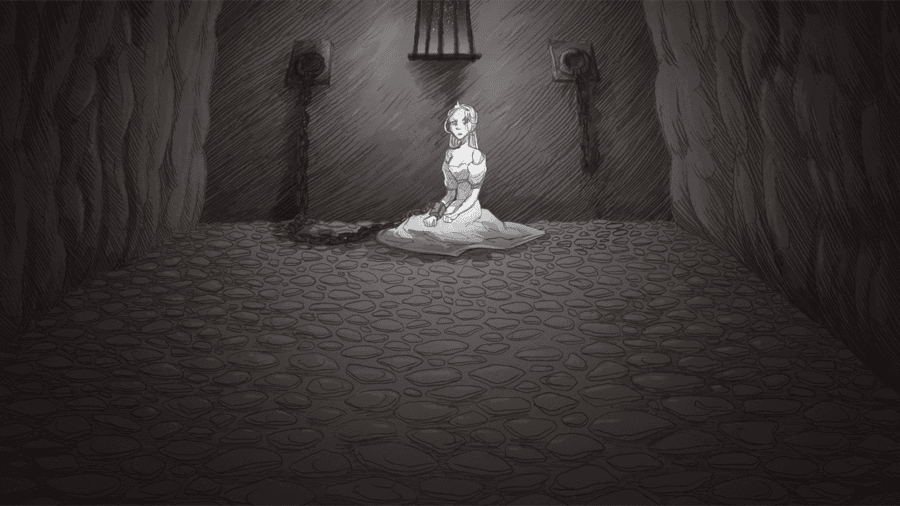
“Oubliette” is an apocryphal French torture technique. They threw the victim into a dungeon shaped like a narrow well, and left him there to die, surrounded by darkness and stench. They put the well on the top floors of castles, and built its walls thin. So all the time the prisoner was dying painfully, he heard the sounds of life from the rest of the castle. The music, conversations, and occasional smells of food added a layer of psychological torture, reminding the victim of what he had forever lost, teasing him with pleasures he can’t ever partake in anymore.
My mother was always a positive person. She loved to travel, go to concerts and museums, carouse. She told me to always keep my spirits up and see the bright side of everything. When I had a bad day, or was otherwise miserable, she said that I should be grateful for the experience and be happy for what I had. And I hated it.
The way you prevent a negative experience from becoming trauma, is processing the emotions through another person. You have to return the ANS into the social engagement mode, and tell your vagus nerve that there are people here who can understand, help and protect. When I went to my mother for support, I didn’t get support, or understanding, or sympathy. My problems, whatever they were, were left unaddressed. My problems, she said, were insignificant compared to the beauty of everything good in the world. I was left alone with my problems and feelings, and also got to hear about some generic good and positive things that had absolutely nothing to do with whatever I was going through. Recently I mentioned the phrase “toxic positivity” to my mother, and she immediately admitted that it’s a good description of her. My mother is showing me all those cool things, but I’m sad, I can’t relate to the good, I’m too sad! I’m sad, but she’s always happy! I have problems, but she never does. It was especially disheartening after that “spirit of contradiction” trick. Right when my nervous system is actively flashbacking and seeing danger everywhere, it sees the good side of life. “Oh, you failed at something? Well, look how good I am at it. You have a problem? I don’t! Look how happy I am that I don’t have that problem! You’re missing out on not having the problem! You can’t do something? Oh how great it would be if you could! You suck at painting? Here’s this inspirational book, this man is paralyzed from the neck down, and he’s 100 times better at painting than you are. Not even disability can stop him! Unlike you, who’s not disabled but still sucks. Oh you have no friends? Have you considered the fact that friendship is beautiful and indispensable? Friends are soooo good to have, they will always have your back. There’s so much beauty in the world, so much fun to be had! Well, not by you, or course, you’re the sad one, everybody else is having fun and enjoying life. You’re sooooo missing out on not being me, who can do anything and is always happy”.
The problem of social skills is that you can’t develop them alone. Especially if you’re an undiagnosed autistic with no stable identity, and the only chapter of your life when you had real socialization, you mostly remember through written notes. I don’t understand intuitively how communication works. I can only imitate.
And others rarely cooperate. When I directly ask for advice or help with my socializing, they tend to see it as reproach or hostility. When I ask something like “John asked a question and you all answered right away, and then I asked a question and you ignore me, why is that”, they say “nobody is obligated to heed your every call, the world doesn’t revolve around you”. Which is literally true in a sense, but it doesn’t really explain anything. When I lose track of the conversation or just don’t know what people are talking about, I try to clarify, but instead of real answers I get ironic jokes and witty remarks. And even when I hear something that sounds like a real answer, I can never be sure it wasn’t a joke. It happened more than once, when I believed a plausible-sounding answer, but it turned out to be sarcasm. For my college friends, I developed techniques and procedures to ask questions or request help in a way that actually gets me what I wanted. But a) those techniques are too idiosyncratic to STEM college culture and don’t generalize and b) I never wrote them down, and Timujin’s procedural memory was too spotty to reproduce them.
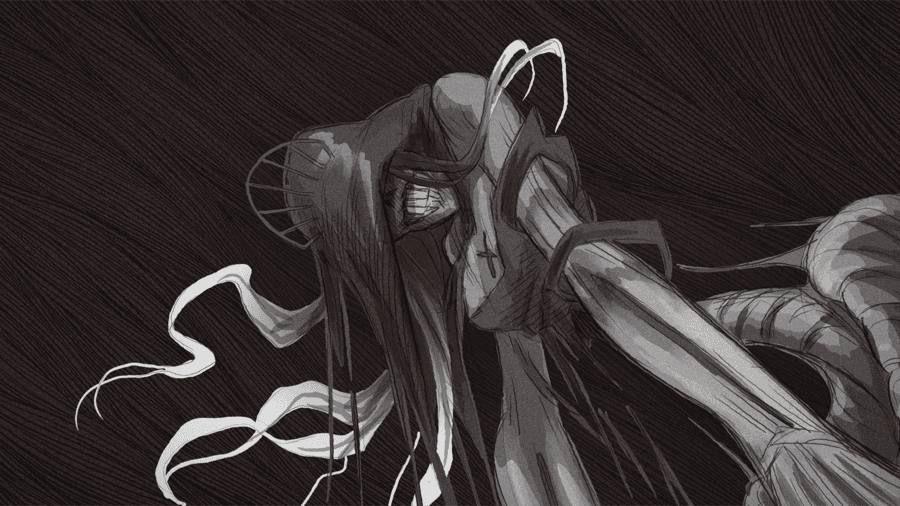
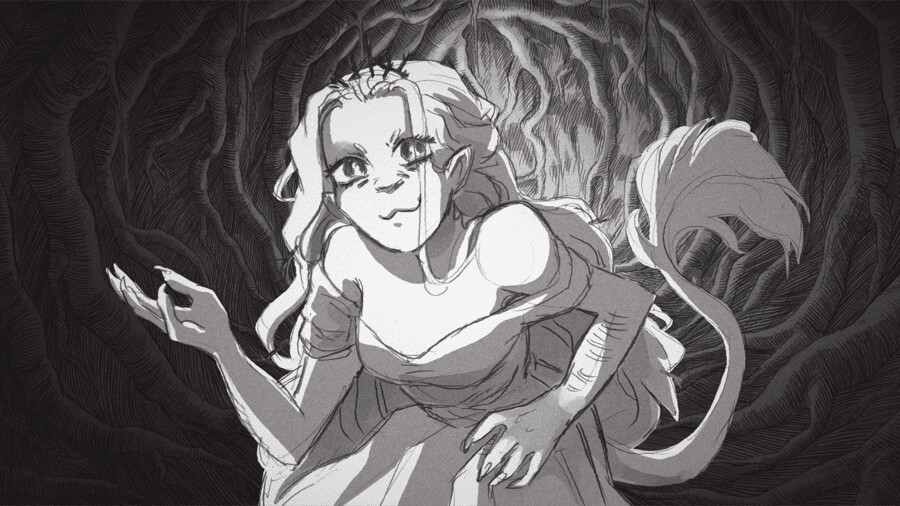
If LQ kills The Nightmare, she reincarnates as The Wraith. This time it doesn’t expect any cooperation or compromise. She just takes over his body and leaves.The only consistently effective method was to freak out. Start swearing, insulting, shouting, shaking fists (if IRL) or spamming in all caps (if online). It works, people snap out of their playful-patronizing demeanor, stop clowning and actually tell me what I wanted to hear all along. But the problem of this approach is that it only works once. It solves this social encounter, but it ruins the future relationship. That’s no way of making friends. So the only social skill I ended up actually good at was the Columbo method. Getting my answers using careful observation, subtle provocations, pointed questions that needle people just the right way, under the guise of faux naiveté, without ever asking directly or revealing my actual agenda. It worked, but it needed uninterrupted focus and was very exhausting. I underestimated the extent to which my social skills hinged on the physical. To not be ignored, I relied on raising my voice, getting in people’s faces, separating them from the group, and betting on the implied threat of violence. When I moved most of my social interactions online, my core strategy stopped working. I became a ghost, invisible, inaudible, ignored by all.