Quousque tandem
Thoughts at the end of Spring Thing (Latinorum postmortem)

It was November 8, 63 B.C., when a young lawyer, Marcus Tullius Cicero, having just escaped the assassins that his political rival, Lucius Sergius Catiline, had hired to kill him, delivered his impassioned speech in the Senate against Catiline himself, who sought to overthrow the Republic.
“Quousque tandem abuteris, Catilina, patientia nostra?”, “How long, Catiline, will you abuse our patience?”, continuing to list all the plots and misdeeds.
In modern common speaking, it is used, even in its abbreviated and suspended form (Quo usque tandem...), with the intention of accusing the addressee of abusing the patience, indulgence, or good manners of the speaker, or of the group for which they speak.
That is what I expected to face when presenting my "Latinorum".
After all, having put readers through the wringer with fried eggs and celery juices instead of taking them on a lovely hike in the Dolomites, having forced them to brew coffee with a moka pot they’d then have to throw away, not to mention the seagull always lurking with its droppings, my readers must have thought: “What will he torture us with this time?”
So I’m not surprised by a statement like:
I almost didn’t play this one, as Espresso Moka was just frustrating and annoying for me,

Actually, the game is among those with fewer reviews than average, but I don't think that's solely due to the previous games.
The rather unusual platform might have been off-putting, but it could also be accessed via a standard browser.
The browser version seems to be running on an emulator.

Unfortunately, it wasn't accessible from a smartphone because smartphones have inherent limitations regarding keyboard use that cannot be resolved and that also cause problems on other platforms.
But perhaps that turned out to be the least of the problems:
The game is much more friendly than I was expecting from it being a Commodore 64 game made over forty years ago

Obviously, I would have had all the ZX Spectrum fans against me, but if someone had owned that fantastic computer that was (and still is) the Commodore 64, I would have won them over right away.
I had a Commodore 64 back in the early/mid 1980s, so this is great fun for me.
In fact, I posted a presentation of the game on a few Facebook groups for Commodore fans, and traffic to the website skyrocketed.
And what about that mocking title?
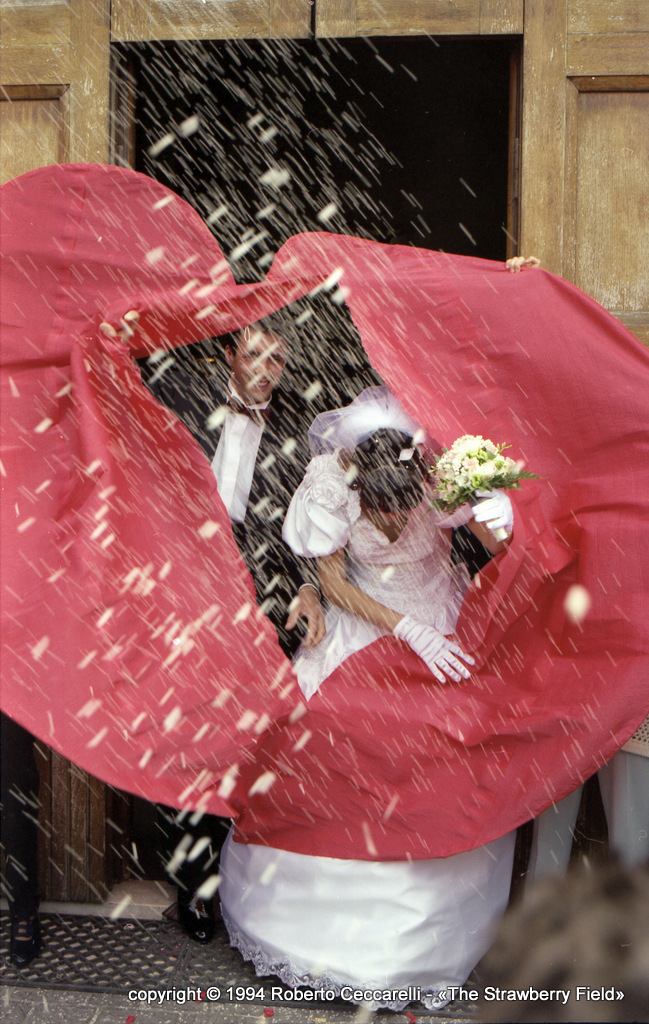
The term was coined by Alessandro Manzoni, who make Lorenzo Tramaglino say it in «The Betrothed». Renzo is the betrothed of Lucia Mondella, but don Rodrigo, a local squire, had fallen in love with her.
To prevent the marriage, don Rodrigo sends his thugs (the “bravi”) to threaten the priest, don Abbondio, who was supposed to marry them.
Don Abbondio was certainly not known for his courage, so he recites to Renzo, in Latin, a language the young man does not know, a long list of impediments in an attempt to dissuade him. It is here that Renzo, thoroughly annoyed, replies: “Are you making fun of me? What do you want me to do with your Latinorum?”
"Oh, come on," some might say, "it's just because they saw you're Italian." I don't want to believe that's the case, especially since I ended up receiving this compliment:
I found it to be reasonably smooth (with two exceptions), especially notable given its Italian-language authorship to this English reader.
Let’s say that perhaps some people thought Latin was something for “Latins” and far removed from the English language. Maybe they don’t realize they’re reading a post-mortem on a forum, or they found the game on the Interactive Fiction site Data Base, etc. (the latter stands for Et Cetera).
In short, Latin words and expressions are still widely used in modern languages; after all, Latin was the standard language for all scientific treatises at least until the XVIII century; Newton wrote in Latin...
Here, too, I got a positive comment:
I like that it opens with a cheery “alea iacta est”


It was January 10, 49 BC, when Julius Caesar crossed the border of Cisalpine Gaul and set out for Rome, uttering the now-famous phrase "Alea iacta est": this event marked the beginning of the civil war against Pompey.
The border was marked by a small river, the Rubicon, which was crossed along the Via Emilia: crossing it meant committing an irreversible act, “the die has been cast”: fate had been defied, and now whatever happens, happens.
The recently restored bridge over which Caesar’s troops crossed is located not far from my home; moreover, every day I “cross the Rubicon” (I cross the river via the highway bridge) to go to work.
And finally, I put myself in the shoes of someone who was supposed to play through the story and perhaps review it: they come home tired after a day’s work, why bother with a 40-year-old story by an Italian author, perhaps filled with phrases in a dead language that only those who’ve studied it can understand?
I sincerely thank those who, despite everything, played and reviewed the game, those who organized the event, and everyone who had the patience to read this far.
And if anyone had become curious, remember that the game is always available, also in the online version, and comments are welcome.
I knew I was taking a big risk by releasing a game I’d designed many years ago on an extremely limited platform, but in the end, it held its own among so many more modern games backed by far more advanced technology. I had a lot of fun getting it up and running again on my old little computer, and I’m glad that someone enjoyed it and that it can now boast its “ribbons.”

What happens now?
I won’t deny that, for me, the most interesting part was reconstructing the software environment that hosts the story, rather than the story itself.
Over these 40 years, my approach to programming has changed a lot, partly because the reasons I write software have changed, the tools have changed, and looking at those old programs left me amazed: how did we manage to do all that without decent editors, debuggers, or even the ability to define a function...
I'm creating some pages on my website where I talk about this “hidden adventure” that led to the creation of a full-fledged authoring system.
The extremely minimalist parser showed some limitations:
vivdunstan:
GET X doesn’t work - you have to type TAKE X. As a very long-term GET X typer this was a toughie for me! To be fair the game does have a COMMANDS command, which tells you what it understands, like POWER X not TURN ON X. But the GET/TAKE was a constant bugbear for me.
Viv wasn't the only one to point out the problem with GET, and in the version currently online, the command has been included alongside the TURNON/TURNOFF pair (the current parser doesn't use two words for the verb, but only for the noun).
There are a billion modern conveniences that it doesn’t have, but it was designed to its own limitations, so it still works.

I plan to refine the parser a bit to allow for other types of interaction and use it for a post-comp version of the story that addresses some of the concerns that have been raised: this is, however, a long-term goal.
First, I need to prepare the four cards for the Gianluigi Parpani 'The World in a Pocket' 2026 Art Competition for contemporary carte-de-visite, complete the description of the current authoring system and a few other trivialities.
I also had more ambitious ideas, of which there are a few traces:
JJ McC:
A key design choice, which I question whether was present in the original, was to highlight interactable nouns in the text.
Word highlighting was added in the current version with the aim of creating hyperlinks that can be clicked using the joystick.
However, implementing this feature both at the program level and at the online emulator level (PC emulators have a small panel that emulates the joystick, whereas for the online version it would need to be built using HTML/JavaScript) would have taken too much time and was therefore shelved.
In short, I have plenty of ideas but little time, but the results I’ve achieved so far are a great incentive to keep going.
