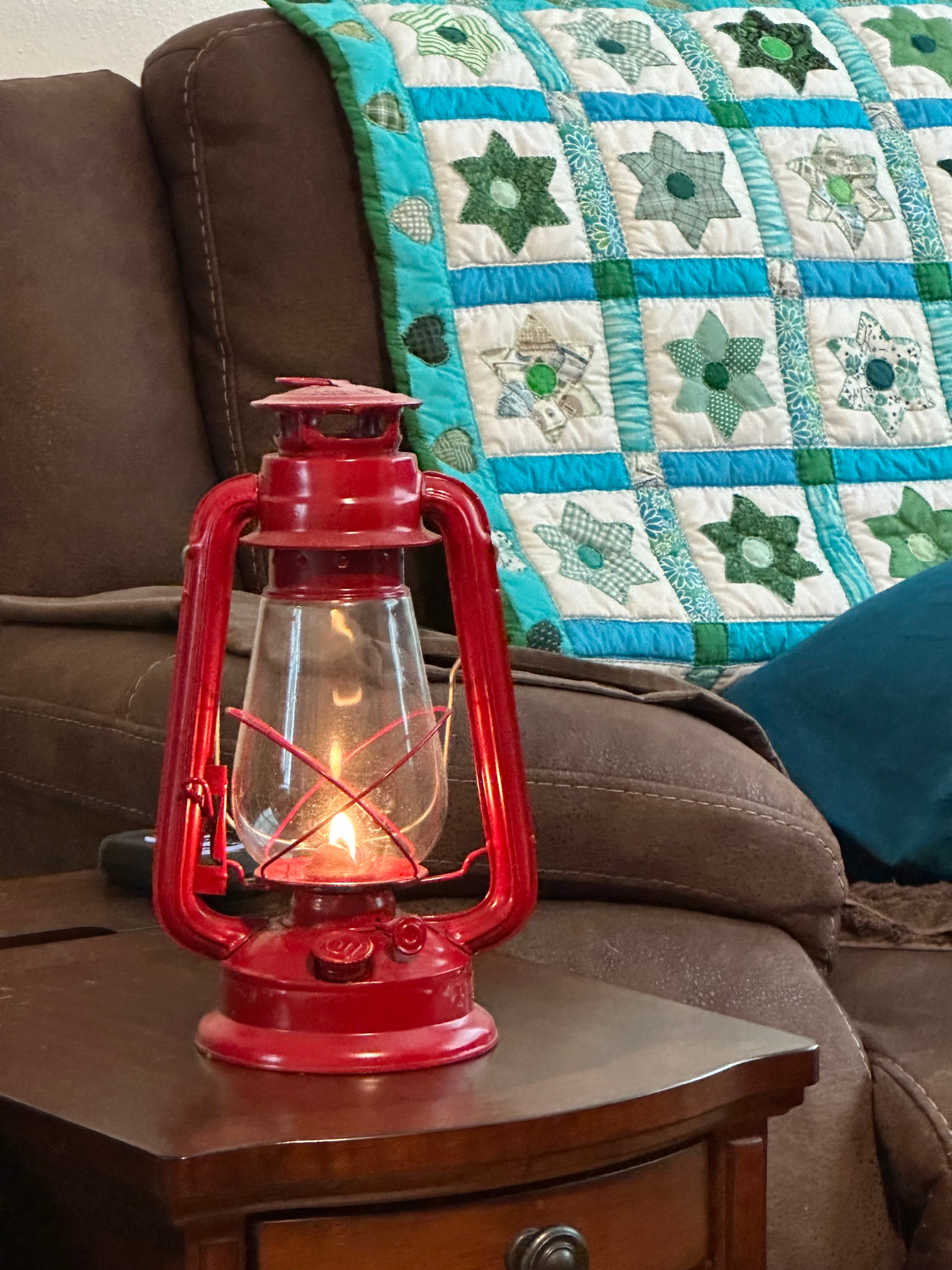
The actual ParserComp Lamp.
10 Likes
I agree with fos1, your games are fun. I’ve directly imitated them twice (once in Never Gives Up Her Dead where my goal for one area was “make a Garry Francis game” and then when I helped code a game for someone else, where I was inspired by your BDB project wor helping port older games). I read forum posts to my son all the time and my son calls you “Garry Parser” and says your opinions are “based”.
6 Likes
Thank you both for the compliments. Some people, especially reviewers, take this hobby far too seriously and think that every new game should be some sort of earth-shattering masterpiece or something that breaks the mould and presents something new.
I’m just in it for the fun, so I try to make games that are fun to play. If I’ve met that goal and made some people happy, then I’m happy.
Unfortunately, the more games you write, the harder it is to come up with something that feels fresh and new, especially with the puzzles. I’m not promising anything that feels fresh and new with this one, but it’s early days. Let’s see how things go. I can’t devote too much time to it, as I have to get back to the BDB Project games.
9 Likes
Space,
As I mentioned, I will not be excluding games that have AI content. You can let the judges determine the merit of your game.
fos1
I’m confused. Isn’t that the point of rule 10 (in bold italics no less!)?
We expect ParserComp 2025 entries should not be generated by Artificial Intelligence. You may use generative AI to develop ideas much as you would to augment your imagination. You should not use AI to generate code or any of your narrative text.
3 Likes
Me too. The rules are not clear on many points. For example, is ai art allowed only for covers or can it be used for in-game pictures. Furthermore, can ai audio be used? Personally, I don’t see the point of banning ai coding either?
1 Like
I am trying not to be too pedantic and exclude good games.
I am pretty sure that AI-generated games will be obvious, but you never know. Games that use AI to augment writing skills may be OK. I hate to see diligent authors excluded.
???
I may modify the rule somewhat…
I have no skin in the game either way, but I think now is the best time to make the rule clear. It seems like most of the comps are settling on a consensus of “AI code is okay, AI art is a gray area, AI writing is banned”, but I’m also all for comp organizers trying out different permutations as we figure out what works and what doesn’t.
3 Likes
I’m happy with whatever the organizers decide on the rules. There’s gonna be some great games entered for sure!
1 Like
FWIW, i would actually like to see AI art allowed. Which, as i see it, is already the case in the rules. AI code too, actually. And AI sounds, if that’s even a thing.
My reasoning is that we have already bans on most of these in other comps, and it would be nice to have at least one comp that’s more permissive. And I agree with @Fos1 that it should really be up to judges to allot their scores, as “slop” will sink.
4 Likes
As a general competition thing, I feel like it might be easier to stick with rules once they’ve been laid out instead of looking at exceptions or modifying rules once it’s been announced and you’re accepting submissions, and maybe consider that for the next one if you want. You’d have time to think it over more and, if it helps your decision making, to discuss with other people, whether it’s surveying the community or just privately other people whose opinion you value.
6 Likes
I have modified ParserComp 2026 Rule 10 to be more in line with other IF competitions. The actual displayed narrative of the game should be created by the author.
10. Artificial Intelligence (AI) Policy: Artificial Intelligence (AI) is a controversial topic. ParserComp 2026 is a showcase for text-based parser-type interactive fiction (IF).
In recent times, generative AI has matured to the point that it can be used to develop computer code and narrative fiction. AI code is allowed. Entries may not require judges or players to interact with external AI or generative services during play.
You may use generative AI to develop ideas much as you would to augment your imagination. The game narrative should be created by the author.
Graphics are another potential use of AI. For example, Adobe Firefly for example can generate cartoon-style graphics by suggesting a set of topics or keywords. This is an example of an image generated by Adobe Firefly:
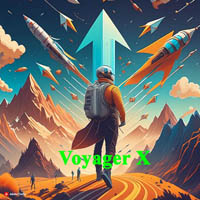
Not everyone is an artist. In that case, we will allow AI-generated images, but you must acknowledge the source of the images in the credits, e.g. ‘Images generated by Adobe Firefly’. You should consider creating the images yourself or employing an artist to do them for you.
6 Likes
OK! With the rules revision, I can enter my game in good conscience. Thank you to the organizers for your hard work!
3 Likes
Good deal! I am glad you are entering.
Thank you, fos1
2 Likes
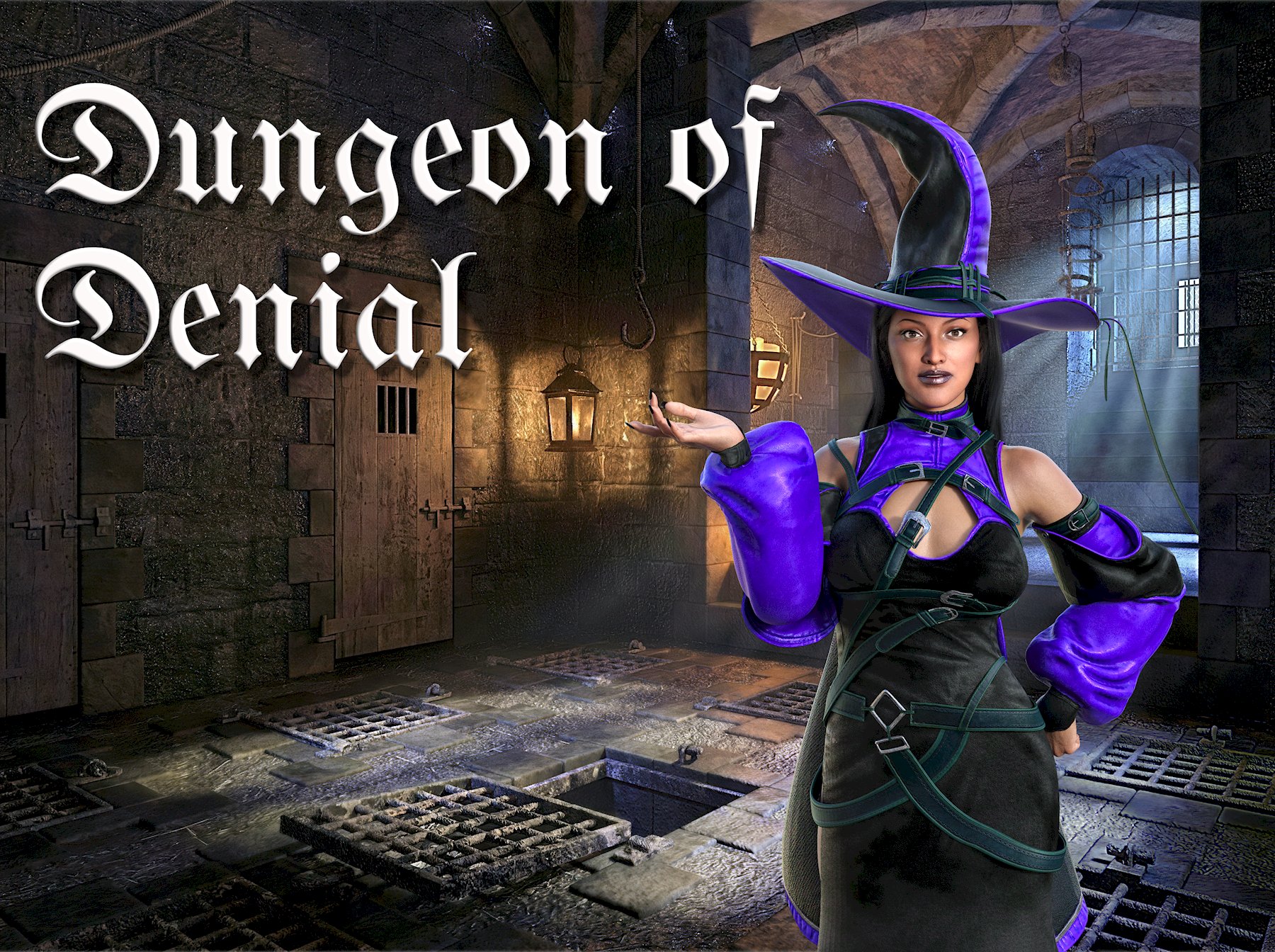
Forthcoming comedy parser game, see playable promo cameo for details.
2 Likes
Just came back to check this thread and make sure the deadline wasn’t the end of May. I’m like one solid round of beta testing away from completion…
But it’s not. Phew!
4 Likes
Damn beta testing already is quick
1 Like
I’m concerned about the voting algorithm used by jams on itch.io
If I understand correctly, 50% of games will get a reduced score simply because they are the least rated ones.
This seems to favor well known authors, who (I presume) have a strong tendency to get the most ratings, and hence be immune from this score reduction.
3 Likes
A couple of times in the past, I’ve done a spreadsheet of the raw scores (which I favour) vs the adjusted scores and the end result was the same.
A more concerning statistic is that well-known authors get a high score simply because they are well-known. There was one comp where the winning game was absolutely awful, but it presumably won because the author was a highly-regarded choice-based author, even though this was their first parser-based game.
In another, a second-time author produced a pretty, yet fairly ordinary game and received dozens of high scoring votes, far more than anyone else. You would think that this was suspicious, possibly ballot stuffing (or sock-puppeting).
In another, two games by the same unknown author received a suspiciously high number of votes, despite scathing reviews, and it was found to be due to soliciting votes, contrary to the comp’s rules.
In yet another, the scoring was done offline and one game received many scores of 7 to 10 (out of 10), yet a couple of people intentionally marked it down with scores of 3 or 4 to boost one of the other games.
All I can say is that the voting public are a fickle lot and cheating happens. As organisers, we try to avoid this and come up with a voting system that is fair to all. Some organisers take this more seriously than others.
As authors, we have to accept that some people are biased, dishonest or just not very good at voting. (Political elections are proof of this.) That’s just human nature. We can’t let it get us down.
In the large comps, like IF Comp and Spring Thing, the larger number of votes help to dampen these anomalies. In the smaller comps with fewer votes, they stand out more.
8 Likes
Edit: I had misinformation in my post, I thought that Itch was pulling scores towards the middle using a Bayesian algorithm, but they’re just straight-up decreasing them. I think that’s dumb! So I agree with you. Sorry for my initial overconfident and incorrect post.
(For future reference the formula itch gives is:
The formula for jam ratings is
adjustment = sqrt(min(median, votes_received) / median)The adjustment for game that got 19 votes in a jam with median of 20 is =
0.97467, about a 2.5% reduction in average score, eg. a 4.5 rating would go to 4.386 for the purpose of comparison during ranking.)
4 Likes