Current reading, early October 2025 edition. Kindle books anyway. I have to read those with a gargantuan sized font for disability reasons. But do manage to gobble up books that way!
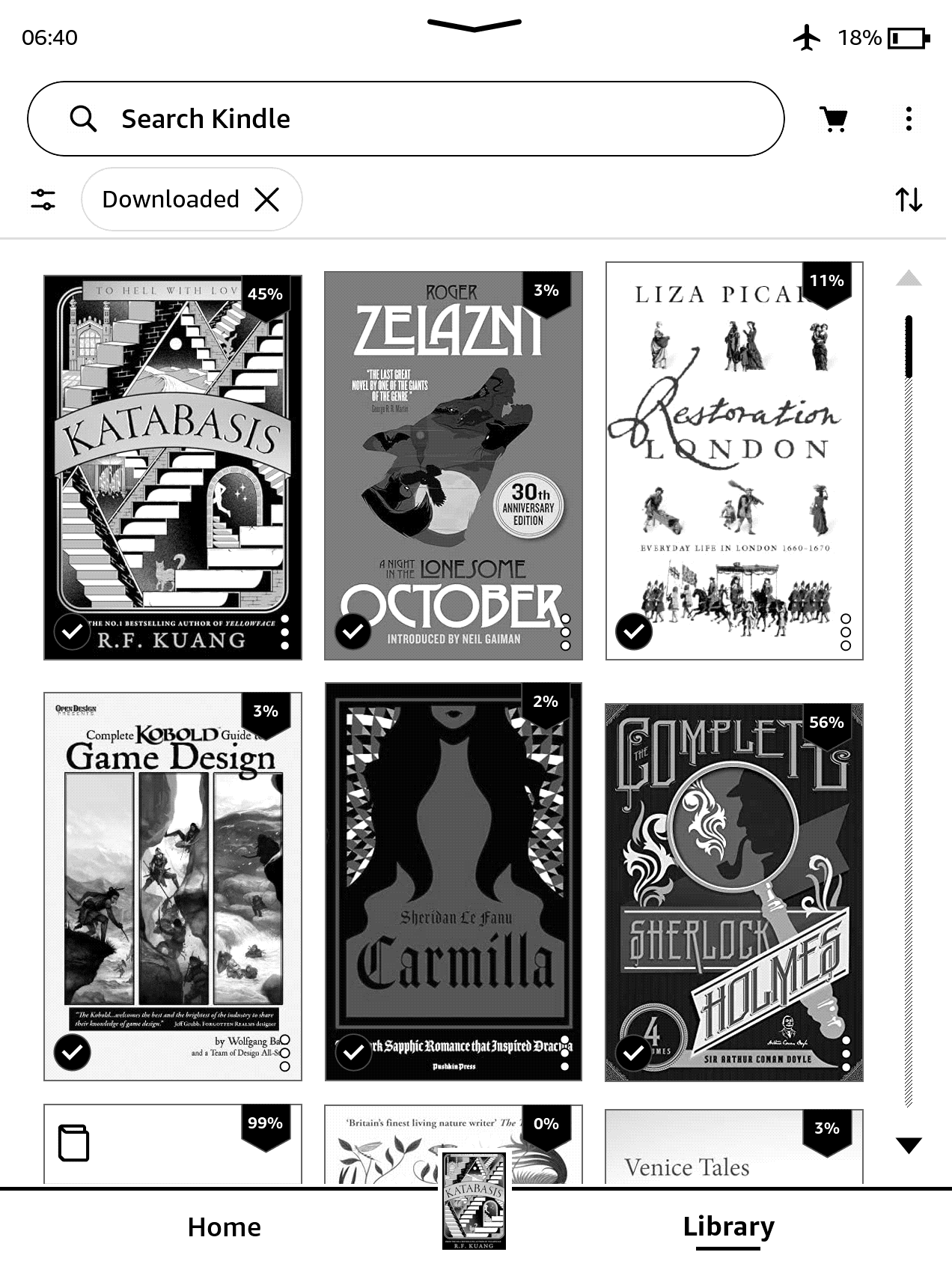
Screenshot of a Kindle Paperwhite, black and white / greyscale colour, showing two rows of three books. On the top are “Katabasis” by R.F. Kuang, “A Night in the Lonesome October” by Roger Zelazny, and “Restoration London: Everyday Life in London 1660-1670” by Liza Picard. On the row below are “The Complete Kobold Guide to Game Design”, “Carmilla” by Sheridan Le Fanu, and a “Complete Sherlock Holmes” collection.
The screenshot from my Kindle shows the main books I will be reading on there this month, with utterly gargantuan font etc. Some are already under way. Others like Carmilla by Sheridan Le Fanu are lined up for my book club later. My main novel read at the moment is Katabasis by RF Kuang, a dark academia book about a journey into Hell to rescue an academic advisor. Am really enjoying it. Last night I started my annual pre-Halloween reread of Roger Zelazny’s A Night in the Lonesome October, which is a gothic horror delight. And I am going to try to read just a chapter a day this time! Liza Picard’s Restoration London is a reread. Though she wasn’t a formally trained historian I am in awe of her approach to the historical sources and questions. The Complete Kobold Guide to Game Design was a birthday present from my husband. Just getting into it now. And I continue my reread of the original Sherlock Holmes short stories, now well into the Return collection.
I just finished the best novel I’ve read in many years: The Pope’s Rhinoceros by Lawrence Norfolk.
According to the back-cover blurb, it’s based on the failed attempt in the early 17th century to bring a rhinoceros from Goa to Rome as a present for the pope. This was the time when Spain and Portugal were lobbying with the pope to draw a line across the globe and divide the world’s potential colonies and natural richess between them. Apparently, a rhino was thought to sway his favours.
From this information, I assumed the book would be a historical adventure, perhaps with some comedy thrown in (the title itself already made me smile).
But The Pope’s Rhinoceros is so much more. It is a world-spanning historical adventure novel, taking place in settings as remote as a crumbling monastery on the Scandinavian Baltic shore, a Goan trading post in India and the deep rainforest of Western Africa, and Rome itself. It’s also a sometimes confusing stylistic text, with many timelines braided through eachother, great twists of mood and atmosphere, flashes of magical realism and slapstick.
Pagelong intricate descriptions of a single sunrise above the city of Rome, or of the behaviours of schools of herring under the surface of the Baltic Sea feel almost Gormenghovian with their far-fetched likenesses and drawn-out eloquence. Threads separate for hundreds of pages, seemingly unconnected, come together in a positively Pratchovian finale.
The mix of elements and influences, the vivid historical settings, and the truly original author’s voice, make for a compelling read.
I just finished House of Leaves by Mark Z. Danielewski, and I was, um…, underwhelmed. To be clear, I’m glad I read it, and I enjoyed it a lot, but I think my expectations were perhaps set too high because it’s all over TVTropes.
I liked the layered steps of reality (a book about a manuscript about a documentary) and the fact that the stories are told in parallel (main book and footnotes). I also liked the content of those stories themselves, the exploration of the house and the relationship between Navidson and Karen in the main text, and the descent into madness in the footnotes.
But I could have done without a bunch of the tricks that others are gushing about so much, they reminded me too much that I was reading a fake real story. Like I could hear the director of The Blairwich Project shouting "Shake that camera around some more, to make it look more real. "
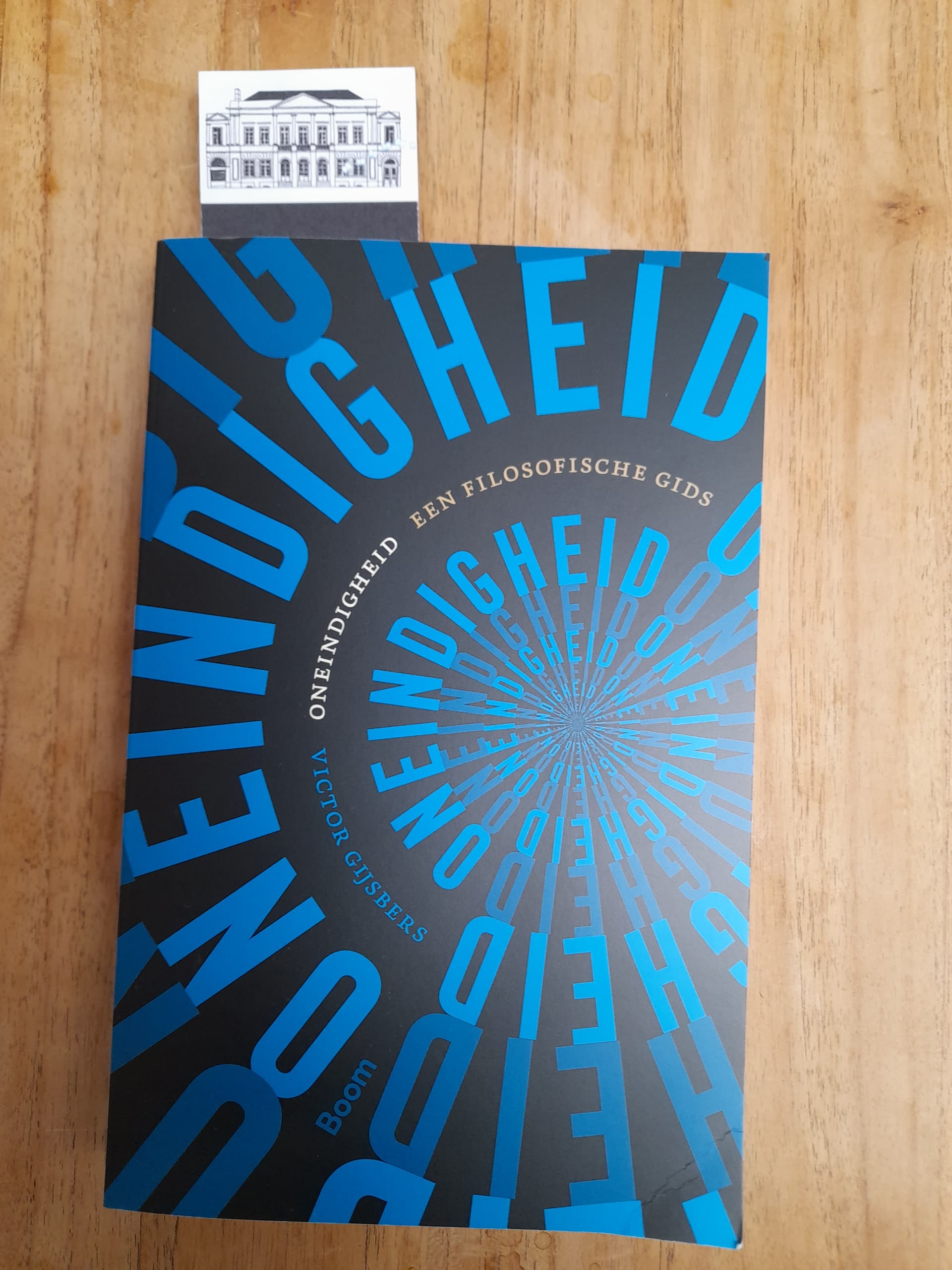
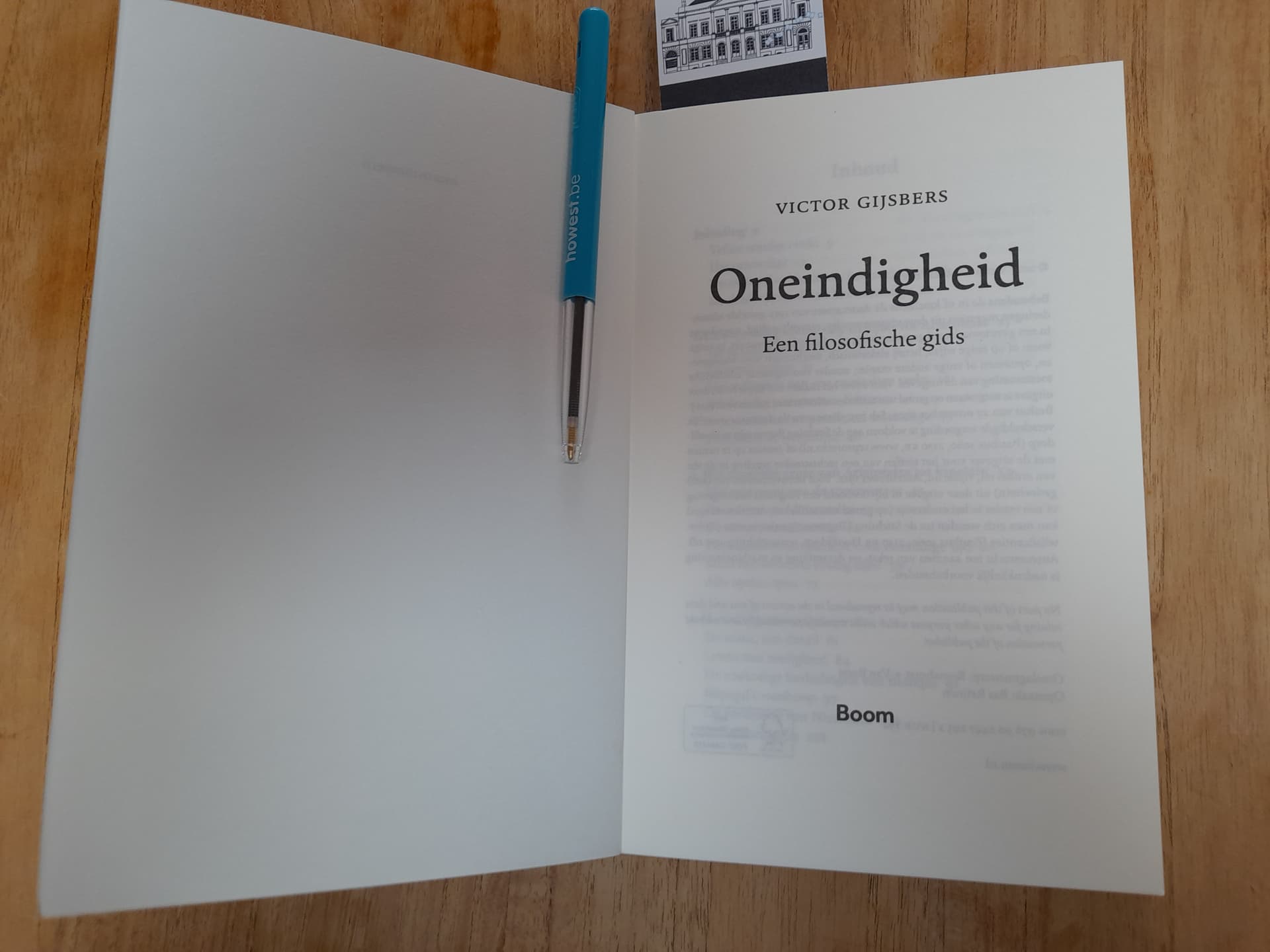
I dived right into the introduction. I love how you start with your kids learning to count. They can already count to 20, or maybe 100. But what comes after that? How far can dad count? At which point does he get “stuck”.
That made me think back. When does the flip happen? When did I realise that once I got the 10 digits and the simple rule of addition, I can go on forever.
That made the distinction between potential and actual infinity easily tangible. And deceivingly simple though they might be, the examples of paradoxically equal infinities never fail to blow my mind. Great example with Zeus giving Sisyphus an alternative punishment!
Maybe it’s fun to give the Zeus/Sisyphus example to everyone. So, in Greek legend, Sisyphus is punished (for some pretty bad stuff he did) by having to roll a big rock onto a mountain; and every time he almost reaches the top, the stone slips from his hands, rolls down, and he has to start again. In my example, Zeus – thoroughly fed up with the sound of that rock rolling down the hill – tells Sisyphus to instead count all the natural numbers: 1, 2, 3, … And once he’s finished, his punishment will be over. Now Sisyphus kneels in front of the god and begs him for a lesser punishment. At which Zeus says: “Okay, I’ll cut you some slack, you only have to count all the odd numbers.”
And here on the one hand we have the intuition that Zeus has cut his punishment in half, because there are surely only half as many odd numbers as there are natural numbers – after all, he doesn’t have to do the even numbers. And on the other hand we have the, I suppose even stronger, intuition that Sisyphus’s punishment did not get any lighter at all!
Now, is Zeus being brilliantly sadistic or stupidly merciful. I feel like it could go either way with Zeus, either knowing for a fact that counting odd numbers is no shorter a task than counting all the natural numbers and is hoping Sisyphus won’t know that, or naively thinking he is genuinely cutting the punishment in half.
About two-thirds of the way through Susie Dent’s Guilty By Definition – it’s clearly a murder (?) mystery by someone who normally (AFAICT) writes non-fiction books about unusual words – there’s SO much of that in here. But it’s fun. And seems to be very much in the vein of mystery-novel-as-puzzle. I didn’t stop to try and decipher the mysterious notes myself but you definitely could.
When I ended up in the ER earlier this week, I was in a bit of a rush, so I didn’t get to grab any of my books—just a phone with a half-full battery. So I ended up looking for free ebooks I could download and read without using much power.
In the process I discovered that I’ve actually read very few of the original Sherlock Holmes mysteries, so I’ve been working my way through the canonical and deuterocanonical ones now. Many of the twists don’t stand up very well nowadays, but enough of them do to be a good read—I’m especially fond of The Lost Special and The Man with the Watches—and it’s always satisfying when I can figure out the answer before Watson does.
Nearly escaped (because of a major miscatologation) my thrice-monthly dragnet of internet archive and I have already read it in the original language, but an english translation (and comparision) is always welcome for an historian:
behind the astonishing miscatalogation (editorial series instead of the title) lies no less than Jomini’s Art of War an important source in understanding warfare between the Napoleonic era and WWI.
a good reading, albeit already done in its proper language.
The Digital Antiquarian’s posts about the history of IF are fascinating. I read most (but not all) of them while they were being posted on the website. But now I discovered that @JimmyMaher also has them neatly packaged as downloadable e-books. » Ebooks – The Digital Antiquarian
The first book covers the early years 1966-1979, and then each following year gets its own book, 1980 through 1997. There’s also a separate book focusing on the history of Infocom, which I’m reading now.
Thank you so much, Jimmy, for providing this collection of gems for my e-reader, so I can read them chapter by chapter before going to sleep.
Currently reading “Roadside Picnic” by Arkady and Boris Strugatsky — the new translation from 2012 by Olena Bormashenko. Much better than the old translation.
On a similar note, if you’ve only read the 1971 translation of Lem’s “Solaris” (which was translated from Polish to French then French to English), then you owe it to yourself to read the 2011 direct translation by Bill Johnston. A stunning improvement, it almost feels like a completely different book.
I’m on the last chapters of The Immortality Elixir by Gabi Gleichman. (Title translated literally; original: Udødelighetens elixir. I can’t find any evidence of an English translation.) History and imagination join hands in this tale about the Spinoza family tree. Starting in 13th century Andalusia, the novel follows the eldest sons of the Spinoza family through the ages, generation after generation. Each of them is the heir to a secret manuscript that holds a recipe for an elixir of immortality.
And yes, when we get to the 17th century, we briefly meet the Spinoza. He’s quickly brushed aside to put his older brother in the limelight though…
The novel is in the form of a frame story, with the last of the Spinozas, childless, old, feeling death creeping up, as the narrator writing down the stories his great-uncle told him about the history of the family.
The way the memories sometimes randomly jump around in the chronology of the ages does break my focus at times (more a fault of my focus than the novel’s), but overall it’s a captivating tale about Jewish history with a large number of wondrous and/or tragic characters.
Zria-rez-ruag-gho-leq-rez-ghoo has looked favourably down upon us! We are thankful to have read Children of Ruin in these times of chu and krikri! May Oojamaflip forever warble happily, and chirp melodiously in honour of Adrian Tchaikovsky!
Rearranging my bookshelves, I went through my stacks (plural!) of Stephen King novels, and I realised I hadn’t read the final part of his Mr. Mercedes-series yet, End of Watch. Now, It’s been a good long while since I read the other two, so I started at the beginning.
Mr. Mercedes is a tense thriller, and I’m glad to have read it again. I’m also glad to have met Holly again with the background knowledge that she’ll be promoted to protagonist in King’s detective/mystery novels about her. (Of which I haven’t read any yet.)

 So, in Greek legend, Sisyphus is punished (for some pretty bad stuff he did) by having to roll a big rock onto a mountain; and every time he almost reaches the top, the stone slips from his hands, rolls down, and he has to start again. In my example, Zeus – thoroughly fed up with the sound of that rock rolling down the hill – tells Sisyphus to instead count all the natural numbers: 1, 2, 3, … And once he’s finished, his punishment will be over. Now Sisyphus kneels in front of the god and begs him for a lesser punishment. At which Zeus says: “Okay, I’ll cut you some slack, you only have to count all the odd numbers.”