Tabitha's IFComp 2023 Review Corner

Brief notes on a few parser games:

CODENAME OBSCURA
  • Gorgeous art! It really helped set the scene in each location and compensate for the sparse descriptions.
  • Enjoyed the number and variety of locations
  • Not my style of puzzles (i.e., completely illogical within the world of the game)
  • I died at the very end and hadn’t saved recently, so I couldn’t easily go back and try again.
  • I found a bug where, once you take the turtle from the fountain, if you examine the fountain again it says the turtle is still there.

Barcarolle in Yellow
  • Enjoyed the Venice setting
  • Very confused about the ending (I got ending C) and what was actually happening throughout the game…
  • Not entirely comfortable with how the game handled violence against women
  • While sex is mentioned in the CWs, it’s possible to refuse the sexual encounter.
  • Transcript attached

Barcarolle_in_Yellow_TOscript.txt (158.5 KB)


Who Iced Mayor McFreeze?
  • A very small game—brief intro, only five rooms in the factory with just a few actions to do in each. Felt like it could have been fleshed out more to include more sleuthing.
  • Insufficient detail in room/object descriptions made puzzles more difficult than they should be
  • Transcript attached (Played after watching part of Autumn’s Twitch stream of the game, so I’d seen some of the puzzle solutions there. Had to resort to the walkthrough for the chimney one.)

mcfreeze_TOscript.txt (58.6 KB)

7 Likes

Hello Tabitha (@alyshkalia),

Thank you very much for playing Codename Obscura!

I’m glad to hear that this retro style has some vibe!

Yeah, the world is a bit of a mixture of many things, mostly inspired by some of the famous games back in the 80s. In case you did not notice, there is a walkthrough available, if you would like to give it another try, without banging the head against the wall too much…

interesting bug, thanks for pointing this out :+1:

Thank you again for playing Codename Obscura and writing these review notes!

Cheers,
Mika

4 Likes
The Gift of What You Notice More by Xavid and Zan

Playtime: ~45 minutes

I didn’t realize to what extent this game was based on the song mentioned as inspiration (“The Blessings” by Dar Williams) until I looked up the lyrics:

And the blessings were like poets that we never find time to know,
But when time stopped I found the place where the poets go.
And they said, "Here have some coffee, it’s straight, black and very old, "
And they gave me sticks and rocks and stars and all that I could hold…

Honestly, I’m super impressed at the way the authors ran with these lines, implementing them very literally into this surreal game about a PC processing the end of a relationship (and now I know the answer to my questions “Why sticks? Why rocks?”).

I love character/emotion/relationship-focused games, so I liked the premise of this one and enjoyed playing out the layers of the PC’s self-reflection and increasing insights. I think the game would have resonated more with me emotionally, though, if both the PC and their ex were more developed as characters; as-is, neither is named and both are characterized fairly vaguely, with some glimpses of their personalities and the tenor of their relationship, but not enough for my taste.

The puzzles and the surreal environments were fun, and I enjoyed the kind-of twist that not all puzzles in each location were fully solvable at first. Because of the unintuitive nature of some puzzles, though, I definitely resorted to lawnmowering several times. I also found one bug: In the initial beach location, after you’ve fully played out the elephant sequence, clicking “rocks” again will make the “smash jug” option reappear, and if clicked, it gives the text about the elephant again.

Highlight: Mouse friend!
Lowlight: After all the previous animal-based puzzles required helping/being kind to them, I was disappointed to have to throw a rock at a bat.

7 Likes

I think it had something to do with the fact that you had to throw garlic at it to drive it away, so the assumption it has a relation to a vampire, and the fact that vampires suck your blood - or in this case, removing what makes you you. Either way, vampires are bad, so So the idea of letting you be you and not having to be changed by anyone or anything.

…But maybe I’m overthinking it…

3 Likes

My Pseudo-Dementia Exhibition by Naomi Norbez

This one is very striking due to its raw, personal nature, and I feel honored to have been invited in. I liked the map and the simulation of walking around the museum, and the display of physical objects from the author’s time in recovery was a powerful way to connect the viewer to the experiences described in the text. I hate that Bez had to go through so many terrible things, but I’m glad that he’s doing so much better now and that he once again has hope.

In which I get emotional
  1. I’m also agender (:handshake:), but because of my anxiety I’ve been hesitant to be fully out and haven’t been bold enough to fully claim non-gendered pronouns IRL. Because of this, I so admire Bez’s courage in the face of the misgendering, how he stood up for himself despite how unpleasant and scary the situation must have been. Hopefully someday I’ll have even a tenth of that courage!

  2. I’ve had my own mental health struggles, not to the same extent, but I could relate to some of the feelings of hopelessness and despair, and I have my own artifacts from that time. This piece might inspire me to share some of them somewhere. It’s been a great reminder of the power of vulnerability and human connection.

9 Likes
How Prince Quisborne the Feckless Shook His Title by John Ziegler

This game is impressive in basically every possible way, starting with the instructional text. It tells you, for example, that “objects usually can be referenced by their adjectives: if the encyclopedia is described as big, you should be able to enter ‘take big’.” This is something I eventually picked up over my time playing parser games, but it’s so much handier to have it clearly spelled out. And this is only one of the many ways this game works to be beginner-friendly.

On to the game itself! Within my two-hour window, I played through the prologue section and a little beyond. While the setting is, on its surface, a fairly typical medievalesque fantasy world, it’s so richly detailed and well researched that it really felt alive and real. Setting-wise, this was accomplished with things like the inclusion of a motte and bailey and the evocative description of the manor hall. Part of my day job involves writing detailed descriptions of buildings, and I’m thus always on the lookout for architectural descriptions in games—so imagine my delight at passages like this:

The ceiling is some thirty feet overhead at the roof peak, blackened with age and smoke. The heavy beams are formed into a roof support system called “hammer-beam trusses.” With this design, no beams need run horizontally from wall to wall to tie things together. The timbers are carved in strategic places, with curving crossmembers and lathe-turned drop finials.

Drop finials! I love a drop finial! But back on topic, one of my other favorite aspects was the treatment of the stomping grounds of some absent NPCs. Rather than being simply a repository for puzzles, the gardener’s cottage and the rest of the bailey felt lived-in, with the placement of objects reflecting the lives and personalities of their owners. I mean, the visiting nephew stole the greenhouse key to play with and left it in his treehouse! That’s both adorable and entirely plausible within the world of the game (oh, and the acorn and beetle on the wagon seat were super charming too).

Gameplay-wise, the experience was very smooth. I never needed the walkthrough or hints (which, I’ll be honest, always makes me feel proud of myself, even if the game did call out the early puzzles as easy ones). I did have my disambiguation stumbles, but relatively few of them, and there were only one or two instances of the parser not understanding what I wanted (e.g., when I tried “pick rutabagas” instead of “pull”). But with TADS’s apparently built-in a typo correction feature and the “undo” function printing which action you’re undoing (very helpful if you’re using “undo” multiple times in a row), for the most part the parser and I got along great. At one point, when I went to leave an area still carrying some NPCs’ personal possessions, the game very smoothly noted that and had the prince put them all back! Both avoiding turning the noble PC into a thief and ensuring my inventory didn’t get cluttered with useless items.

I did have one gameplay quibble, which is that the directions frequently had me confused. This is partly on me, as I almost always get turned around in parser games (and, I’ll be honest, in real life too), but sometimes there would were just a lot of exit possibilities and I really had to spend time sorting out which one I wanted.

As for the prince himself: I loved the way the game described his nerves lessening and his happiness growing as the turns passed by. There was a nice natural progression, the game reflecting that the more time we spent together, the more comfortable PQ got with the PC. His idle actions were charming, and in a very clever touch, he plays with some of the things you’ve picked up! One thing I did feel was missing, though, was a proper back-and-forth conversation with him. At one point he asked if I had pets, quicky adding that of course I must have a horse, but when I tried to tell him about it using “t horse”, the parser understood that as me conversing with him about his horses. I’d like at least some chances to play out the developing relationship, rather than just being told about it.

Finally, a note on the cutscenes: whew, they are long. Before each one, you’re given an option to view a short version or the full version, but with my FOMO, I was never going to pick the short version. I did feel that they didn’t need to be as long as they were, though—but of course that comes down to personal preference. And I did enjoy them, as the writing is good and the goofiness of this place’s history and its people is amusing.

All in all, this is a very well done game, and of course I’ve only scratched the surface. Kudos to the author, and I look forward to playing on!

Transcript with a few notes for the author marked with *:
PQ_TOscript.txt (165.0 KB)

Update: 2nd transcript with my very clumsy blacksmithing attempts. The parser and I are not getting along so well here :sweat_smile:
PQ_TOscript2.txt (40.5 KB)

8 Likes

Thank you so much, Tabitha! I’m very pleased you enjoyed it!

To keep your thread more streamlined...

-Sorry about directions! As much as I didn’t wish for navigation to be a constant hassle for players, I just couldn’t build my whimsical world in a harsh, predictable, orthogonal grid pattern! I tried to use very clear travel descriptions whenever the travel does something slightly unorthodox, and I hoped the inclusion of a map would help players visualize how locations are connected.
-Future players will be able to “pick rutabagas”…
-Yes, I know my cutscenes are long! But I will be perfectly frank: this game was not written for IFComp… it was written to be a mammoth adventure that a player would want to sink themselves into for perhaps weeks on end, and I’m entering it here despite the 2-hour judging limit, mainly because this is like the One Big Interactive Fiction Competition. Because it was written to be a game in which players were willingly going to invest some time, I wanted the writing and the worldbuilding to provide the maximum “engrossment” for the journey.
-Conversations with PQ: Ah! And “Alas!” I would have loved to exploit all the possibilities of conversation with PQ. But if you even so much as get halfway through the game, you will realize that making PQ’s conversational abilities constantly adapt to the state of the game would have become my life’s work. I tried to give him a reasonable number of ask topics for the opening scenes, but beyond that, I just had to concede that the conversation mechanic with PQ (which doesn’t play any part in solving any part of the game, and thus is a mere bell-and-whistle) was a beast too mighty to tame for my poor time-pinched self. I’m sorry! I would’ve liked more conversational possibilities too.
-I look forward to viewing your transcripts! There is no obligation on you at all, but I am willing to mention, if you do play further in PQ, it would be supremely helpful to me if you’d be willing to keep sending transcripts to my PM! As you may guess, it was very difficult to get any testers that were willing to donate enough of their time to get more than, say, 1/3 of the way through it (God bless those few who went all the way!), so I would very much love for the latter half of the game to get some more refinement. I’m not thinking so much of bugs, as things like missing verb/action responses, or synonyms for objects, etc. Anyway!
Thank you so much for playing, and for sharing your thoughts in a review! Cheers!

4 Likes

That very much makes sense! I should have taken the initiative to make my own map of the prologue area, too—that definitely would have helped.

Excellent :smile:

This also very much makes sense. I think it’s a bit of a mismatch between what the game is and what I might want it to be (I’m typically more into character-focused games than puzzlers), but as I said in my review, PQ’s development over what I’ve played of the game is done very well!

Will do!

4 Likes
The Whisperers by Milo van Mesdag (spoilers)

This is an unusual one, and one I quite enjoyed. I’m not super familiar with the history and politics of the USSR, but some Wikipedia-ing early on helped provide the context I needed to understand the backdrop that the play’s five characters are operating against.

I love stories with high stakes in the background that choose to focus on how those stakes affect individual people, and that’s exactly what we get here. A strained sibling relationship, a developing romance, and a long-term marriage are all tested by the oppressive political climate. The image of whispering becoming everyone’s normal way of speaking, because they’re not safe even in their own home, was a very effective one. It contrasted well with the spark of finding a like-minded person who you can trust, which is what Agnessa finds in Nikolai. Even then, though, the two can’t truly be happy together, because they have a fundamental difference in what they want out of life. These lines capture their relationship so well:

Nikolai: Agnya, I love you, I-

Agnessa: Do you? Do you really? Or do you love what you want me to be?

Nikolai [pause]: I think you are what I want you to be. You just won’t let yourself be.

And ultimately, this love that gives Nikolai a reason to wake up in the morning is what dooms him. In the end, this felt like a story about futility, especially after I played through several times; there’s no “good” ending, no matter which of the two options the audience chooses at each junction point. Agnessa and Nikolai are always going to be caught and arrested. We’re never choosing their fate; each choice is simply one of two equally bad options. The fictional authors of the play have written our choices for us, and they all lead to those authors’ singular chosen destination.

Except… there’s the secret ending. (Shoutout to Manon for telling me about it!) And that provided an interesting twist, where the audience breaks out of the choice binary and demands a different—happy—ending. Which the actors and the play-runner/actor, the Guide, provide, albeit reluctantly. But then, this ending rings so very hollow, as it obviously wasn’t planned; it doesn’t feel true to the story, and it’s impossible to imagine the characters actually living happily after these events even if the NKVD did have a sudden, random surge of compassion and let them go. So we’re back to futility now, inevitability. You can fight but you can’t really change anything. I don’t read that as the game’s universal message, but for these characters, in this situation… no matter how much we, the audience, might want it to end differently, there was always only ever one place they could end up.

10 Likes
The Little Match Girl 4: Crown of Pearls by Ryan Veeder

(I think this will be my last comp review! And it’s going to be another “brief thoughts” edition rather than a proper review. I’m writing this post-finishing the game, which took me longer than the two-hour comp judging window.)

I played the first two “Little Match Girl” games this week in anticipation of playing this one, and all of them are just plain wacky fun. The time/space-hopping, the metroidvania-ness (a new-to-me term that, apparently, describes a style of game that I love—at least in IF form), and the outlandishness of the premise all make these games a delight to play.

Things I loved about LMG4:

  • The humor in the parser narration (e.g., the response to >smell: "It would be rude to smell")
  • The vividness and variety of the settings
  • Puzzles I could solve without needing the hints/walkthrough
  • All the connections between places, and how you uncover more over the course of the game
  • Turning into a mouse (and having chats with other animals)
  • The scanning lens’s commentary
  • The poignant character moment at the end

Critiques:

  • I would have liked a liiiitle more implementation of synonyms
  • When playing in browser (which I did for the pretty colors/other stylings), there’s a long sequence of timed text that repeats every time you sit down and reflect on how things are going. As you progress in the game, new text is added to the end of this segment; however, you still have to sit through the slow doling-out of the text you’ve already seen each time, with no way (as far as I could tell) to skip through or speed it up.
11 Likes

Wrap-up

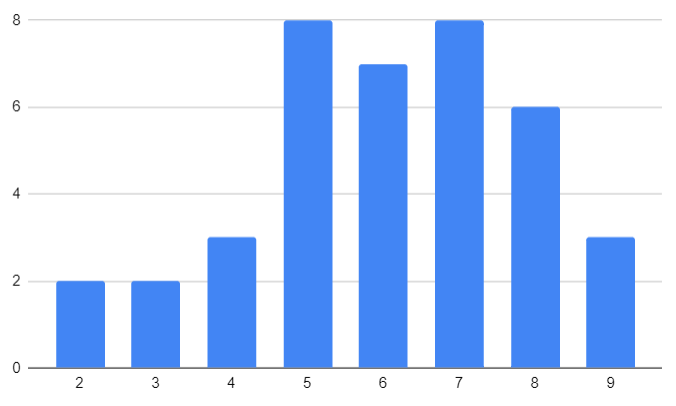
So, I’ve now played all the comp games I’m going to! I played more than I reviewed; some I just didn’t have much to say about, and also, writing reviews takes a lot of time and energy (to those who review every game: I don’t know how you do it, but you have my admiration). Which is why I didn’t always write full reviews; sometimes it just had to be a bulleted list or nothing. When I was able to write full reviews, though, I enjoyed it a lot. Trying to convey my reaction to a game in writing, for other people to understand, always got me thinking more about the game, which was a nice bonus.

I think it took me a little while to find my feet as a reviewer, and I kind of don’t want to look back at my earliest reviews in this thread. :sweat_smile: But I do plan to post my full reviews to IFDB for posterity, and I like to think that I grew as a reviewer of the course of these six weeks—at least partly due to reading all the other excellent reviews!

I saw someone share their score breakdown, and I thought it would be fun to share mine too.


I really value polish, and many games lost points from me on that front. I highly recommend that authors proofread/run spellcheck/have a friend read over your game before submitting it to the comp! Cleaning up typos isn't too hard and can go a long way toward making a better first impression.

I playtested six games and, as per the rules, did not score those. I still plan to write at least short reviews, though, so those will be coming soon as a sort of postscript to this thread.

For now, I just wanted to add that this, my first IFComp, has been a great time. This is a very fun community to be a part of—everyone’s enthusiasm, authors and reviewers alike, has been great, as has the way reviewers are willing to take every entry seriously while also being totally silly (e.g., the limerick thread). Authors, thank you for sharing your games with us!

19 Likes

Congrats on reviewing all these games! I loved reading your thoughts about stuff we both played~

4 Likes

Nice thread of reviews and impressions. I read through the ones I have played and it was great to see your take on them.

4 Likes

Epilogue: brief reviews of the games I tested (in alphabetical order)

Bali B&B by Felicity Banks

This is a cheerful, lighthearted game, despite the rather stressful situation the PC is in! The PC’s position as somewhat of an outsider who’s suddenly plunged in over their head was a compelling one, and I enjoyed navigating through the various scenarios (especially those involving cute cats or a mischievous monkey). I also appreciated the social management aspects; it was very gratifying to facilitate a nice breakfast chat between guests despite language barriers, and to save two teenagers from a boring day with their parents and also spur a friendship between them in the process.


Bright Brave Knight Knave by Andrew Schultz

I hadn’t played any of Andrew’s Prime Pro Rhyme Row games when I tested this one, but as soon as I got into it I loved it, and after finishing I immediately played through the rest in the series. As a lover of rhymes, alliteration, and wordplay in general, I found it delightful to be tasked with coming up with my own alliterative rhymes as the central mechanic of gameplay. The comparisons to Dr. Seuss are apt, as this is a wacky wordplay-ful world that defies logic, and is all the more fun for it.


Dr Ludwig and the Devil by SV Linwood

This is such a solid parser game, and my projected comp winner. So much excellence here—the premise, the characters, the setting, the humor, the puzzles, the narrative voice… It’s all so well done. Highlights include the Torch and Pitchfork Society and their perfectly reasonable demands, Hans in general (and specifically, the conversations with him and the possibility of asking him out), and every interaction with the devil. A very smooth and just plain fun experience!


Gestures Towards Divinity by Charm Cochran

Damn, this game. It’s got so much depth, and I spent a lot of time thinking about it after playing. There’s so much emotion here, so much hurt, and yet we have this reflective distance from which to interact with and interrogate it all, even as it feels very personal given that two of the NPCs are different iterations of George Dyer, Francis Bacon’s doomed lover. This is a window on suffering people who in turn inflict suffering on others; on self-destruction/self-harm; on pain channeled into art. It begs the question of what the purpose of art is, why people are led to create and view it, and calls out how it can both connect and alienate us. It makes me feel very conflicted, and I think that’s a good thing. Altogether a brilliant game.


LUNIUM by Ben Jackson (spoilers!!)

This is a very well-crafted game—impressive that it’s the author’s first time working with Twine! The art is moodily evocative, and I enjoyed the way the puzzles were built around it. The hint system and its tiered approach, with the first level letting you know when you didn’t need to worry about a specific object/puzzle yet, was a nice touch. And I loved the ending, the way it clicked for me what the answer to “whodunnit” was—and the extra “whydunnit” twist/reveal, which explained so much in retrospect. The answer to the mystery of “who locked me in here with all these weird puzzles??” being “I did, and for good reason!” was very clever.


Xanthippe's Last Night with Socrates by Victor Gijsbers

A game about your husband’s last night before his execution has no right being this fun! But Victor has accomplished that with a big dose of humor and a richly drawn protagonist who can’t help but be entertaining. Alongside the silliness, though, there’s a lot of emotional depth as the couple’s relationship history and its various layers of love and hurt is gradually revealed. Their conversation—litigating past wrongs, discussing what Xanthippe’s future might hold, and hashing out what they mean to each other—swings from anger to affection in a way that felt very authentic. I liked the bittersweet note of the end, where they’re both able to come to a sort of peace with the impending loss. I was glad to have spent time exploring their relationship, and getting to know Victor’s version of Xanthippe—who is very far from one-dimensional.

17 Likes

I should have thanked you for beta testing already (if I haven’t, THANK YOU) but thank you again for reviewing!

Oh, how I love reviews. Both as a player and developer. It’s so much fun to see different perspectives!

4 Likes