Mathbrush Ectocomp 2025 reviews (Done)

Thank you for the review, and we’re so glad you enjoyed it! Ada wanted me to add this:

You’re right, the meter of act three
is inconsistent (much to our chagrin).
Each stanza is a tetra- or
penta-meter, but which depended on
convenience only. Cleaner verse
may yet appear in future versions, when
the comp concludes and time allows.
We thank you for the feedback and review!

4 Likes

Awesome! Love the response

1 Like

Dad’s Shiva

This was a pretty grim short story with a lot of room to explore and contemplate. In it, you play as someone estranged from an abusive father who has now died in hospice at your sister’s house.

The death of a close relative who as abusive is especially upsetting, as you have grief without anything to offset it. Or you have neither grief nor happiness at first. I had two grandfathers die within a few years of each other; one was beloved and surrounded by multiple generations that he had raised, even down to a great-grandson he had raised as his own. The other grandfather had been physically abusive to his children in their youth, and when he was older he smoked so much that none of the grandkids wanted to visit much due to the smell. His death felt so much less to me than the other grandfather. Years later, I thought about him more, and performed some rituals for the dead (part of the Church of Jesus Christ of Latter-day Saints), and that helped me connect with his memory more.

Sexual abuse can dig even deeper; I’ve met several friends and extended family members whose most deeply held secret was sexual abuse by someone close to them, often someone they still saw on a regular basis and cared for as a relative while simultaneously being hurt. So many kids have a putative dad or presumed-absent dad in public and a ‘real’ dad that can’t be made public because they were an abusive uncle or grandparent.

This game captured all of those feelings really well; everything felt so authentic, down to one relative denying the abuse ever happened and kids having trouble talking about it as adults.

The end I found was fitting. It took me a second to realize it was the end; it might have helped me process it more quickly if there was a signifier of the ending, like a horizontal ruling or the words “the end” or “fin”, but those are stylistic choices up to the author.

Good writing, bad feeling.

8 Likes

Non-humain

Interesting that I’d play two games within a few days of each other about inhuman creatures who gain action verbs from their surroundings in order to move around and interact with each others. Also interesting that, outside of that similarity, these games are so different (the other game is Stage Fright).

I played the English version of this game, as while I enjoy playing French games, I tend to understand much better in my native language.

This game has a cool retro vibe (it uses the Decker engine) and has an eyeball that looks wherever your cursor is.

You yourself are some kind of monstrous being with unusual powers. The game is short and the powers are the most fun part so I won’t spoil anything here. I found two endings, both of which felt appropriate for my character. Short and fun.

9 Likes

Costumes and Candy

This game had a really interesting structure. There is a framing story (you’re a trick-or-treating kid competing against a bully) but after that it’s essentially 19 Halloween-themed short stories. You navigate around a map shaped like a calculus fence optimization problem and interact with people to get candy.

This includes a maze (which was thankfully very simple), a fetch quest or two, and even a miniature CYOA-game (which I think was acting like Mad Libs a bit, as there are tons of options for what character you can pick but it seems written in a way to easily adapt to different characters).

You can end the game at any time, and the ending doesn’t vary too much if you end soon or late (only the result of your contest changes), so if you decide to skip out after a few houses you can still get a good feel for the game.

This definitely had a 90’s or earlier vibe. Kids go trick-or-treating alone, people in the neighborhood seem to know each other, the only computing devices used are plugged-into-the-wall computers. The bully plotline is really reminiscent of 90s media (and IRL, in my experience) as well.

The candy descriptions definitely made me hungry, and the coding and creativity in house/host descriptions was impressive.

7 Likes

Glad you liked the candy and neighborhood descriptions! I was indeed going for a more “timeless” feel to the setting by avoiding (most) technological or historical references. I also took pains to not use actual brand names for the candy, which lead me to finding out what a “dragée” was.

The game-within-a-game is indeed a Mad-Libs style story. That was one of the most fun parts of the game for me to write.

Thanks for your review!

2 Likes

Annual Country Market

In this game, you end up at a Farmer’s Market in Amish country (or equivalent) a little too late at night. You have enough time to buy something from each stall (which are all arranged in a circle you can traverse clockwise or counterclockwise).

But then, disaster strikes! A dramatic change happens, and you have to use your newfound inventory to find a way out.

I used to live in Philadelphia and we’d drive out towards Amish country every month or so. I have found memories of the pretzel cheeseburgers (a whole cheeseburger cooked into a big pretzel) and shoo-fly pie (basically pecan pie without pecans).

This craft fair is unfortunately not as fun, featuring things like head cheese and hairy squash. But those all come in useful at night!

I think there are multiple endings to the game, as I pursued a singular ‘defeat everyone’ strategy and the text sounded like I was committing to that and locking off other possibilities by doing so. Interestingly, I thought it’d be a complex game of strategy, but the winning method was exceedingly simple. More interesting was the commentary and backstory revealed about our character, making me wonder if that was the true point. I liked the twist at the end.

7 Likes

Thanks for playing and reviewing. I got the inspiration for this story while visiting one of my own favorite markets (open all year, but only three days a week). One of my memories is taking a visiting family member from the West Coast to the market. She sampled the head cheese and just raved about it! I haven’t tried it myself.

I was perhaps also inspired by the Levi Zendt chapter of James Michener’s “Centenial”, one of my favorite books. In true Michenerarian style the author goes on for about two full pages with a description of how souse is made.

I live pretty close to Philadelphia, and even closer to Michener’s birthplace and lifelong home.

4 Likes

Oh, that’s great that it’s tied to real experience! That really adds to the game. And that makes sense why the description of the fields and the farmer were so vivid and lifelike.

The Night Ferry

This is a short, atmospheric game about a ferry at night with surreal overtones. It reminds me a bit of the game Cactus Blue Motel, with a magical world of horror mingled with wonder. This game tones down the wonder and cranks up the horror and wistfulness.

You are on a ferry, and it’s mostly abandoned. A series of unattended but distubring cars is near you. You can wander around, but the only people you meet are also alone, and are uniformly described as a ‘stranger’, which I found effective at setting the tone.

I felt like I had a lot of choices. There were many places to navigate to and people to talk to; there were cycling choices letting you create your own backstory with real differences (like, you could want to be a shaved-head punk or a braided-hair linen-sewing person). And there were things you could learn about or do in one spot and have it referenced later. Finally, there were multiple ending choices. So this game is actually fantastic in the variety of interactivity it offers, in addition to the creepy atmosphere.

8 Likes

Thanks for the review, and nice catch about the ending!

This was my first time releasing a standalone story in Ink, rather than with a game engine where the ending credits would be obvious.

1 Like

Oz, the Great and Terrible

I forgot that I never reviewed this, though I played it several days ago!

This game is a Bitsy game, meaning it has two-color low-resolution pixel graphics with simple two-frame animations, and text that pops up as you run into things. This particular game is a macabre and darkly humorous take on the Wizard of Oz.

You play as Dorothy whose dog is lost. The Wizard the Oz is a cruel necromancer reigning over the land and the only one that might be able to help you find your dog. The scarecrow, Tin Man and Cowardly Lion take on far different forms here.

The game is a little tricker than most Bitsy games, requiring some fetch quests and some intuition on where to go to solve each problem. The ending was both positive and negative; it reminded me of the ending of Sister Location in the FNAF franchise, with its colorful and cheery tone but a ‘not quite right’ ending for our protagonists.

8 Likes

Kinophobia

I’m pretty disappointed in myself; I played this game for 3 days and 5-6 hours trying to beat it without hints and only got 18 out of 24 before beginning to look things up.

This is a parser game with a moderate-sized map filled with information. You play as an exorcist visiting an abandoned film studio, set on exorcising 24 ghosts that all died in different years. To do so, you must know their name, the year they died, and how they died.

Thus, you embark on your quest to gather up as many pieces of paper as you can find (and you can find a lot) and occasionally using your psychic abilities to examine objects’ pasts.

I generally try in my reviews to be encouraging to newer authors or people who seem like they could use encouragement, but to be more frank and open with people who are well-established. So I’d like to say that I am giving this game 5 stars and think it is great, and I’d like to spend the rest of this review analyzing the game’s design and play style without focusing on building it up with praise.

This game was directly influenced by numerous games I’ve never played, included Obra Dinn and Her Story. When I played it, I was strongly reminded of several other IF games, perhaps inspired by those same sources.

Superficially, I was reminded of Dr Horror’s House of Terror, a parser game that took 2nd place in 2021. It also featured a haunted film studio split into 5 buildings, each of which had its own cast of monsters and puzzles to be solved. I soon found that while the setting was similar, the gameplay was almost a polar opposite.

I next was reminded of Excalibur, a fantastic game from the same year (2021) that takes the form of a fake wiki database about a non-existent TV series. It’s self-aware, and even in-game it’s possible the series never existed and the whole wiki is a concoction of a fan. Similarly to Kinophobia, gameplay revolves around looking up cast members with connections to the occult.

The third is Type Help, a game released this year outside of competitions that then skyrocketed to 5th place of all time on IFDB. Like Kinophobia, it has a linear sequence of murders where the names and deaths of the victims must be pieced together, first by finding easily accessible info, then slowly learning the system and finding patterns.

The implementation in this game is paradoxically smooth. Most scenery mentioned in scenery descriptions is not implemented at all, usually a sign of a terrible parser game. Here, it’s just a sign to ignore it. The focus is entirely on the documents.

Similarly, some reasonable synonyms don’t work. “Q Landlord” doesn’t work. “Q The Landlord” does. But again, this isn’t a flaw; the game is about being as exact and specific as possible. You may think you have the exact right name, and a person with that name might exist, but it might not be the right person.

Unlike Dr Horror’s House of Terrors, which took a wry attitude, this game is generally sincere somber. This breaks down under the weight of the 24 suspects. Without hints, I re-read every document over 10 times, searched and researched names (curse you Annie Serpico) until the ambient messages became entirely pedestrian. “Oh? Light is reflected off an iris before me? How droll”. Combing the rooms became a tedious chore (I recommend using SCORE, as it tells you when you’re done exploring). Yet despite this, I put more hours into the game than I have into any other parser game this year (except for the French magnum opus (Le comte et la communiste). I simply enjoyed it, and I don’t think fixing its perceived flaws would ‘fix’ it; a lot of times the best experiences are the best precisely because of flaws that contrast with the rest of the game, and removing those flaws can result in anodyne experiences (I experienced that with Kingdom Hearts 3, which smoothed out the combat system so much that much of its combat feels like ‘press O to watch movie’).

Overall, this is an oddball game with a strong commitment to worldbuilding and nice (which I mean literally, not sarcastically) translation of video game mechanics into parser. I think most people will find something to like here.

7 Likes

For fun, here’s the spreadsheet I used for the first 18/24 people (and entered 3 more):

I can say that the cover art is much more impactful after finishing the game.

Okay, with the comp halfway over and all Grand Guignol games reviewed that I plan on playing (I think I only passed on one due to content), it’s time to review Petite Mort games. Since I am also in this competition, I will refrain from criticism and focus on descriptive or positive analysis of the games. When I upload them to IFDB later, I generally give most petite mort games 2-3 stars (and would expect similar for my own), since polish and replay value are usually pretty high on my list of desired attributes in a game, but I’ve given out 4’s and 5’s for petite mort games in the past.

With that in mind, I’ll start talking about the fun games!

The Idle Demon

This game is by a recent new IFComp entrant, and has an impressive amount of objects for a speed-IF, and even includes two endings (one of which I decompiled to find).

You are naked and alone in your garage, and you need to figure out what exactly happened between you and your family the night before. First step: finding clothes!

The house you explore has a lot of items implemented, like alcohol and glasses, a rotary telephone, a couple of keys. There is also a series of mysterious background messages prompting you forward.

I think this was a good topic choice for a Speed IF and that it was executed well.

4 Likes

Find and Keeper

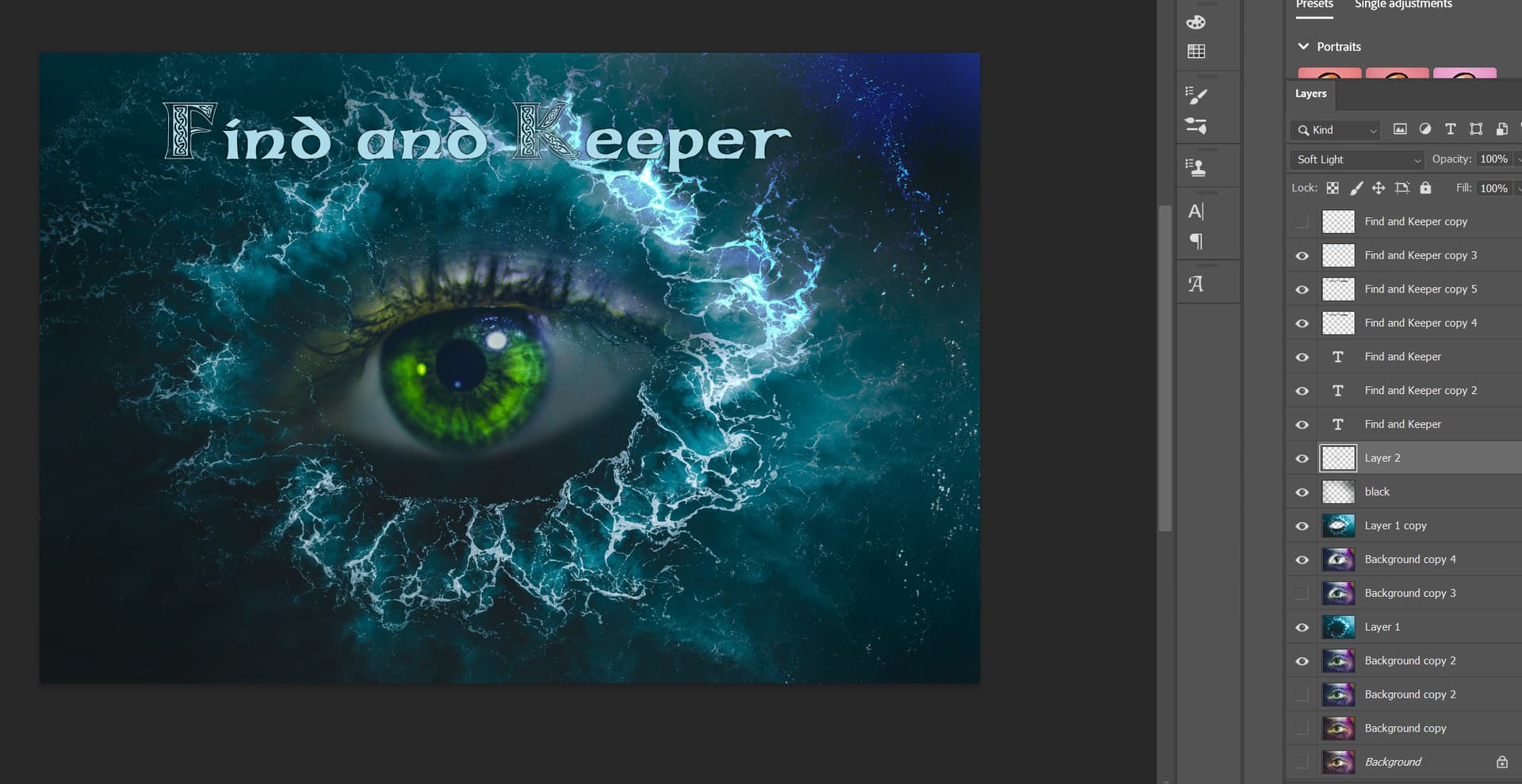
This was the least-played Petite Mort game on my list. I wonder if people might have been off-put by thinking the cover art is AI, but the credits link to the different components it was built out of (some pixabay resources), so it’s legit.

This is a pretty brief Choicescript game. Most popular choicescript games boast of their vast length, so it’s a difficult medium to do an Ectocomp game in. Here the author handles that by reducing branching in the early parts and replacing it with player reactions, leaving stronger branching for the end (unless I misread that; it’s just the impression I got).

The story is based on Irish folklore. Late at night, you find a strange feathered cap near the ocean, of the type that your family used to tell you was worn by fairies. Keeping it, you begin to find strange occurrences around your house. It kind of made me think of Tailypo, but more like ‘what if Tailypo was hot?’

Overall, it was fun. I didn’t find any bugs, and I’ve always loved Gaelic, so seeing it in the game was a bonus.

8 Likes

Thanks again for the lovely review @mathbrush ! I actually hadn’t even considered the AI art aspect given the ectocomp rules but I can see why it may have been mistaken as such given it’s a bit of an odd picture. I promise it genuinely was put together as a non-AI photo manipulation for anyone concerned about this :sweat_smile:

Yes that is correct, given the time constraints for the petite mort that’s how I went with it this time :slight_smile:

I’ve never heard of a Tailypo before. Thanks for that! Always up for new interesting folklore to read about :grinning_face:

3 Likes

Just gonna move this one to the top of my “to play” list real quick…

3 Likes

The Horrible Escape Room of Horror

I was delighted by this game. It’s in the author nilsf’s custom javascript parser system (I believe), which has always been on par with the big 3 of Inform, TADS and Dialog.

It’s a short two-room game. At first, I was entirely stymied on what to do. There were several cryptic messages and a way to die but that’s all. I was about to post a hint request, but carefully replaying the game to describe the setup gave me the hint I needed to succeed.

The second room had a lot going on. I felt like there just wasn’t enough info to proceed, but when I finally figured out what the vials were for, I was really impressed with the solution. Finally, figuring out the skulls was a real unusual thing that was not something I’ve seen very often at all in parser games.

So, this was great. There were a few typos (I think a wall was called ‘souther’) and I had trouble referring to one vial, but otherwise this worked great, and I’m impressed it was put together in such short time.

7 Likes

Dusk, Airy, Does Carry

This is an Andrew Schultz game written in Adventuron. The adventuron aspect allows the use of pixel art here, which I think greatly enhances the experience. There were several pages where I said ‘wow!’ out loud when I saw them, including one featuring animals. Great work here; since these wordplay games can become very abstract, the art helps ground the game, and the colors are cheerful.

This is a wordplay game about taking two-word pairs and typing other two-word pairs that sound like them when spoken out loud. There are 12 such pairs. I got stuck twice: once, not realizing I pronounced something differently than the author (curse my Utah accent!), and another where I didn’t realize I was doing wordplay on the wrong thing in a room.

Overall, great scope and polish for a 4 hr game. I would definitely look forward to more games in this vein (e.g. level of difficulty, size, graphics).

9 Likes