The intriguing thing about the difficulty of Genji is that its difficulty derives primarily from the intuitive networks that we don’t share on which its courtly elision relies, literature’s immanence in immersion torsions twixt any eidos elusive to its epoche. It was coded as popular literature, written in the vernacular with just enough Chinese to prove that it was written in the vernacular, so any of the augustness we ascribe to difficulties are coyly demurred so as to humiliate you specifically you low rank wretch, return to the mud and mudmake, the experiences which have moved her are preserved from the oblivions from which we strive to reach it. Anyway Shonagon’s much easier, if you want to preserve something just Noah’s Ark it, everyone’s on the list voila.
I’m also not certain lovers is the correct word; protagonists is my preference, given that Genji is the wrecking ball whose impetuous beetlemindedness drives the narrative tensions everyone around him strategizes desperately to resolve socially, indeed ultimately the tale carries on perfectly well without him. Our endless duty to avoid the cessations of fate retold in a dozen tragedies. Which is the miracle of literature! Instead of one you get a dozen! Such abundance! Such decadence!
I’m sure everyone who’s been watching the challenger’s Github repository is dying to know: what is a capsa?
The short answer is, it’s the Latin word for “container”. It eventually made its way into English through three different routes:
In French it became casse (modern chasse), which was borrowed into English as “case”.
A small capsa in Latin is a capsula, which was borrowed as “capsule”.
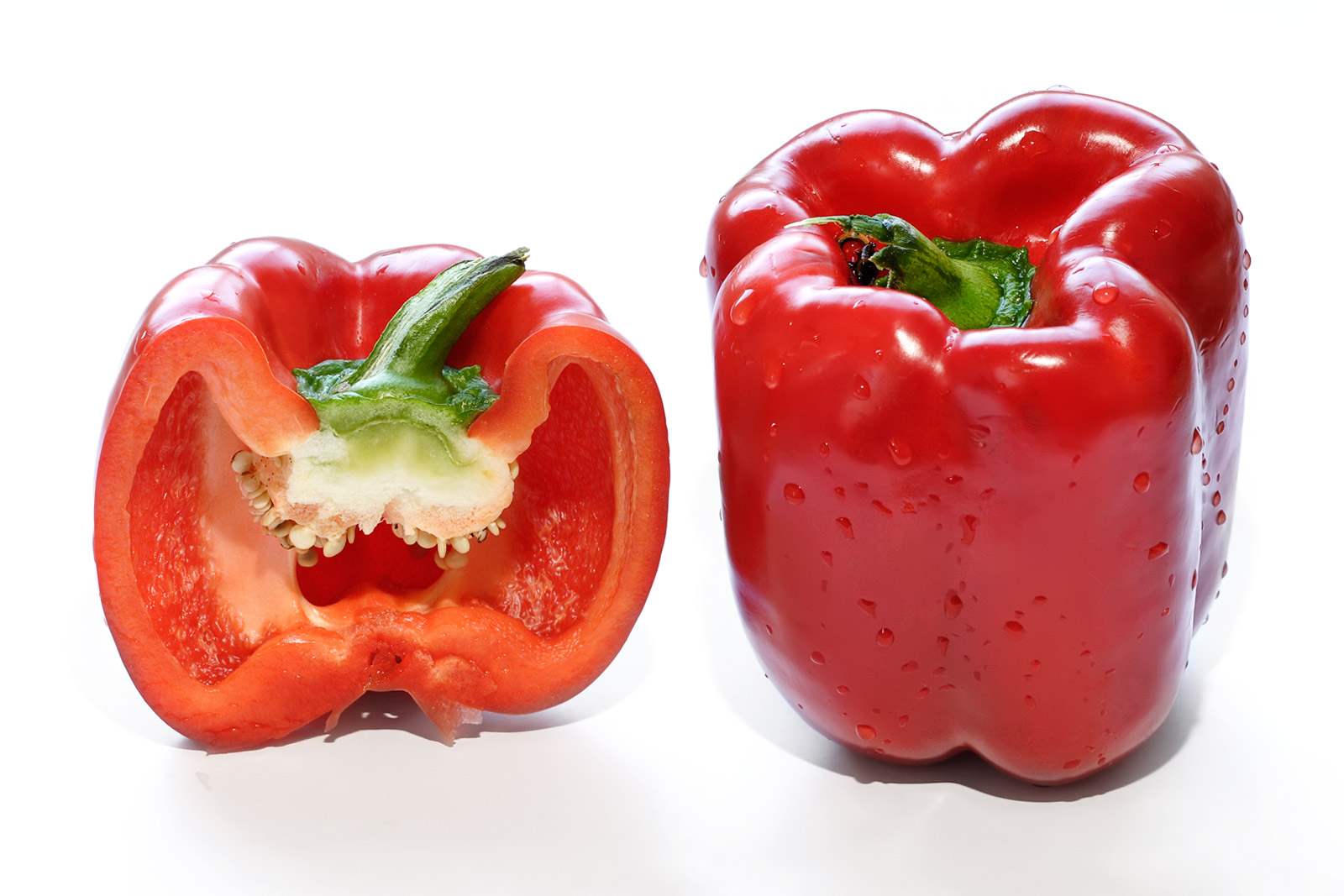
When botanists found a fruit shaped like a hollow container, they named it capsicum “container-y thing”, and now the subset of the English-speaking world that doesn’t call those “peppers” calls them “capsicums” instead.
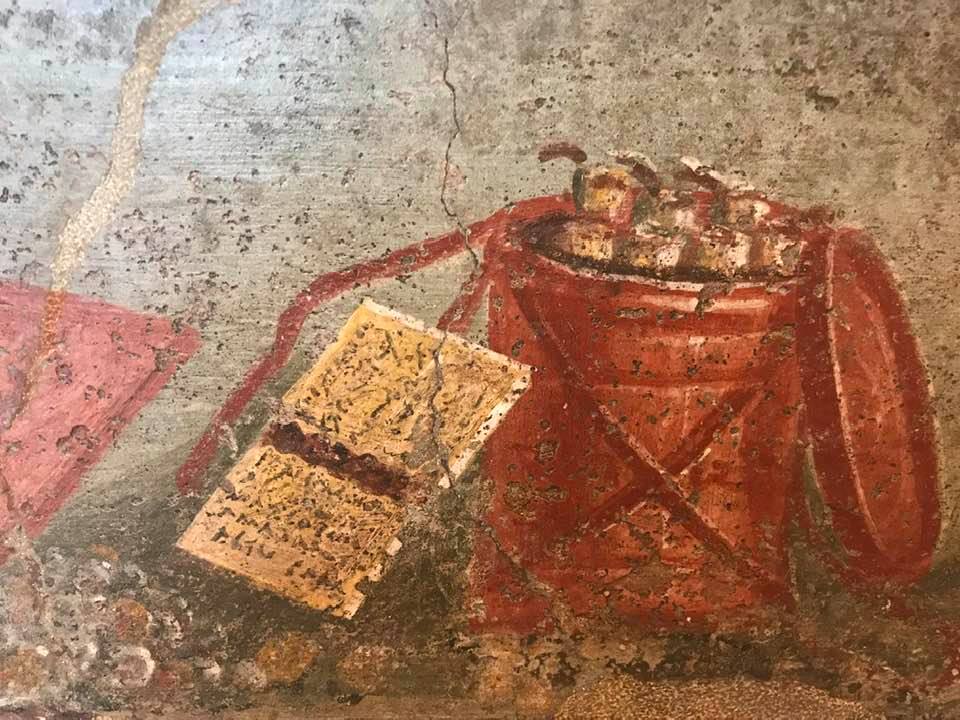
But, it’s also used in English in a fourth, more technical sense. Nowadays, the cases we put books in tend to be rectangles, because our books are rectangles. But the ancient Romans’ books were scrolls, shaped like cylinders instead of rectangles, so they kept them in tube-shaped containers. If we want to talk specifically about those tubes instead of modern cases, we can borrow the Latin word and call them capsae.
If you're wondering about the book-shaped thing to the left
That’s a foldable writing board, covered with wax. Before the invention of paper, writing materials weren’t cheap, so short-term things like grocery lists or “Aulius didn’t show up to work today” would be written in wax instead. Then once you buy the groceries or have Aulius flogged, you can rub the wax smooth and reuse it. The nicer ones folded in half with the wax on the inside for protection.
Capsa itself comes from the verb cap- “take”, as in capture, capable, accept, occupy, or receptacle.
Those are all the same root?? That’s something I am very happy to have learnt…
Speaking of this, I am slightly worried totally super ready for if/when my time comes as a chef. It’s so fun watching the competition play out, but actually doing it going to be another thing…
There are actually a lot of sets of English words that are technically the same word borrowed multiple times—most commonly it’s a via French vs. via Latin thing, but sometimes it just gets borrowed from French multiple times centuries apart. So that I can pretend that this is on topic, “chef” is actually a case of the latter—we got “chief” from Old French in the 14th century and then “chef” from modern French in the 19th.
Yeah! Cap- is one of the most versatile verbs in Latin; also anticipate, capacity, capisce (“you get it?”), concept, deception, exception, various other -ceptions (in-, inter-, per-, re-), precept, recuperate, susceptible, and probably plenty more too.
Seeing the comparison between the various ZIL parsing libraries (not exactly libraries in Infocom’s case) will be interesting.
The chief chef in charge wrote rapidly—
Susceptible to stress, I suspect, performance pressure—
As, irony of ironies, iron will crumbled
For the Iron ChIF; chief among the ailments are chaos…
No actual resemblance to any actual past or future contests intended,
A quick note with a rules clarification: A question has been raised about whether or not people who are acting as beta testers for the chefs will be allowed to vote for the winner. The answer, ratified by the panel of judges, is yes, in keeping with the “free for all” model of beta testing being tested in this episode. Rules may change in the future.
With only five rooms, I’d be tempted to draw a map graphic for each one, with labelled arrows showing where each direction leads. “North: Downward to the thingy. East: Downward to the whatsit.”
There are worrying signs that out Iron Challenger has painted himself into a corner directionality-wise. Nothing that couldn’t be fixed, surely, but it seems that there is no more time to let the paint dry and get out of that corner without making a mess.
This, in itself, gives an elegant and symmetrical mental geometry. The problem arises when trying to hammer these locations into compass-relations to each other.
My first thought is related to the vertical axis of the map. Since there is only one top location and one bottom location, and this game seems to take place outside, I assume that the three mid-level locations are visible from both above and below. GO TO would be the natural fit.
You are hovering in the air. Below, you see -aerie1-, -aerie2-, and -aerie3-. (These would probably need proper names for fluency.)
>FLY TO AERIE3
(Same thing for looking up from the forest floor.)
Phew - I must admit that I haven’t kept up with all the rules and posts about this contest, and I didn’t really know what I was doing when I joined the “tasters”; since I am beta testing Ryan’s game I have been afraid to even post in this topic.
Anyway, since Ryan wrote about his process of designing this game, and it gained some interest, I wanted to remind the audience that he has written a blog post about some aspects of this before:
Actually, the Wumpus part of that very same cave crawling game has a different set of directions. Can’t have too many directions in one game! Interestingly, the original Wumpus maze can be thought of as a dodecahedron where the rooms are the twenty vertices and the passages are the thirty edges. But it can also and equivalently be thought of as consisting of three concentric rings: five rooms in the inner ring, ten rooms in the middle ring, and five rooms in the outer ring. Which gives us:
Clockwise is a direction. Clockwise has opposite counterclockwise.
Counterclockwise is a direction. Counterclockwise has opposite clockwise.
Centered is a direction. Centered has opposite peripheral.
Peripheral is a direction. Peripheral has opposite centered.

Intersection 1 is an inner-ring intersection in Wumpus-Maze with identifier 1.
Intersection 2 is an inner-ring intersection in Wumpus-Maze with identifier 2. Intersection 2 is clockwise of Intersection 1.
Intersection 3 is an inner-ring intersection in Wumpus-Maze with identifier 3. Intersection 3 is clockwise of Intersection 2.
A propos what our contestants said about feature creep… eh… you might not want to hold your breath for this thing to be finished.
Yeah, actually when @Lucian was describing his room arrangement, I was flashing to Gregory Yob’s description of various topological squashings (e.g. a squashed dodecahedron) he effected to design his maps for Wumpus and Wumpus 2 in the mid-70s.
For those doing the arithmetic on lpsmith’s latest post, FYI his official delivery message with the posted version of the game is timestamped at 11:57 UTC. Both chefs submitted their dishes on time.
It’s interesting how there has been so much activity in these threads during the competition, but once the dishes have been served, everyone has gone quiet. I can only guess that it’s because the judges are hard at work at tasting the dishes.
I beta tested Ryan’s dish all the way up until the deadline, and I still haven’t beaten it… So I think it’s time to check out the Challenger’s attempt!